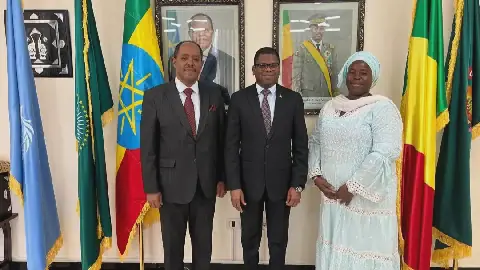
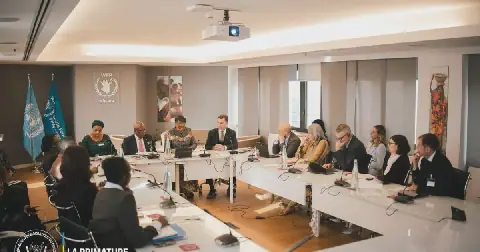
The government of the Democratic Republic of Congo has accused Rwanda of contributing to the severe food crisis affecting 28.8 million of its citizens. This accusation was made by Ève Bazaiba, the Minister of State for Social Affairs, Humanitarian Action, and National Unity, on November 19, 2026, in Rome, Italy, during a meeting of the United Nations World Food Programme's governing body.
According to Bazaiba, the number of Congolese people in need of humanitarian assistance has doubled from 14.9 million in December 2025 to 28.8 million, citing ongoing conflict and insecurity in various parts of the country as the primary reasons. She directly implicated Rwanda and its allies in the crisis, stating that the situation worsened following Rwandan attacks in the Uvira region.
The Minister of State highlighted that on December 1, 2025, the Congolese government had identified 14.9 million people in need of assistance, but subsequent insecurity, particularly in Uvira, led to an increase in displaced persons and those requiring aid. Bazaiba pointed out that Rwandan attacks on Uvira, which began after the signing of a peace agreement in Washington, resulted in population displacement and a surge in numbers needing humanitarian aid.
In response, Rwandan Foreign Minister Amb. Olivier Nduhungirehe dismissed the allegations, questioning how Rwanda could be responsible for the plight of 28 million Congolese across different regions. He urged the DRC government to address internal issues such as weak governance structures, corruption, lack of basic infrastructure, and absence of state authority, rather than attributing its problems to external actors.
Nduhungirehe expressed skepticism about the basis of the accusations, asking how the DRC could uniformly categorize citizens from various provinces as being in a state of humanitarian crisis due to Rwanda. He emphasized the need for the DRC to examine internal factors contributing to its challenges, including ineffective state institutions and economic issues.
The exchange reflects heightened tensions between Rwanda and the DRC, with each side presenting differing views on the causes and solutions to the humanitarian crisis in the DRC. The situation remains complex, with significant implications for regional stability and humanitarian response efforts.
The DRC's humanitarian crisis is one of the most severe in the world, with millions displaced and facing food insecurity. The international community is closely monitoring developments, and there are ongoing efforts to provide aid and support to those affected.
Key points
- The DRC government has accused Rwanda of contributing to a food crisis affecting 28.8 million people.
- Rwanda has denied these allegations, urging the DRC to address internal issues.
- The crisis reflects broader regional tensions and challenges in providing humanitarian aid.