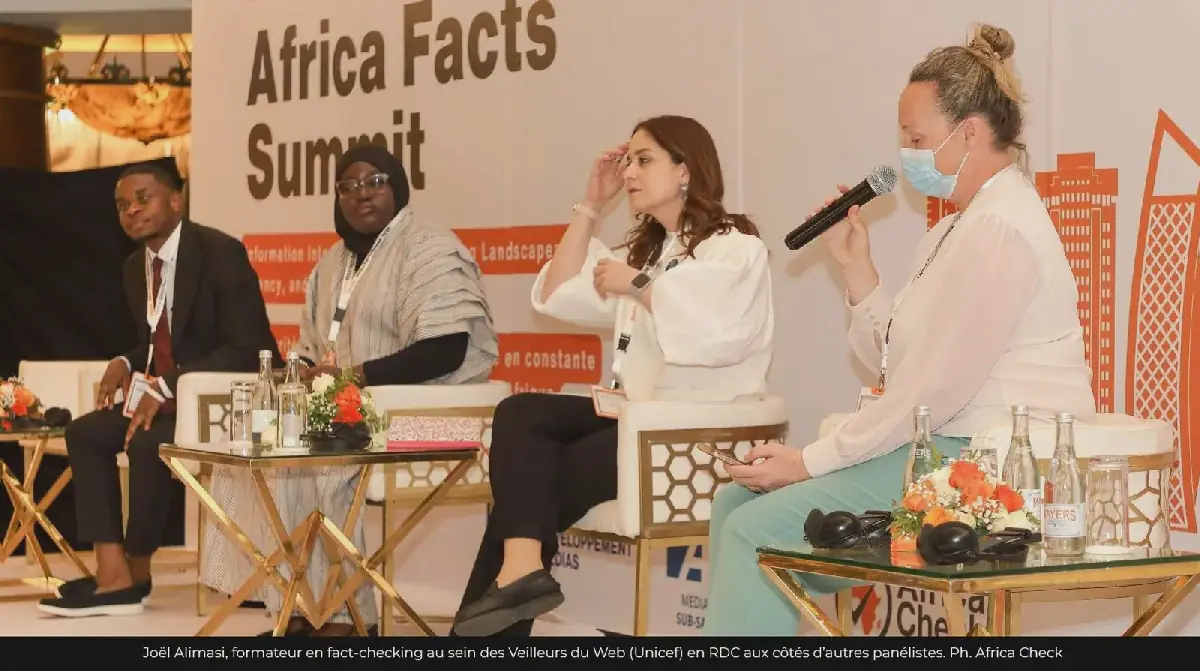
The city of Goma, located in the East of the Democratic Republic of Congo (DRC), has been embroiled in a conflict that extends beyond the military terrain to the realm of information. The fifth edition of the Africa Fact Summit, held in Nairobi on October 21-22, 2026, brought together fact-checking experts who discussed the manipulation of information in crisis zones and the challenges faced by fact-checkers in verifying information.
The panel discussion on "conflict zones as battlefields of information - lessons from the field" highlighted the difficulties faced by fact-checkers in Goma, where the conflict has led to a breakdown in information integrity. Joël Alimasi, a panelist and editor at Eleza Fact, noted that the conflict has resulted in the proliferation of misinformation, with both parties to the conflict having dedicated teams for spreading false information.
According to Alimasi, the conflict has severely impacted the information landscape in Goma, making it challenging for fact-checkers to operate. He cited the example of WhatsApp groups and word of mouth as channels used to spread misinformation, which is often not accessible to fact-checkers who primarily communicate in French or English. This has resulted in a situation where misinformation can spread rapidly, particularly in local communities where languages such as Swahili, Kinyarwanda, or Mashi are spoken.
The manipulation of information has significant consequences, including the spread of terror in the region. Alimasi emphasized the need for fact-checking media to disseminate their content in local languages to ensure that their messages reach a wider audience. He also highlighted the danger posed by misinformation, which can be spread through local communities in languages that fact-checkers may not be familiar with.
The conflict in Goma began in November 2025, when the city fell to rebels from the Mouvement du 23 mars (M23), a group that has been accused by the DRC government of being supported by Rwanda. The conflict has since led to a surge in propaganda, which has contributed to the spread of misinformation and terror in the region.
The situation in Goma underscores the challenges faced by fact-checkers in conflict zones, where the manipulation of information can have severe consequences. As Alimasi noted, the conflict has resulted in a situation where "the entity of information is exactly touched by the conflicts, because the trust is already boosilled."
The Africa Fact Summit highlighted the need for fact-checking organizations to adapt to the changing information landscape in crisis zones. By disseminating their content in local languages and being aware of the channels used to spread misinformation, fact-checkers can play a critical role in promoting information integrity and combating the spread of false information.
Key points
- Misinformation is rampant in Goma, with both parties to the conflict having dedicated teams for spreading false information.