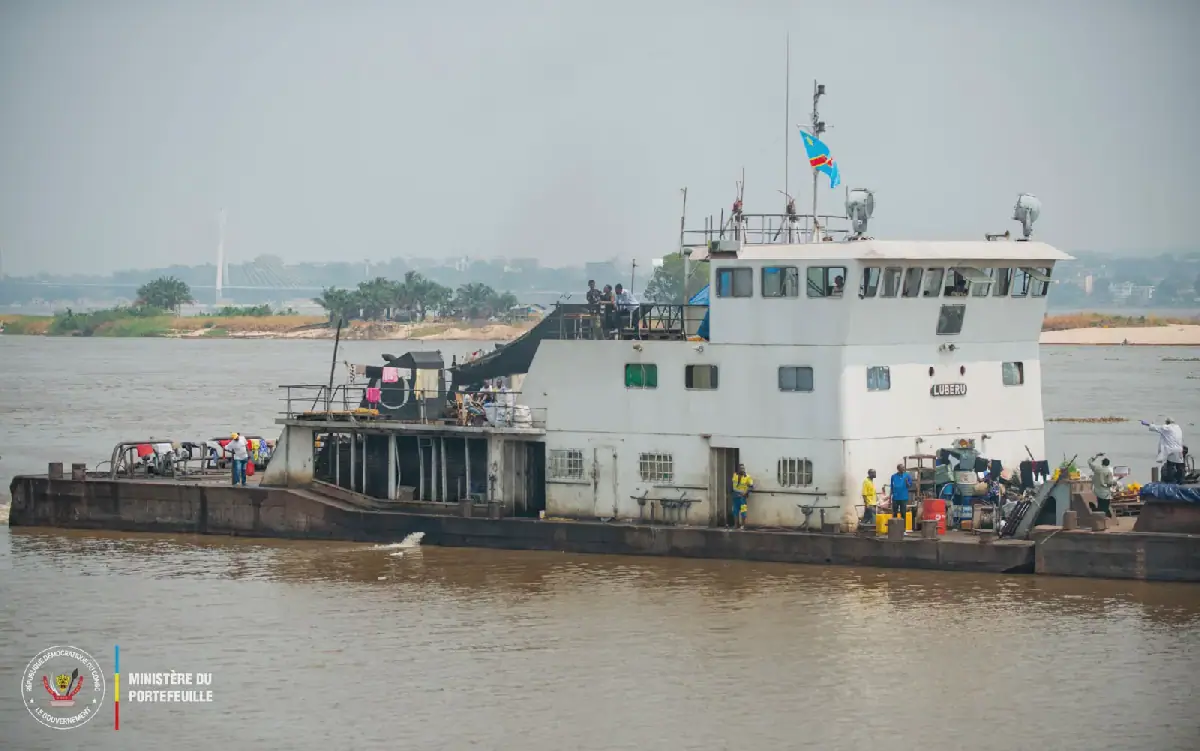
The conflict in eastern Democratic Republic of Congo has had a devastating impact on the transportation of goods by river between Kisangani and Kinshasa. According to freight transporters, the persistent insecurity on several road axes in North Kivu is significantly disrupting the transportation of goods to Kisangani, leading to a decline in freight to Kinshasa. This has resulted in a substantial reduction in the arrival of goods, affecting various products such as vehicles, beans, and potatoes.
The situation is having a direct impact on the activities of shipping companies and workers on boats, whose incomes depend on the volume of goods transported. At the port of Kisangani, several metal boats have been immobilized for months, waiting for sufficient cargo to depart for the capital. Fernand, marketing manager of the Apolo boat, stated that the war has greatly reduced the arrival of goods, causing boats to remain stationary due to a lack of merchandise.
The conflict has affected numerous productive localities or transit zones in Kivu, either due to ongoing fighting or control by rebels, which is slowing down the supply chain to Kisangani. As a result, the waiting time at the dock has increased, prolonging the duration of trips between Kisangani and Kinshasa. A journey that normally takes three months can now take up to five months, causing financial losses for shipping companies.
To avoid losses, shipping companies prefer to wait until they have sufficient goods before departing, further prolonging delays. Michel, a worker on another boat, expressed frustration over the extended waiting period, stating that they are paid per trip, and if goods arrived on time, they would have already returned to Kinshasa months ago. The delayed arrival of goods, sometimes taking up to eight days, has made it challenging for workers to earn a living.
The decline in activity has made it difficult for many river transport workers to provide for their families. Gentil, another employee in the sector, called on Congolese authorities to take measures to restore security in conflict-affected areas. He believes that stability in eastern DRC would help revive commercial exchanges and boost river transport between Kisangani and Kinshasa.
The impact of the conflict on river freight transport has significant economic and social implications for the region. With many workers struggling to make ends meet, there is growing concern about the humanitarian situation in areas affected by the conflict. Efforts to restore security and stability are crucial to reviving economic activity and improving living conditions for local populations.
Key factors contributing to the disruption of river freight transport include the persistence of insecurity in North Kivu, the control of rebel groups over key transit zones, and the decline in the volume of goods being transported. Restoring security and stability in eastern DRC is essential to reviving commercial exchanges and boosting river transport between Kisangani and Kinshasa.
Key points
- The conflict in eastern DRC has caused a significant decline in freight transport between Kisangani and Kinshasa, affecting the livelihoods of workers and the local economy.
- The persistence of insecurity in North Kivu and the control of rebel groups over key transit zones are major factors contributing to the disruption of river freight transport.
- Restoring security and stability in eastern DRC is crucial to reviving commercial exchanges and boosting river transport between Kisangani and Kinshasa.