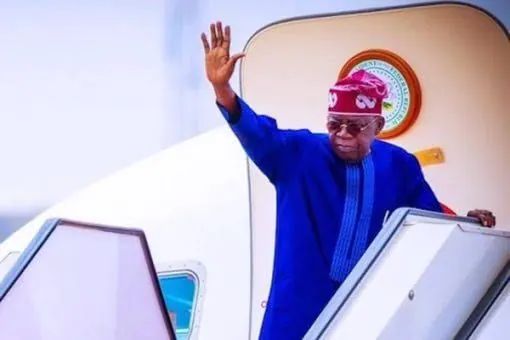
President Bola Ahmed Tinubu's prolonged absence from Nigeria has raised concerns regarding constitutional requirements. According to the Nigerian Constitution, if the President is out of the country for more than 21 days or unable to perform his duties, he must hand over power to the Vice President. Tinubu was originally due back in Nigeria on September 20 but extended his "working vacation" by a week. The presidency announced he would return over the weekend, but he did not arrive as expected.
The Centre for Democracy and Development (CDD) has called for legal clarification on Tinubu's prolonged overseas stay. Dr. Dauda Garuba, Director of CDD-West Africa, stated that while the President has the right to extend his travels, he must adhere to constitutional provisions regarding the duration of his absence. The CDD's comments come amid heightened scrutiny over Tinubu's absence and concerns about potential constitutional violations.
Sources close to the presidency suggest that Tinubu's delayed return was merely a change of travel plans. Special Adviser on Information and Strategy, Mr. Bayo Onanuga, stated on social media that the President is in good health and can fulfill his duties without being physically present in Abuja. Onanuga highlighted Tinubu's ongoing engagement with investors in France, securing a $7 billion deep-sea port project in Ogun State.
Despite Onanuga's assurances, critics argue that the National Assembly should activate Section 145(2) of the Constitution, allowing the Vice President to step in if Tinubu fails to return by the time lawmakers reconvene. Former House of Representatives member Mark Gbillah insists that the President's absence raises significant constitutional issues and must not be downplayed as merely a "working vacation."
Concerns have also been voiced about the implications of both the President and Vice President Kashim Shettima being out of the country simultaneously. Gbillah insists that this situation requires clarity on who is exercising presidential authority in their absence. Public figures, including the presidential candidate of the Nigeria Democratic Congress, Peter Obi, have demanded transparency regarding Tinubu's whereabouts.
An Abuja-based lawyer, Barrister Abdurrahman Salis, offered a different perspective, stating that just because both leaders are abroad doesn't create a constitutional vacuum, provided they can still perform their duties remotely. However, he acknowledged that the situation could differ if the President were solely on holiday. As of now, President Tinubu's absence and failure to officially delegate his responsibilities have raised doubts about governance continuity in Nigeria.
The situation has sparked a national debate, with many Nigerians expressing concerns about the country's leadership and governance. With Nigeria facing pressing economic and security challenges, the need for clear leadership presence on the global stage has been underscored. As the President's absence continues, the nation awaits his return and clarification on the circumstances surrounding his extended stay abroad.
Key points
- President Tinubu's prolonged absence from Nigeria has raised concerns over constitutional requirements and governance continuity.
- The Centre for Democracy and Development has called for legal clarification on Tinubu's prolonged overseas stay.
- Critics argue that the National Assembly should activate Section 145(2) of the Constitution, allowing the Vice President to step in if Tinubu fails to return.