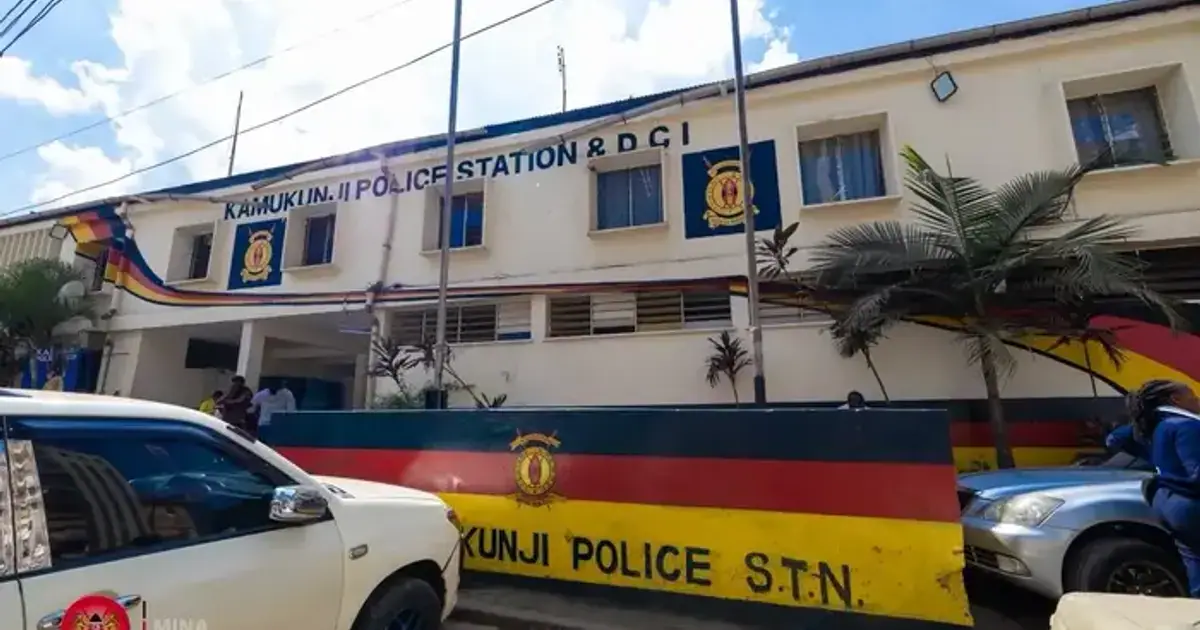
The Kenya Police Service has detailed the process of how crime reports move from the front desk to investigators at police stations. According to Corporal John Chebii, police stations have designated offices to handle specific stages of reporting and public service delivery. This structured workflow aims to provide citizens with clarity and confidence when reporting incidents. The process begins at the customer care desk, where visitors are received and guided to the relevant offices.
At the customer care desk, two police officers assess the nature of the visit and direct individuals to the correct department. Whether someone is inquiring about a detained relative, seeking general police assistance, or reporting an incident, the officers provide guidance. Corporal Chebii explained that the customer care desk is the first point of contact and is manned by two police officers whose primary mandate is to receive visitors and refer them to the relevant offices.
For individuals seeking to officially report a criminal incident, the customer care desk officers escort them to the report office. At this stage, the reporting party meets with an intake officer responsible for documenting complaints. Every formal report is systematically logged into the Occurrence Book (OB), a permanent legal record that chronicles all daily occurrences, complaints, and arrests made at the station. Logging a report in the OB is a critical legal step that establishes an official record and generates an OB number.
The Occurrence Book (OB) number is often required for insurance claims or legal proceedings and officially initiates police involvement. Once the complaint is successfully recorded in the OB, the complainant is directed to the Office of the Officer Commanding Crime (OC Crime). It is at this stage that the case transitions from initial intake into active investigation. The OC Crime office evaluates the report and assigns a specific investigative officer to the case.
The designated officer takes over responsibility for following up on the matter, gathering evidence, and communicating updates to the complainant. Corporal Chebii noted that after making the report, the client will be referred to the office of the OC Crime where an officer will be assigned to investigate and follow up the matter. This process aims to provide a clear and structured approach to handling crime reports.
Corporal Chebii’s breakdown of station procedures comes amid heightened focus on public safety and crime management across urban centers, particularly in Nairobi. Law enforcement agencies have intensified measures to tackle rampant urban offenses that frequently affect residents. According to police statistics, the most frequently reported crimes in the capital include mobile phone snatching, general theft, and obtaining money or goods through false pretenses.
In response to these trends, Nairobi regional detectives have flagged hotspots such as Kilimani, Westlands, and the Central Business District (CBD) as areas experiencing elevated criminal activity. Authorities have ramped up targeted operations, leading to numerous arrests related to sophisticated theft and fraud rings, including high-profile instances involving organized syndicates operating within the metropolis. This comprehensive guide aims to provide citizens with a clear understanding of the crime reporting process.
Key points
- The Kenya Police Service has a structured workflow for handling crime reports, starting from the customer care desk to the assignment of professional detectives.
- The Occurrence Book (OB) is a critical legal record that chronicles all daily occurrences, complaints, and arrests made at the station.
- Nairobi regional detectives have flagged hotspots such as Kilimani, Westlands, and the Central Business District (CBD) as areas experiencing elevated criminal activity.