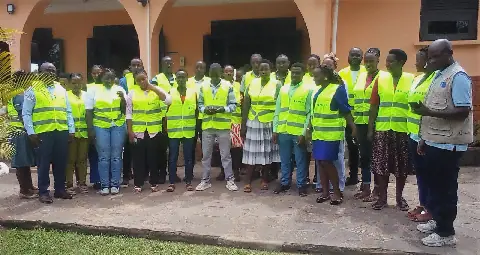
The University Institute of Technology (IUT) in Comoros recently organized the country's first Data and Statistics Days, bringing together representatives from institutions, partners, teachers, professionals, and students. The event aimed to discuss the role of data in decision-making and national development. IUT Director General Ahmed Bacar emphasized that data has become a vital tool for decision-making, governance, and development. He noted that Comoros needs reliable data to plan public policies, improve services, and meet population needs.
The initiative seeks to bridge the gap between university education and professional realities. Ahmed Bacar highlighted the evolution of statistics with the development of data science, artificial intelligence, and new technologies. He stressed that the university must prepare students for these new demands by offering theoretical and practical training. The project Statcap-km coordinator, Hamidou Saïd Ounais, also emphasized the importance of training professionals capable of meeting the needs of the national statistical system.
The IUT's statistics department was established through a partnership between the National Institute for Statistics and Economic Studies (INSEE) and the University of Comoros, with support from the Abidjan National School of Statistics and Applied Economics (ENSEA). The department initially aimed to train technical assistants in statistics but now offers training up to the license level. However, Ounais noted that there is a challenge in providing stable employment for graduates, as ministries, regional departments, and public services often lack statisticians.
Abdou Raouf Echata, Chief of Cabinet representing the Rector of the University of Comoros, highlighted that decision quality largely depends on available information. She emphasized that statistics are essential in various sectors, including economy, education, health, employment, and poverty reduction. Echata invited the university to adapt its training to technological developments and labor market needs.
The second day of the event featured conferences, masterclasses, a data challenge, and a data quiz. These activities allowed students to apply their knowledge, compare their skills with real-world situations, and develop their analytical capacity. At the end of the event, certificates were awarded to participating students.
Youssouf Ahamada, Head of the Statistics Department, expressed satisfaction with the quality of discussions and student participation. He emphasized that producing data is not enough; it must be reliable, accessible, and transformed into useful information for decision-making. Ahamada hopes to make the department a hub for expertise, research, and innovation in service of the country.
The first Data and Statistics Days were supported by the Statcap-km project, with backing from the World Bank. The event aims to become an annual meeting to strengthen statistical skills and promote better data use in Comoros. Key outcomes include raising awareness about the importance of data and providing a platform for students and professionals to engage with data-driven practices.
Key points
- The event brought together various stakeholders to discuss the role of data in decision-making and national development.
- The statistics department faces challenges in providing stable employment for graduates despite the growing demand for data professionals.
- The initiative aims to become an annual meeting to strengthen statistical skills and promote better data use in Comoros.