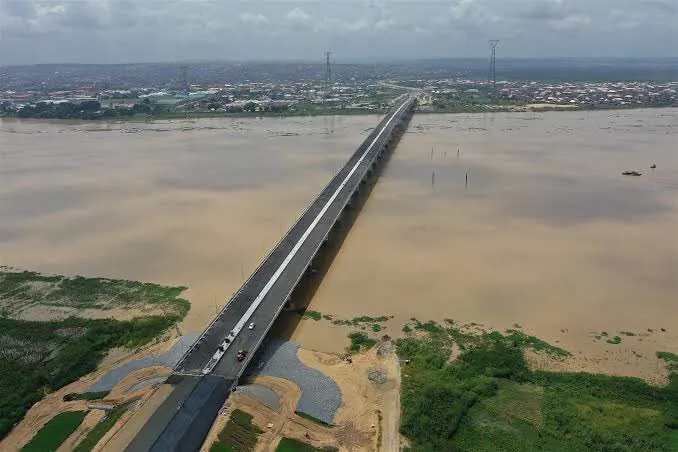
The reopening of the First Niger Bridge in Nigeria has been delayed due to persistent heavy rainfall across the state. The bridge, which connects motorists from Anambra and Delta states, was initially set to reopen on Monday, 21 September 2026, after a two-week closure for rehabilitation and maintenance works. However, the contractor requires at least three consecutive dry days to resume work, forcing commuters to seek alternative routes.
Motorists and commuters are facing heavy delays and untold hardship due to the bridge closure and poor condition of alternative routes. Some commuters are alighting from vehicles and trekking along the bridge to continue their journeys. The ‘God Is Good’ driver, Barry, lamented the suffering motorists are facing, stating that the contractor should have fixed the alternative routes before closing the bridge.
The federal government, through the Ministry of Works, Anambra state field headquarters, announced the closure of the bridge on 7 September 2026, to allow for emergency repairs, including replacement of vandalised railings, bolts and nuts, and installation of CCTV cameras. The closure aimed to restore the facility and improve safety for motorists.
The Acting Federal Controller of Works, Federal Ministry of Works, Anambra State Field Headquarters, Timothy Emenike, advised motorists to use the Second Niger Bridge route through Obosi, Whistleblower Road towards Asaba, Delta state. However, commuters from the Asaba end of the bridge are facing heavy delays, scrambling for alternative routes via the Onitsha-Owerri Road at higher fares.
As of Monday, the bridge was still barricaded by construction vehicles and equipment, while some on-site workers were seen working at the bridge. However, some sections of the bridge that had already been worked upon had been affected by the persistent rainfall.
The delay in reopening the bridge has resulted in longer travel times and increased transportation costs for commuters. People plying this route now spend over four hours on a journey that would take less than 60 minutes. The transportation cost has more than tripled, thereby extending the hardship on motorists.
When contacted by telephone, Emenike said the reopening of the bridge may no longer be possible, subject to favourable weather conditions. The contractor needs at least three consecutive dry days to resume work, and the authorities concerned are urged to speed up the work to alleviate the suffering of motorists.
Key points
- The First Niger Bridge reopening has been delayed due to heavy rainfall.
- Commuters face longer travel times and increased transportation costs due to the bridge closure.
- The contractor requires at least three consecutive dry days to resume work on the bridge.