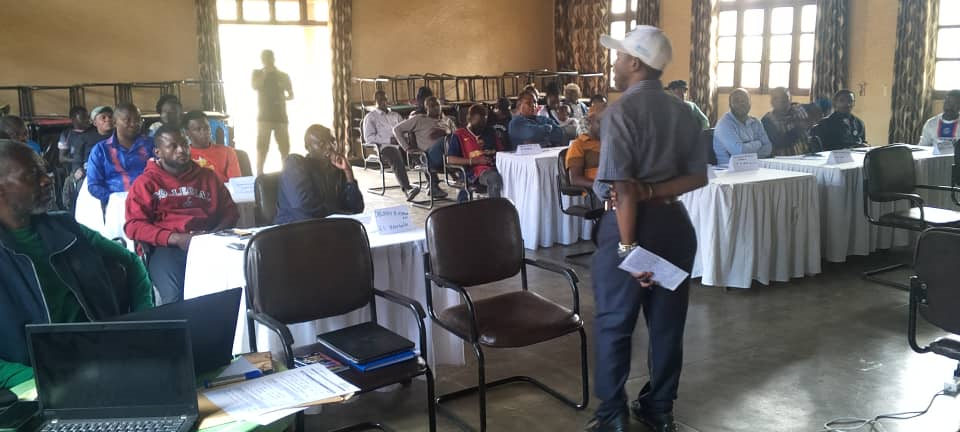
On October 10, 2026, various community leaders in Beni, Nord-Kivu, were sensitized by the president of the surveillance pillar of the response to mobilize and become relays in their communities to combat the Ebola outbreak. The sensitization aimed to address the mistrust between the community and healthcare personnel, which has led to clandestine treatment and increased mortality rates. According to Damien Kambale, the president of the surveillance pillar, the community's mistrust is a major obstacle to eradicating the disease.
During the sensitization session, Kambale presented epidemiological statistics from the 10th to the 17th epidemic in Nord-Kivu. He highlighted that the current epidemic, declared on May 15, 2026, has recorded 8665 confirmed cases, with a different strain, Bundibugyo, rather than Zaïre. The statistics also showed that the disease has spread to seven provinces, with 4178 deaths reported. Kambale emphasized that the situation is dire and requires collective action to combat the disease.
The Ebola outbreak in Nord-Kivu has resulted in 1829 confirmed cases and 1099 deaths, with several health zones affected, including Katwa, Beni, Butembo, and Goma. Kambale stressed that the disease is real and deadly, and that the community must work together to combat it. He also noted that the population is often confusing Ebola with malaria due to similar symptoms, leading to clandestine treatment and increased mortality rates.
Kambale urged the community leaders to encourage their communities to accept isolation and treatment at designated centers. He emphasized that early treatment is crucial to survival and that avoiding contact with infected bodies is essential to prevent further transmission. The community leaders were tasked with disseminating this information to their communities and promoting awareness about the disease.
The sensitization session aimed to address the challenges faced by the healthcare system in combating the Ebola outbreak. The community's mistrust of healthcare personnel and the tendency to seek clandestine treatment have hindered efforts to control the outbreak. By engaging community leaders, the response team hopes to increase awareness and promote community-led initiatives to combat the disease.
The Democratic Republic of Congo has experienced several Ebola outbreaks, with the current being the 17th epidemic. The country has recorded a total of 3470 confirmed cases and a high mortality rate during previous outbreaks. The professor Muyembe has been recognized for his efforts in combating the disease, including being honored with the 2026 "Virchow" prize.
The government has emphasized the importance of community engagement and awareness in controlling the outbreak. By working together with community leaders and promoting awareness about the disease, the response team hopes to break the chain of transmission and bring an end to the outbreak. The situation remains dire, but with collective action, the community can combat the disease and prevent further transmission.
Key points
- Community leaders in Nord-Kivu have been sensitized to become relays in their communities to combat the Ebola outbreak.
- The Ebola outbreak in Nord-Kivu has resulted in 1829 confirmed cases and 1099 deaths.
- The community's mistrust of healthcare personnel and clandestine treatment have hindered efforts to control the outbreak.