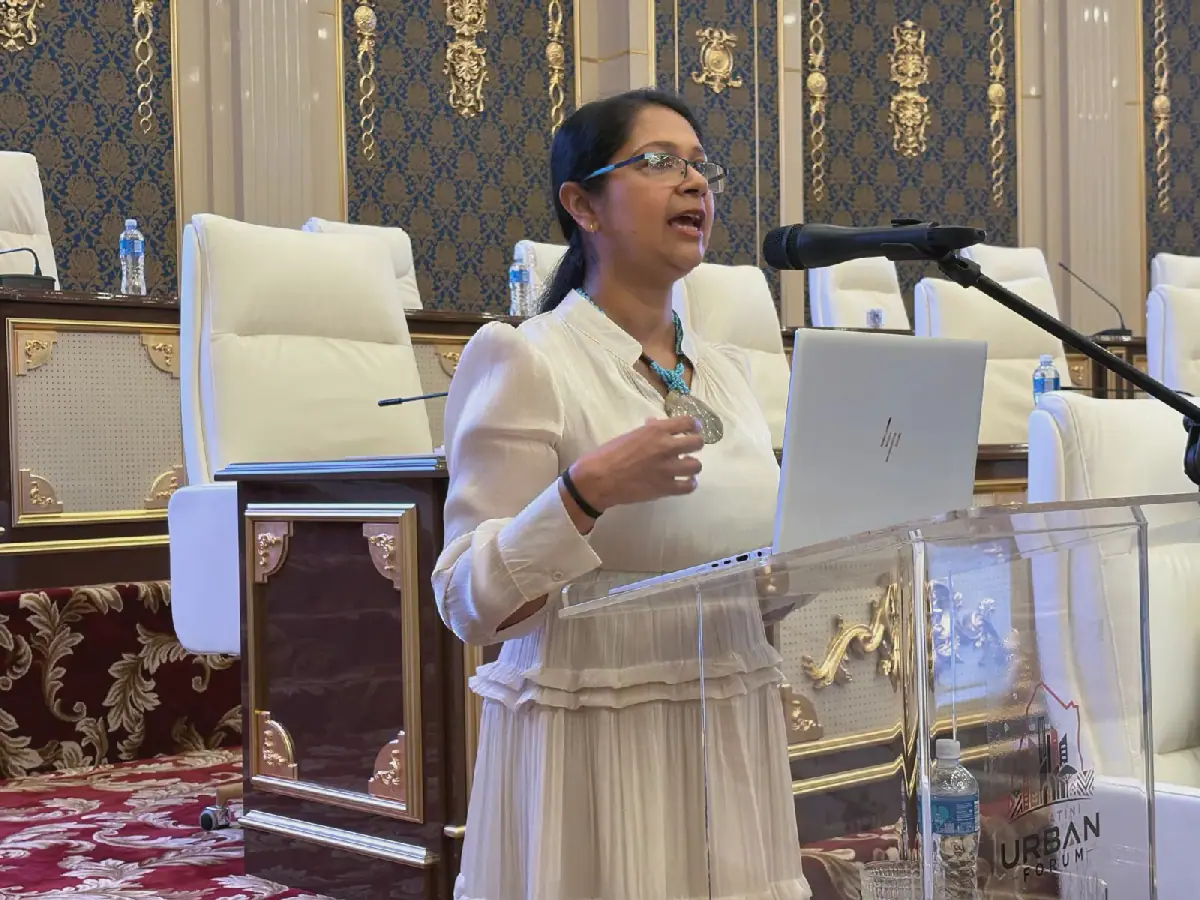
Dr. Deepa Pullanikkatil, Commonwealth National Climate Finance Advisor, emphasized that sustainable development in towns can only be achieved if communities own a stake in the economies created within them. She made this statement during the closing of the Eswatini Urban Forum at the Ezulwini International Convention Centre (ICC). According to Dr. Pullanikkatil, many towns exhibit a pattern where people are employed and consume, but the economic value generated does not directly benefit them or build long-term household resilience.
Dr. Pullanikkatil highlighted the disconnect between the economic value generated in towns and the benefits received by families, leaving them vulnerable, particularly during retirement or when breadwinners pass away. She stressed the need for a shift in how local authorities plan for development, focusing on people-centred development that involves individuals and collective community plans. This approach would enable local authorities to assist household structures in creating strategies that integrate community plans.
A practical approach to achieving people-centred development, according to Dr. Pullanikkatil, is supporting repair communities and associations that build infrastructure to support families during critical transitions. These associations could provide shared resources and support systems that reduce household vulnerability and strengthen community bonds. By doing so, towns can foster a sense of community ownership and responsibility.
Dr. Pullanikkatil emphasized that people-centred development cannot be separated from environmental responsibility. She noted that current consumptive activities are placing strain on the planet and that development planning must acknowledge this. The connection between human well-being and environmental sustainability is crucial in shaping the future of town development.
Dr. Pullanikkatil advocated for a generation of young people who are conscious of waste and consumption patterns. By raising awareness about the implications of consumption, towns can move towards a more sustainable future. This requires a deliberate effort to include environmental considerations as a central aspect of development planning, rather than an afterthought.
The Eswatini Urban Forum provided a platform for stakeholders to discuss the challenges and opportunities facing towns in Eswatini. Dr. Pullanikkatil's remarks underscored the need for a collaborative approach to addressing these challenges and forging a sustainable future for towns. By working together, communities, local authorities, and other stakeholders can create thriving and resilient towns.
The call for communities to own a stake in town economies resonates with the need for sustainable and inclusive development. As towns continue to grow and evolve, it is essential to prioritize people-centred development and environmental responsibility. By doing so, Eswatini and other countries can create thriving towns that benefit both residents and the environment.
Key points
- Communities must own a stake in town economies for sustainable development.
- People-centred development and environmental responsibility are crucial for sustainable town development.
- Supporting repair communities and associations can help reduce household vulnerability and strengthen community bonds.