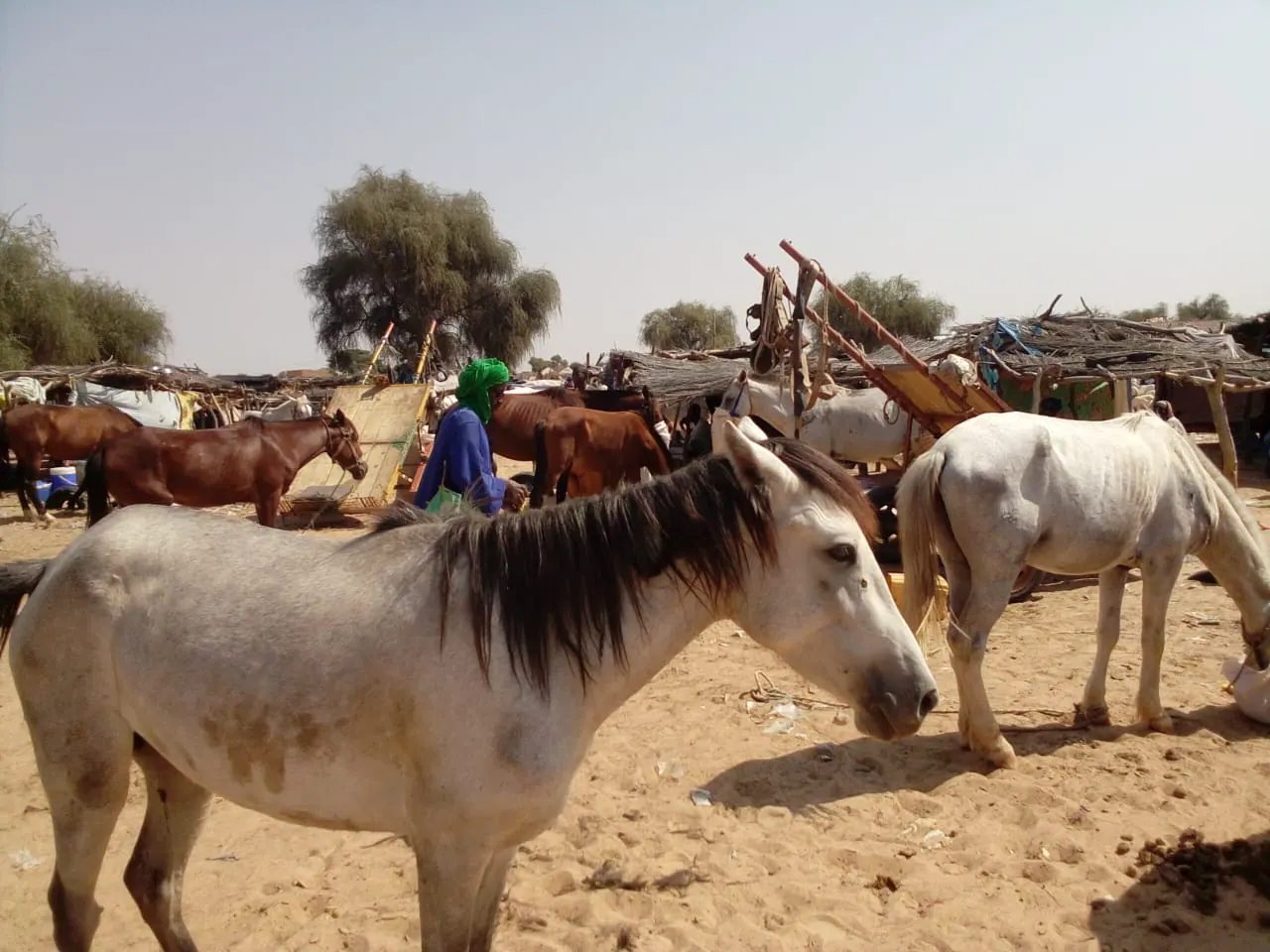
The weekly livestock market in Barkédji, located 35 kilometers east of Linguère, Senegal, is a bustling hub of activity every Thursday. The market plays a significant role in the country's economy, society, and culture. Among the various commercial activities, horse trading stands out as a vital component. The equine industry, although largely informal, is influenced by rural activities and urban transportation needs.
Mamadou Sonko, a retired veterinary agent based in Linguère, believes that the horse trade can improve the living conditions of those involved. However, he suggests that the industry would benefit from better organization and government support. According to Sonko, the seasonality of the trade affects demand and, consequently, horse prices. The market offers a platform for breeders, sellers, and wholesalers to buy and sell horses.
Gorgui Dieng, a seasoned horse trader in his sixties, has spent 40 years in the industry. He attributes his success and possessions to his expertise in horse trading. Dieng reveals that a horse can be sold for between 400,000 and 600,000 CFA francs, while some breeders sell their animals to him for 300,000 to 350,000 CFA francs. He requests that the government review the high cost of horse feed.
The market in Barkédji benefits not only traders but also breeders who find a market for their animals. Doudou Ndiaye, a young breeder from Gassane, considers horse breeding a profitable venture despite the challenges. He notes that wholesalers often take advantage of breeders, earning more profit. Ndiaye has made several investments thanks to horse breeding and is grateful for the opportunities it provides.
The commercialization of horses is subject to sanitary controls. The Linguère departmental livestock service oversees the sale of equines through health certificates. Before selling a horse, breeders or traders must obtain a health certificate from the veterinary services, which verifies the animal's health status. Sonar Ngom, head of the Linguère departmental livestock service, emphasizes the importance of these regulations.
The livestock service conducts vaccination campaigns and provides education to industry stakeholders. According to Ngom, over 10,000 equines were vaccinated in the Linguère department during a recent vaccination campaign. The service also maintains a presence at weekly markets to ensure compliance with regulations.
The horse trade in Barkédji continues to thrive, providing a source of income for many families. Despite being considered a marginal activity, it plays a significant role in the local economy. Industry stakeholders, including breeders and traders, benefit from this ancient trade, which has become an integral part of their daily lives.
Key points
- The horse trade in Barkédji is a significant contributor to the local economy and provides a source of income for many families.
- The industry is largely informal and would benefit from better organization and government support.
- Sanitary controls, including vaccination campaigns and health certificates, are essential to the commercialization of horses in Barkédji.