The modern illicit drug trade has evolved into a sophisticated transnational supply-chain enterprise, involving multiple actors across several jurisdictions. For Ghana, this presents a particularly complex law-enforcement challenge due to its strategically important position on the Gulf of Guinea and significant maritime and commercial connectivity. The country's location makes it a transit and destination market for illicit drugs, with the UNODC observing that Africa has increasingly become a transit region for cocaine, heroin, and methamphetamine.
The UNODC's 2026 World Drug Report notes that cocaine seizures in Africa have risen more than twenty times from 2015 to 2024. However, the Ghanaian conundrum is not simply about seizing drugs, but about identifying, penetrating, disrupting, and dismantling the entire criminal ecosystem that supports the movement of drugs through Ghana. A successful seizure may remove a consignment from circulation, but it does not necessarily remove the organization that financed it or the logistics network that transported it.
Effective drug interdiction must shift from commodity-centered enforcement to network-centered intelligence and investigation. The illicit drug market increasingly resembles a globalized commercial supply chain, with criminal organizations exploiting many of the same commercial infrastructures while introducing concealment, corruption, false documentation, and clandestine financial arrangements. The UNODC World Drug Report 2025 highlights that Africa's involvement in global drug trafficking has grown beyond its traditional domestically sourced cannabis markets.
Cocaine is now more frequently trafficked from Latin America through West Africa to Europe, while heroin, methamphetamine, synthetic opioids, and pharmaceutical drugs are transported via other international routes. This development's importance for Ghana is that not every drug case should be seen as an isolated criminal incident. A seizure at a port, airport, border, or inland might be just one part of a much larger organization.
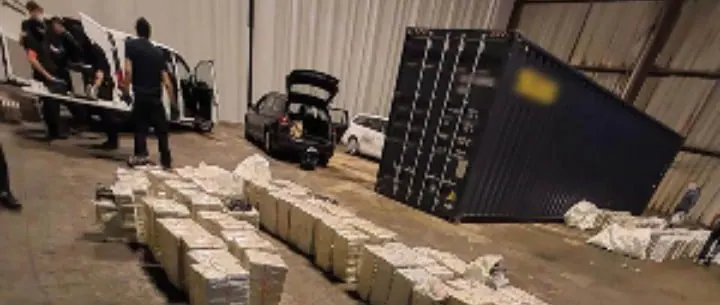
The UNODC Global Report on Cocaine 2023 documented the use of containerized trade and various vessel types in transatlantic cocaine trafficking involving West and Central Africa. It also identified Ghana among African destinations appearing in seizure data associated with maritime cocaine movements. This does not imply that all shipments entering Ghana are part of a single, centrally controlled cartel, but rather that modern trafficking often involves a network of interconnected brokers, facilitators, and specialized service providers.
One of the enduring challenges in narcotics enforcement is the tendency to focus on the person found in possession of the drugs. However, a complex trafficking operation often involves a wide range of participants, including financiers, suppliers, wholesalers, brokers, intermediaries, logistics coordinators, and corrupt insiders in security and politics. The supply chain functions more as a network rather than a single route, with foreign parties, including suppliers and financiers, often based outside Ghana.
International assessments describe contemporary trafficking networks as multinational, adaptable, and capable of operating through horizontal, vertical, or decentralized structures. This phenomenon aligns with recent global studies on serious organized crime networks, with Europol's 2024 assessment finding that 50 percent of threatening criminal networks were involved in drug trafficking and that 71 percent engaged in corruption to facilitate criminal activity or obstruct law-enforcement or judicial proceedings.
Key points
- Effective drug interdiction in Ghana requires a shift from commodity-centered enforcement to network-centered intelligence and investigation.
- The country's strategic location and increasingly sophisticated transnational supply-chain networks make it a complex law-enforcement challenge.
- Modern trafficking in Ghana often involves a network of interconnected brokers, facilitators, and specialized service providers.