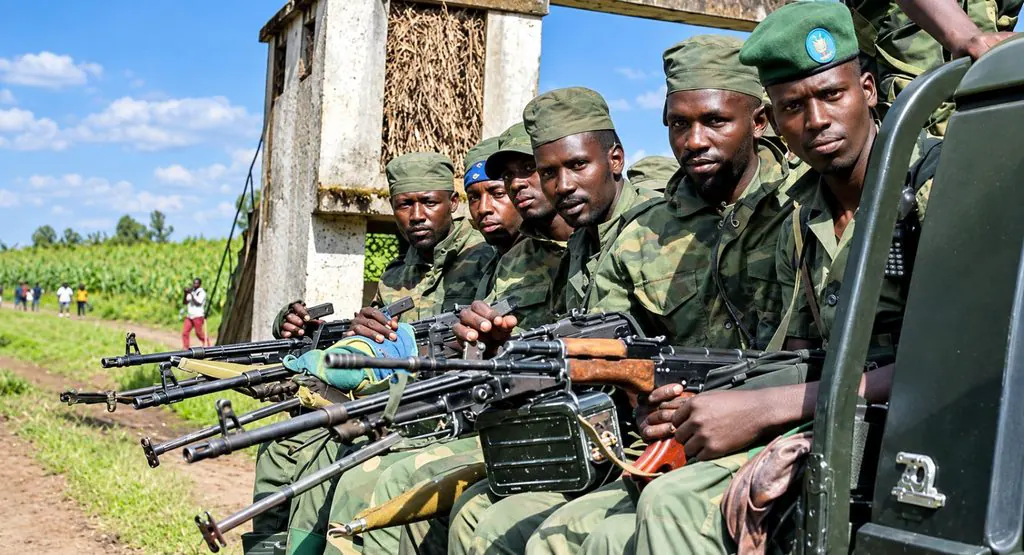
A horrific situation has unfolded in Rubaya, a mining area in North Kivu, Democratic Republic of the Congo, where the M23 rebels and Rwandan forces have taken control. According to Amnesty International, artisanal miners are being subjected to inhumane treatment, including being thrown into containers and tortured at will. This has resulted in the deaths of 18 minors, with 10 beaten to death, 2 killed by gunfire, and 6 abducted and later found dead.
Amnesty International's research has identified three containers near the Rubaya site where minors are being tortured. These locations, difficult to access due to the control exerted by Rwandan-backed M23 rebels, appear to be part of a system where violence is used to discipline workers and secure control over Congo's natural resources. The organization has documented cases of ill-treatment and torture, with Lane Hartill, an American researcher, stating that they have evidence of grave human rights abuses.
The situation in Rubaya is part of a larger pattern of violence and exploitation in the region. Amnesty International's report, published in September, details serious violations committed against artisanal miners in Rubaya and Lomera, including summary executions, arbitrary detention, forced labor, and forced recruitment. The organization accuses the M23, backed by Rwanda, of organizing the illegal transportation of gold and coltan towards Rwandan territory.
The international community has condemned the situation, with the UN Security Council demanding the immediate withdrawal of Rwandan Defense Forces from Congolese territory. The Council has also called on Rwanda to cease its support for the M23 rebels. This position extends a previous resolution adopted in February 2025, which aimed to bring an end to the conflict.
Despite diplomatic efforts, fighting persists in the region, with clashes reported in Masisi and Walikale. The situation remains volatile, with new displacements, disrupted essential services, and hindered aid delivery. The UN has expressed concern over the humanitarian crisis, with James Swan, the UN Special Representative in the DRC, describing the situation as "always concerning" in North and South Kivu.
Some progress has been made, including the establishment of a disarmament and cantonment mechanism for the FDLR, a rebel group operating in the region. In July, Kinshasa announced the creation of this mechanism, and since September, 122 former FDLR members and their families have been repatriated to Rwanda. Additionally, talks between Kinshasa and the M23 have led to a roadmap for further negotiations.
The humanitarian crisis in the DRC continues to worsen, with the resurgence of Ebola and mass displacement of populations. The UN has called for increased support for the revised humanitarian response plan for 2026 and demands safe, rapid, and unhindered access to those in need. The situation in Rubaya and the wider region remains dire, with artisanal miners facing extreme violence and exploitation.
Key points
- Amnesty International reports that M23 rebels and Rwandan forces are torturing and killing artisanal miners in Rubaya, North Kivu, Congo.
- The UN Security Council has demanded the immediate withdrawal of Rwandan Defense Forces from Congolese territory and an end to support for the M23 rebels.
- The conflict in the DRC has resulted in mass displacement, humanitarian needs, and the resurgence of Ebola, with the UN calling for increased support for the affected populations.