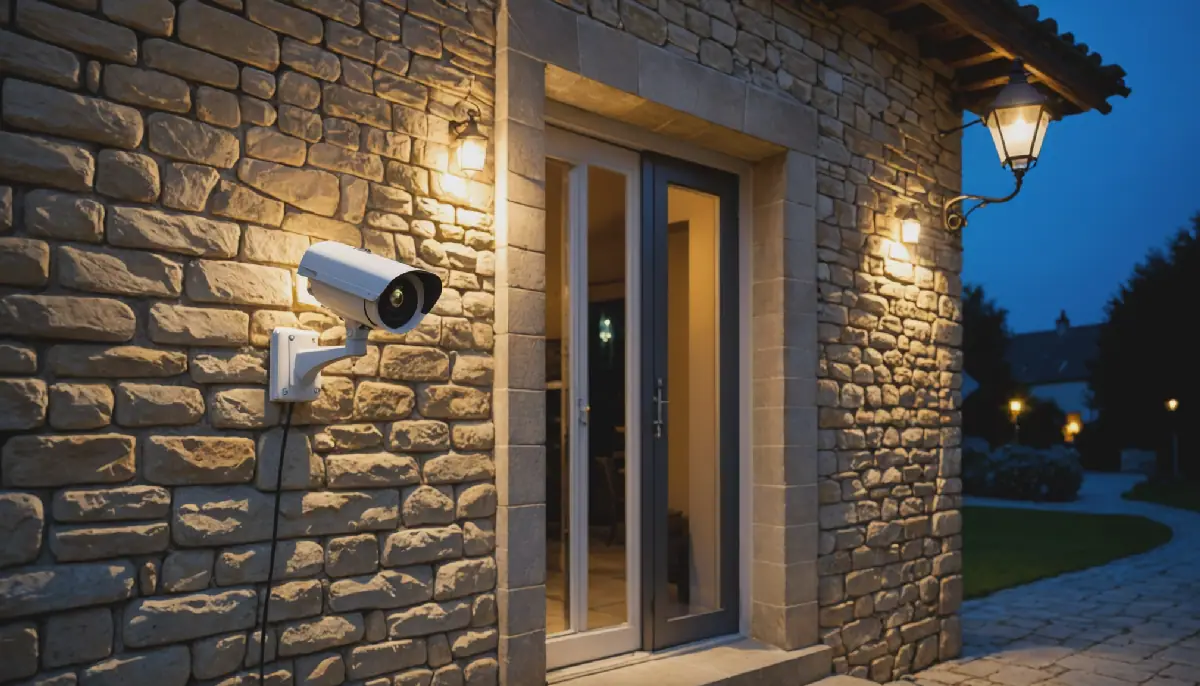
Color night vision technology in outdoor security cameras captures footage in color even in low-light conditions, providing more detailed information than traditional infrared recording, which often produces black and white images. This technology uses light-sensitive image sensors and available illumination to record color sequences. Some cameras rely on ambient light, while others activate built-in white projectors in low-light conditions.
The effectiveness of color night vision depends on lighting conditions, camera sensor capabilities, and camera settings. In complete darkness, additional illumination may be necessary to maintain color recording. When identifying people, vehicles, and other important details, color night vision can offer valuable visual information. For instance, the colors of clothing, vehicle paint, and objects carried by visitors may appear more identifiable than on monochrome infrared recordings.
Color night vision is particularly beneficial in areas such as entryways, driveways, and backyards where detecting nighttime activity is crucial. It can help distinguish between a visitor approaching the front door and a person moving near a parked car or in the garden. For larger outdoor areas, consider camera placement, viewing distance, and available lighting. A well-placed outdoor camera with sufficient low-light capabilities can provide more informative video.
In the event of a security incident, color night vision can preserve details such as clothing, vehicle colors, and visible objects, which are more difficult to distinguish on monochrome recordings. This information can make the footage easier to examine and describe when reporting an incident. For best results, prioritize clear resolution, accurate timestamps, and reliable recording.
When deciding if color night vision is necessary for an outdoor camera, evaluate the outdoor lighting and surveillance environment. Check the amount of light that reaches the areas to be monitored after sunset. Areas with sufficient lighting, such as porches with outdoor lights, may not require color night vision, while dark backyards or distant driveways may benefit from cameras with built-in projectors.
Color night vision should not be the only criterion for selecting a camera. Compare resolution, zoom capabilities, detection features, recording options, and viewing angles to determine if a camera meets specific needs. For example, the eufy SoloCam S340 offers 3K resolution and 8x zoom for detailed surveillance, but its color night vision capabilities depend on specific conditions.
Ultimately, the choice between color night vision, infrared, and dual-mode night vision depends on specific security needs. Color night vision is suitable for areas where color detail is important and sufficient lighting is available. Infrared night vision is suitable for areas where discreet surveillance is more important than color detail. Dual-mode cameras offer flexibility by switching between color and infrared based on lighting conditions or selected settings.
Key points
- Color night vision provides more informative footage in low-light conditions by preserving color details.
- The technology is particularly beneficial in areas such as entryways, driveways, and backyards.
- When selecting a camera, consider factors beyond color night vision, including resolution, zoom capabilities, and detection features.