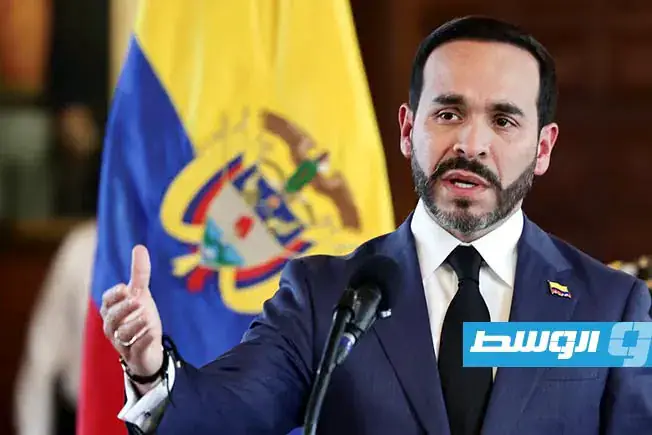
Colombian President Abelardo de la Espriella has accused dissident groups from the FARC movement of being responsible for a car bombing that targeted a government office in Villavicencio, a city in central Colombia. The bombing occurred on the eve of the 10th anniversary of the signing of a peace agreement between the Colombian government and the FARC movement. The attack resulted in the destruction of the local government office and several surrounding buildings.
According to President de la Espriella, the bombing was carried out by Antonio Medina, a dissident FARC leader known for his involvement in drug trafficking. Medina is part of a faction led by Ivan Mordisco, one of the country's most wanted individuals. The President made these statements during a visit to Meta province, where he vowed to pursue those responsible for the attack.
The bombing injured at least 25 people and caused significant damage to the government office and nearby buildings. The explosion also left a large crater and caused power outages in parts of the city center. The attack occurred just hours after a drone strike targeted a police station in the city of Cucuta, injuring three people, including an 18-month-old child.
President de la Espriella has been waging a strong campaign against drug trafficking, facing off against dissident FARC groups that have increased their attacks in recent years. These groups have been involved in a range of criminal activities, including bombings, kidnappings, and drug trafficking. The Colombian government has been working to dismantle these groups and bring their leaders to justice.
The bombing in Villavicencio is part of a larger trend of violence in Colombia, which has seen a surge in attacks by dissident FARC groups and other criminal organizations. The country has struggled with high levels of violence and crime, particularly in rural areas, where these groups often operate. The government has vowed to take a hard line against these groups and restore order.
The peace agreement between the Colombian government and the FARC movement was signed in 2016 and was seen as a major step towards ending decades of conflict. However, dissident groups have continued to operate, and violence has persisted in many parts of the country. Former President Juan Manuel Santos, who negotiated the peace agreement, has criticized the current government's handling of the peace process.
President de la Espriella has taken a tough stance on dissident FARC groups, vowing to bring them to justice or eliminate them. He has also criticized the peace agreement, calling it a "false peace." The government has increased military operations against these groups, and the conflict is likely to continue in the coming months.
Key points
- The Colombian government has accused dissident FARC groups of being responsible for a recent surge in violence, including the bombing in Villavicencio.
- The bombing occurred on the eve of the 10th anniversary of the signing of the peace agreement between the Colombian government and the FARC movement.
- The Colombian government has vowed to take a hard line against dissident FARC groups and restore order in the country.