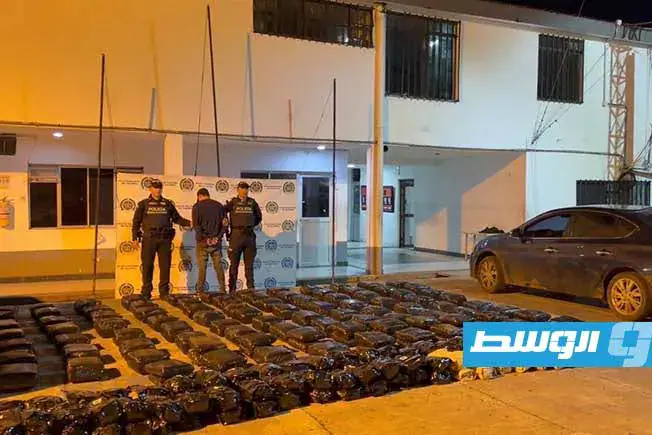
Colombian President Gustavo Petro announced on November 9 that authorities had seized a shipment of 358 kilograms of cocaine at the port of Cartagena, a major port on the Caribbean Sea. The cocaine was hidden inside electrical generators in a shipping container bound for Tripoli, Libya. According to Petro, the shipment originated in Panama and was scheduled to be transshipped at Cartagena before reaching its final destination.
The seizure was part of a broader operation that resulted in the confiscation of a total of 878 kilograms of narcotics, including 520 kilograms of marijuana bound for the Colombian city of Medellin. The operation was carried out under the "Esmeralda" security strategy, which aims to disrupt international narcotics trafficking. The Colombian authorities have not disclosed any information about the suspects involved in the shipment.
This is not the first time Libyan authorities have intercepted a large shipment of narcotics. In October, the Iraqi Interior Ministry announced that it had foiled an attempt to smuggle 1.2 million Captagon pills into Libya. The operation was carried out in coordination with Libyan authorities and resulted in the arrest of a Libyan suspect.
The seizure of the cocaine shipment bound for Tripoli highlights the growing concern about Libya's role as a transit point for international narcotics trafficking. According to a United Nations report released in January, Libya has become a key hub for the transit of industrial and other narcotics, either destined for local consumption or for onward shipment to other African countries.
This is not the first large-scale narcotics seizure linked to Libya in recent months. In May, Spanish authorities announced that they had seized a massive shipment of cocaine, estimated to be between 30,000 and 45,000 kilograms, on a ship traveling from Sierra Leone to Libya. The operation was described as one of the largest in Spanish history and one of the biggest globally.
The Colombian authorities' seizure of the 358 kilograms of cocaine is a significant blow to international narcotics traffickers. However, it also underscores the challenges faced by regional authorities in disrupting the flow of narcotics through Libya. The country's instability and porous borders make it an attractive route for traffickers.
The Libyan government has not issued a statement on the latest seizure, but it is clear that the country is a critical point in the international narcotics trade. The international community, including the European Union, has expressed concern about the situation and has taken steps to support regional efforts to combat narcotics trafficking.
Key points
- Libyan authorities have struggled to combat narcotics trafficking due to the country's instability and porous borders.
Reporting sources
- Wasat TV · Wasat TV