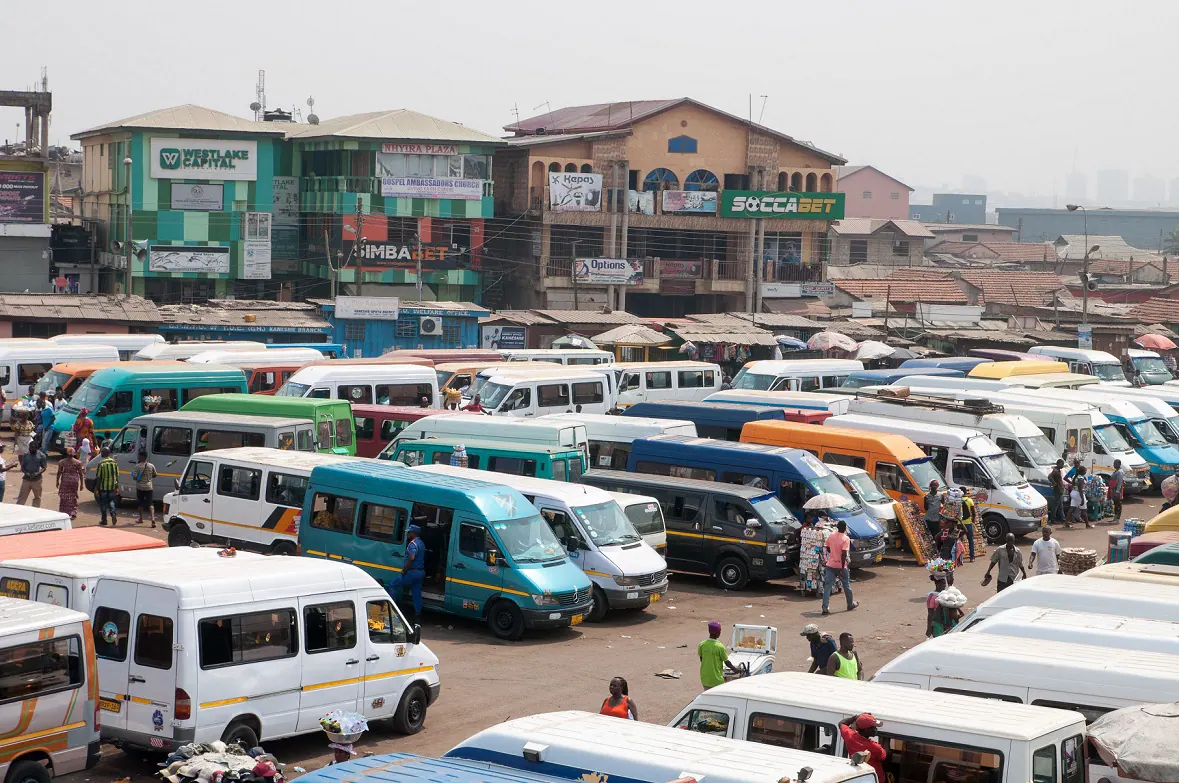
A shortage of coins in circulation is contributing to the rounding up of some public transport fares in Ghana following the implementation of an 8 percent increase. The Ghana Road Transport Coordinating Council (GRTCC) has acknowledged that the limited availability of coins has created difficulties for operators attempting to provide exact change under the revised fare structure. This has resulted in some fares being rounded to what operators regard as an appropriate average amount.
The GRTCC General Secretary, Emmanuel Ohene Yeboah, explained that where the application of the 8 percent adjustment produces an amount that requires coins, transport operators may encounter difficulty collecting or returning the precise balance because coins are not sufficiently available within the system. He stressed that transport providers are expected to comply with the officially approved fare schedule. The explanation follows complaints from passengers across some transport terminals that the new fares are occasionally being rounded upwards.
For example, a passenger whose previous fare was GH¢50 would arrive at GH¢54 after an exact 8 percent increase. However, some commuters have reported being charged GH¢55 instead, with the additional GH¢1 effectively arising from the difficulty of dealing with the smaller denomination required to collect the precise fare. The GRTCC has deployed monitoring officers to transport terminals to observe the implementation of the revised fares and identify situations where operators depart from the approved schedule.
The Council has also provided transport operators with a fare template containing the previous charges alongside the newly approved rates. The template is intended to serve as the principal reference for drivers, conductors and passengers as the revised charges take effect. The 8 percent adjustment became effective on Saturday, September 26, following negotiations between the transport unions and the Ministry of Transport.
The revised schedule covers shared taxis, intra city trotros and inter city services, with the new charges calculated from the approved fares that took effect in May 2025. Under the published schedule, an intra city fare of GH¢5 has been adjusted to GH¢5.50, while a GH¢10 journey has increased to GH¢11. At the higher end of the intra city structure, a fare of GH¢30 has moved to GH¢32.40, while GH¢34 has been adjusted to GH¢36.80.
Inter city fares have similarly been revised, with a journey previously costing GH¢25 increasing to GH¢27, while a GH¢100 fare has moved to GH¢108. The highest fare contained in the published schedule is GH¢324, compared with the previous charge of GH¢300. The GRTCC and the Ghana Private Road Transport Union have directed operators to display the approved fare schedules prominently at loading terminals and stations.
The unions have also warned that operators who collect fares above the approved rates could face sanctions. The fare adjustment followed consultations between the Ministry of Transport, the GRTCC and other transport stakeholders. The transport unions have also acknowledged government intervention on diesel prices, saying the measure helped moderate the extent of the eventual increase.
Key points
- The shortage of coins in Ghana is causing public transport fares to be rounded up following an 8 percent increase.
- The GRTCC has deployed monitoring officers to transport terminals to observe the implementation of the revised fares.
- The revised fare schedule covers shared taxis, intra city trotros and inter city services.