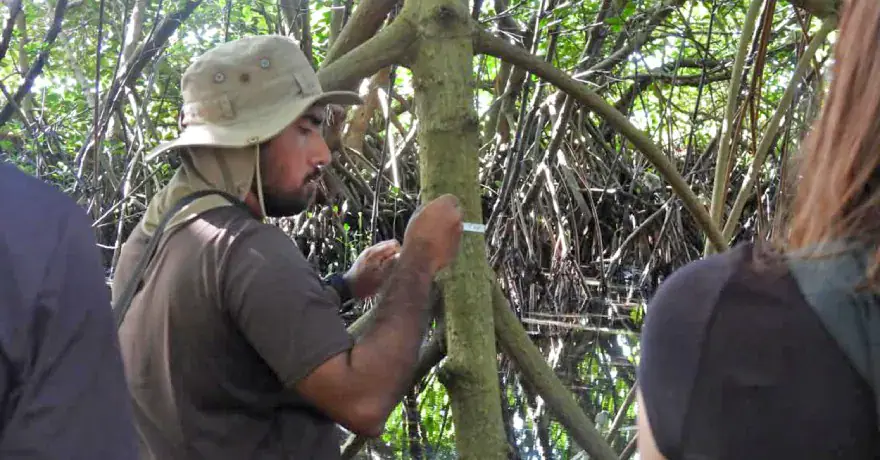
Mangroves in Grand-Port, Mauritius, are facing a significant threat from plastic pollution. These ecosystems, which serve as natural barriers against coastal erosion and provide habitats for numerous marine species, are being overwhelmed by plastic debris. The project "Clean • Restore • Recycle" by Eco-Sud aims to address this issue through a scientific approach that includes monitoring, characterization of marine waste, restoration, and recycling. The project also emphasizes community participation, involving residents, fishermen, and volunteers.
The project focuses on three sites in the region: Bois-des-Amourettes, Vieux-Grand-Port, and Rivière-des-Créoles. These locations were chosen for their exposure to pollution and their connection to local community activities, particularly fishing. By studying these areas, researchers can compare different situations and better understand the relationship between marine pollution and ecosystem health. Scientists use geolocated permanent plots to monitor the evolution of these ecosystems, tracking parameters such as tree diameter, species presence, and debris coverage.
Initial observations reveal a significant presence of plastic debris, including HDPE fragments, PET bottles, and nylon fishing lines. However, the exact sources of these pollutants have not yet been determined. Further analysis and discussions with site users, particularly fishermen, will help clarify the origins of this pollution. The project's goal is to understand the impact of plastic waste on mangroves and to take concrete action against pollution.
Mangroves play a vital role in maintaining coastal ecosystem balance. Their roots stabilize soil and limit erosion, while providing habitats and nurseries for many marine species. These ecosystems contribute to biodiversity conservation and support communities dependent on fishing. Additionally, mangroves act as a significant carbon reservoir, storing carbon in tree biomass and sediments, which aids in climate change mitigation and coastal resilience.
The conservation of mangroves is crucial for mitigating climate change and enhancing coastal resilience. According to Shakeel Jogee, coordinator of Eco-Sud's scientific team, removing debris is only part of the solution. Scientific monitoring will help identify areas where debris accumulates, assess its impact, and understand how mangroves regenerate under these conditions. This information will inform targeted cleanup and restoration efforts, as well as waste management and advocacy actions.
The project has received support from the International Union for Conservation of Nature (IUCN) through the IslandPlas initiative, which aims to address plastic pollution in island ecosystems. The goal extends beyond recycling to reducing plastic use at the source and promoting policy changes that contribute to pollution. Collective action is necessary, involving changes in consumer habits, reduced waste from fishing activities, and commitments from businesses and authorities.
Community participation is essential for the project's success and for ensuring that scientific findings translate into lasting change. By working together, residents, fishermen, and organizations can help protect mangroves and promote sustainable practices. The "Clean • Restore • Recycle" project serves as a model for addressing plastic pollution in coastal ecosystems, highlighting the importance of a comprehensive approach that combines scientific research, community engagement, and policy advocacy.
Key points
- The "Clean • Restore • Recycle" project aims to address plastic pollution in mangroves in Grand-Port, Mauritius, through a scientific approach and community participation.