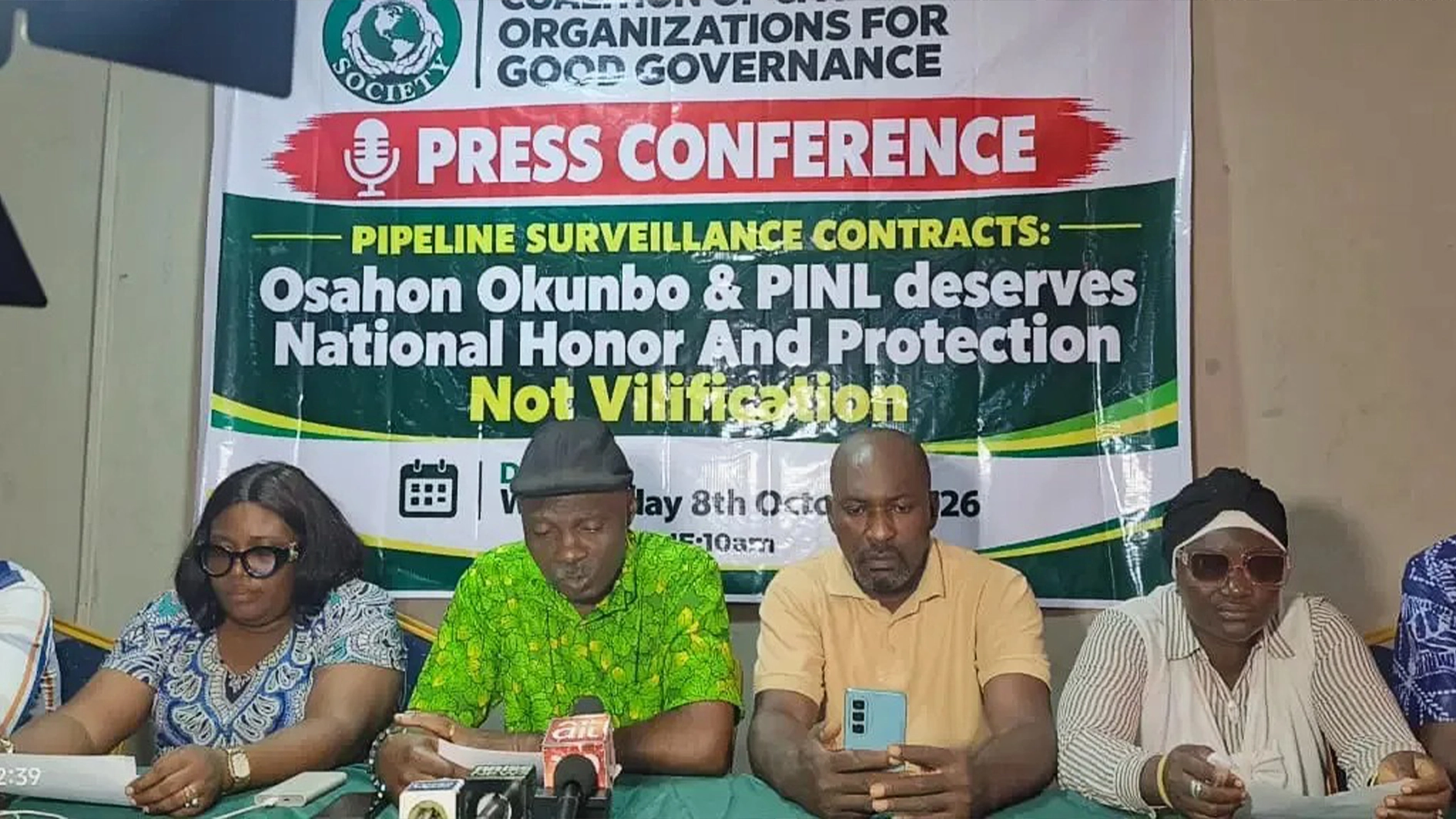
A coalition of civil society organisations, the Coalition of Civil Society Organisations for Good Governance (CCSOGG), has urged stakeholders to seek an evidence-based review of pipeline surveillance contracts in the Niger Delta. The coalition's call comes amid allegations of irregularities in the contracts awarded to companies such as Pipeline Infrastructure Nigeria Limited (PINL). CCSOGG's spokesman, Comrade Declan Ihekaire, emphasised the need for verifiable evidence in assessing the contracts.
The coalition defended PINL and its Project Director, Osahon Okunbo, against allegations concerning the value and performance of the company's pipeline surveillance contract. Ihekaire disputed reports linking PINL and Okunbo to a purported N2.7 trillion annual pipeline surveillance arrangement, saying no publicly available documentary evidence had been produced to substantiate the figure. Instead, the coalition stated that the actual value of the contract attributed to PINL was about N150 billion.
The coalition urged government agencies to publish relevant contract details, payment schedules, scope of work, and performance records whenever questions arise over public expenditure. Ihekaire said, "If the allegation is true, let the document be produced. If it is not true, those responsible for spreading it must have the courage and responsibility to correct the record." The group stressed that contract values should not be equated with personal income.
The coalition cited figures attributed to PINL, indicating a significant reduction in pipeline infractions and vandalism attempts compared with previous years. PINL reported no pipeline vandalism on sections of the Trans Niger Pipeline in Bayelsa and the wider corridor during a period under review, attributing the development to collaboration among the company, security agencies, and host communities. The group, however, said such claims should be independently assessed by relevant government authorities.
PINL's operations cover about 215 communities along the Eastern Corridor, and the company has reported engaging thousands of youths in surveillance and related activities. The coalition highlighted the reported involvement of traditional rulers, youth leaders, women, and other community stakeholders in pipeline surveillance activities. Community participation is crucial to protecting oil and gas infrastructure, particularly in areas characterised by difficult terrain and extensive waterways.
The coalition commended the reported deployment of technology in pipeline surveillance, including drones, surveillance stations, security vessels, mobile response units, and round-the-clock monitoring. The group urged the Federal Government to conduct independent assessments of all contractors before deciding whether existing arrangements should be retained, reviewed, or expanded. Any decision on pipeline surveillance contracts should be based on competence, measurable results, and value for money.
The coalition called for greater transparency from government institutions to reduce speculation surrounding pipeline surveillance contracts. The group urged the Federal Government and the Nigerian National Petroleum Company Limited (NNPCL) to provide sufficient information on pipeline surveillance arrangements to promote transparency and reduce misinformation. Contractors that meet established performance benchmarks should not be disadvantaged by unverified allegations.
Key points
- The coalition seeks an evidence-based review of pipeline surveillance contracts in the Niger Delta.
- The actual value of PINL's contract is about N150 billion, not N2.7 trillion.
- The coalition urges the Federal Government to conduct independent assessments of all contractors based on measurable performance.