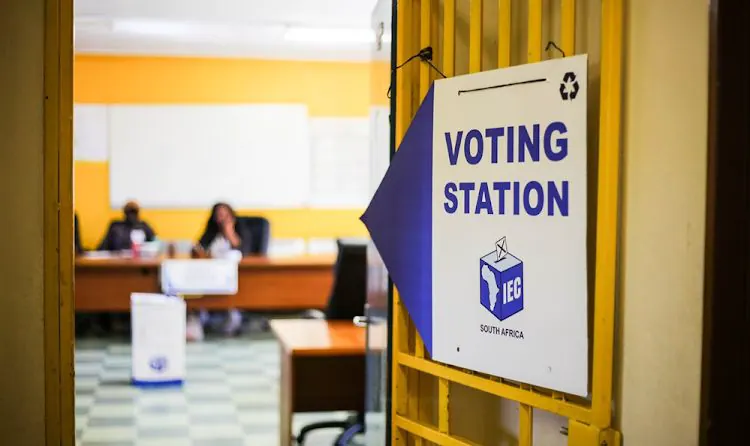
The state of South Africa's municipalities is a reflection of the overall stability and capability of the national government. Local authorities are responsible for service delivery, and their efficiency directly impacts the country's functionality. Professor Daniel Meyer noted that the 2026 local elections will determine whether municipalities begin a credible turnaround or continue their slide into dysfunction. The experience of government and service delivery is felt by citizens when they access basic services such as water, electricity, and refuse collection.
The instability of fragmented, multi-party coalition governance is a primary cause of the decline in municipalities, especially in metropolitan cities. While coalitions are intended to introduce checks and balances, they have triggered extreme instability in South Africa's fragile municipal structures. In several key metros, coalition governance has devolved into a chaotic game of political musical chairs, with small parties holding a small percent of the vote being elevated to kingmakers.
Many smaller, underperforming municipalities are entirely weak financially and depend almost completely on national grant bailouts. These broke councils frequently exist primarily to keep a political gravy chain moving, serving as channels for patronage, bloated salaries, and irregular tenders for local political elites rather than funding real asset management. The systemic consequences of continuous political horse-trading and fiscal weakness hit regional commerce hard.
The consequences of coalition instability include administrative disruption, a double burden on businesses, and the dilution of accountability. Every shift in a political alliance triggers a purge of senior leadership, destroying institutional memory and stalling capital infrastructure projects. Small businesses lose direct revenue due to localised utility dysfunction, forcing them to self-fund their own backup infrastructure.
The City of Cape Town is a primary example of what can be achieved when an administration is backed by an unambiguous, decisive mandate. Despite facing severe macroeconomic challenges, the city manages to maintain an impressive baseline of operational capability, delivering essential municipal services even to those residing in informal settlements.
Securing a stable, capable political leadership for the incoming term is not merely a local priority, it is a national necessity. Cape Town must remain a glimmer of hope for all struggling metros currently entangled in political and administrative chaos. It serves as live proof that a professionalised civil service can protect infrastructure, provided it is insulated from perpetual political warfare.
To arrest the slide towards a collapsing state, South Africa must radically confront the structural flaws of its local governance model. Parliament must urgently finalise the Municipal Structures Amendment Bill to introduce statutory thresholds that limit erratic motions of no confidence and stabilise councils. Electorates must look past historical party loyalties and recognize that local government is a function of operational logistics and business enablement, not ideological rhetoric.
Key points
- Coalition instability and weak finances are putting South Africa's municipalities under pressure ahead of the 2026 local government elections.
- The City of Cape Town is an example of what can be achieved with stable and capable leadership.
- South Africa must confront the structural flaws of its local governance model to prevent the collapse of its municipalities.