The Nigeria Labour Congress (NLC) has stated that the federal government's Compressed Natural Gas (CNG) intervention has not provided the expected transportation relief to Nigerian workers. Despite being introduced three years ago, the policy has failed to make a significant impact due to the limited number of CNG vehicles, inadequate refuelling infrastructure, and restricted coverage of subsidised mass transit. This has left workers grappling with high transportation costs, fuelling the rising cost of living.
NLC president, Comrade Joe Ajaero, questioned the effectiveness of the CNG policy, citing the limited availability of conversion facilities and the number of vehicles converted to gas-powered vehicles. He asked, "The CNG policy, did it work? Where and where can you refill your tank? How many vehicles have been converted to CNG?" Ajaero's concerns highlight the struggles faced by workers who spend a substantial portion of their income on commuting.
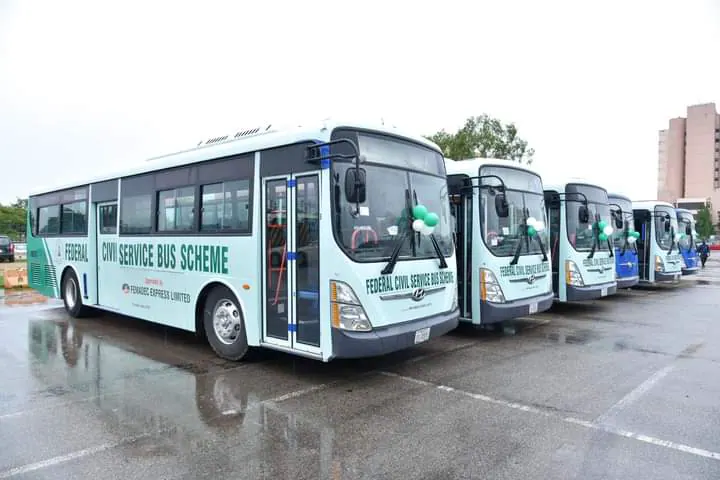
The CNG initiative was introduced as part of measures to cushion the impact of petrol subsidy removal. The programme aimed to provide cheaper transportation, encourage conversion of petrol-powered vehicles to CNG, expand mass transit, and reduce dependence on petrol. The government also announced plans to deploy CNG buses and conversion kits, with the objective of using Nigeria's abundant natural gas resources to reduce transportation costs.
NLC spokesperson, Comrade Benson Upah, stated that the intervention had remained too limited to produce the expected economic impact. He said, "In principle, they are expected to lower the cost of transportation and by extension, the cost of living. However, in reality, they are far too few and irregular to make an impact. In summary, the depth of intervention is marginal three years later." Upah's comments underscore the disappointment felt by workers who had hoped for relief.
The concerns raised by the NLC are significant, particularly as organised labour pushes transportation and the wider cost of living to the centre of discussions around workers' earnings. Increases in transport fares can substantially reduce the purchasing power of wages, affecting workers who spend a substantial portion of their income commuting. National secretary of the Joint National Public Service Negotiating Council (JNPSNC), Olowoyo Gbenga, emphasised that government mass-transit interventions have limited impact unless they are sufficiently expanded to serve workers across the country.
Gbenga questioned whether the buses being deployed could meet the transportation needs of workers, noting that the current efforts are insufficient. He said, "Where are the buses? The only one they are trying to roll out now is electric buses, which they are yet to roll out. They are at the planning stage. We cannot be only one CNG bus from Gwagwalada to the Central Area and you expect it to convey all workers from Gwagwalada to the Central Area." Gbenga's comments highlight the need for a more comprehensive approach to addressing transportation challenges.
The issue of transportation costs is closely tied to wage negotiations, with Gbenga arguing that reducing the cost of transportation is essential to improving workers' welfare. He noted that wage negotiations cannot be considered in isolation from the costs workers incur in getting to work. As the government continues to grapple with the challenges facing workers, it remains to be seen whether the CNG policy will be reviewed or expanded to provide more meaningful relief.
Key points
- The CNG policy has failed to provide widespread transportation relief to Nigerian workers due to limited infrastructure and coverage.
- The NLC has expressed disappointment with the policy's impact, citing limited availability of conversion facilities and CNG vehicles.
- The issue of transportation costs is closely tied to wage negotiations, with labour leaders arguing that reducing costs is essential to improving workers' welfare.