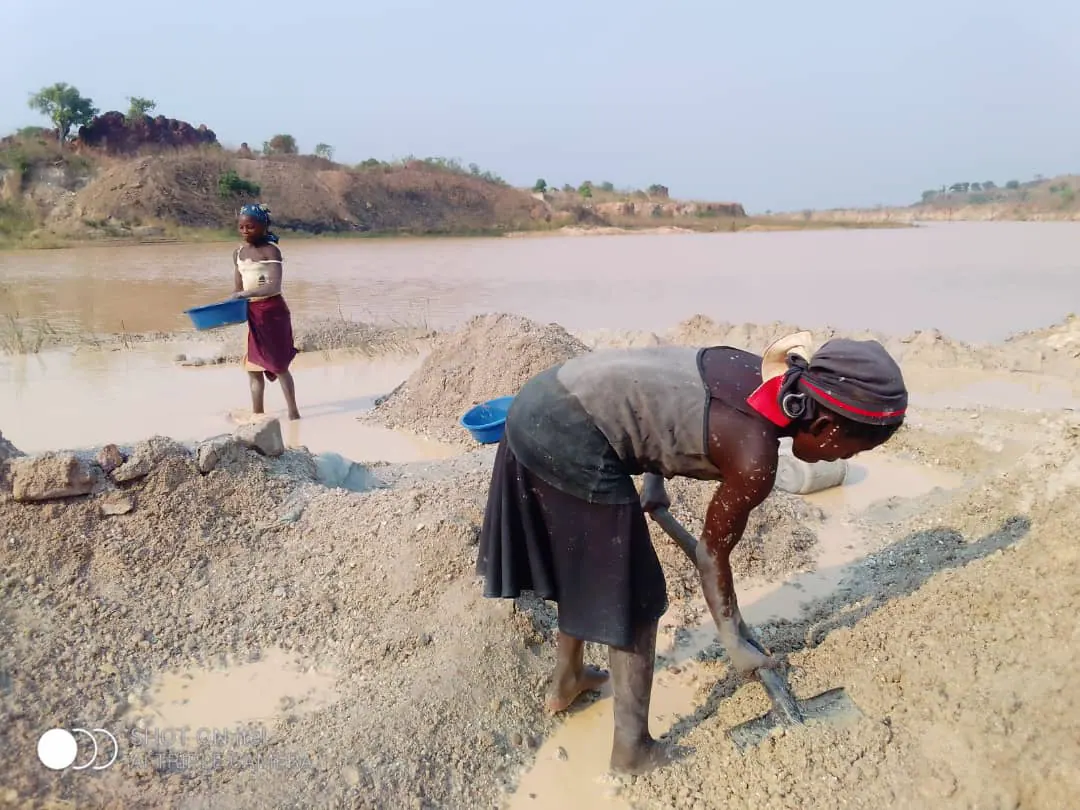
The Democratic Republic of Congo's National Human Rights Commission (CNDH) has raised concerns about the presence of children in artisanal mining areas. On September 28, CNDH President Paul Nsapu addressed the 63rd session of the Human Rights Council in Geneva, Switzerland. He emphasized that child labor in mines is a pressing issue that requires attention. The CNDH urges stronger actions against factors that contribute to child labor, including household poverty and limited access to education.
According to the CNDH, child labor in mines is not solely the responsibility of those on the mining sites. Paul Nsapu stressed that the entire mineral value chain, from extraction in the DRC to transformation and marketing in international markets, must be involved in the fight against child labor. This includes countries that import minerals and industries that use them. The CNDH highlights that child labor in mines is a violation of international norms, particularly the International Labor Organization's (ILO) Convention 182 on the worst forms of child labor.
The CNDH recalls that exposure to mining work can be hazardous for children. The institution advocates for responsible mining practices that respect human rights. To protect children, the CNDH recommends ensuring access to education and creating an environment that safeguards them against exploitation in artisanal and semi-industrial mining sectors. This approach aims to address the root causes of child labor and promote sustainable solutions.
The CNDH's concerns about child labor in DRC mines are not new. The issue persists despite efforts to address it. According to the CNDH, poverty, lack of education, and inadequate controls in some artisanal mines contribute to the problem. The institution's call for stronger actions emphasizes the need for a comprehensive approach to tackle child labor.
The ILO's Convention 182 sets international standards for eliminating the worst forms of child labor. The CNDH's reference to this convention underscores the need for the DRC and other countries to adhere to these standards. By doing so, governments can ensure that children are protected from hazardous work and that mining practices are responsible and sustainable.
Promoting responsible mining practices is crucial for protecting children's rights. The CNDH's recommendations emphasize the importance of a human rights-based approach to mining. This approach prioritizes the well-being and safety of local communities, including children, and seeks to prevent exploitation and harm.
The CNDH's intervention at the Human Rights Council highlights the need for international cooperation to address child labor in DRC mines. The institution's efforts aim to raise awareness about the issue and mobilize support for stronger actions against child labor. By working together, governments, civil society, and industries can help prevent child labor and promote responsible mining practices.
Key points
- The CNDH urges stronger actions against factors that contribute to child labor, including poverty, lack of education, and weak controls in artisanal mines.