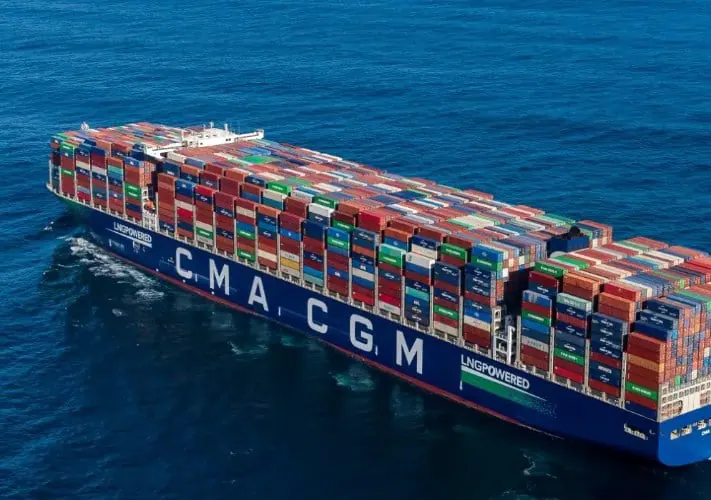
French company CMA CGM and Danish firm DSV have agreed to implement CMA CGM's low-carbon shipping solution, ACT+, to reduce carbon dioxide emissions. The partnership aims to cut CO2 emissions by 12,000 tons over two years. This collaboration reflects both companies' commitment to accelerating the transition to low-carbon supply chains. The ACT+ solution enables a reduction of up to 83% in CO2 emissions by utilizing low-carbon fuels.
The ACT+ solution uses low-carbon fuels, including second-generation biodiesel based on used cooking oils (UCOME) and biogas (BioLNG). DSV will use this solution to support its goal of reducing CO2 emissions. CMA CGM developed ACT+ as part of its efforts to achieve carbon neutrality by 2050. The solution is part of CMA CGM's broader strategy to reduce emissions through improved energy efficiency and the adoption of low-carbon energy sources.
The partnership between CMA CGM and DSV strengthens their long-standing relationship and supports DSV's goal of achieving net-zero emissions across its operations and value chain by 2050. This collaboration is part of a growing trend in the market, with an increasing number of leading companies choosing ACT+ as part of their carbon reduction strategies. CMA CGM is a leader in low-carbon shipping, having been the first shipping company to commit to using liquefied natural gas (LNG) for large container ships.
In 2017, CMA CGM's Chairman and CEO, Rodolphe Saadé, made a strategic decision to use LNG for large container ships. This led to the delivery of the CMA CGM Jacques Saadé in 2020, the world's first LNG-powered container ship with a capacity of 23,000 TEU. Since then, CMA CGM has continued to accelerate its transition, launching the ACT with CMA CGM+ initiative in 2020.
CMA CGM is set to introduce the CMA CGM NOTRE DAME into service in 2026, the largest container ship currently under the French flag, and the first of a series of ten new-generation ships that will run on LNG and have a capacity of 24,212 TEU. The company expects to operate around 200 ships with dual-fuel systems (LNG and methanol) and capable of using low-carbon energy sources by 2031.
Michael Holstien, Senior Vice President of Global Ocean Freight Services at DSV, emphasized that reducing emissions across global supply chains requires strong collaboration and scalable solutions. He noted that the partnership with CMA CGM and the use of ACT+ expands low-carbon shipping options for DSV's customers.
Amandine Pouligny, Vice President and Commercial Director at CMA CGM, highlighted that the partnership demonstrates how strong collaboration can drive the development of more resilient and sustainable logistics services, while delivering high-performance solutions for customers. The companies are working together to build a more sustainable future for the shipping industry.
Key points
- CMA CGM and DSV aim to reduce CO2 emissions by 12,000 tons over two years through the implementation of the ACT+ low-carbon shipping solution.