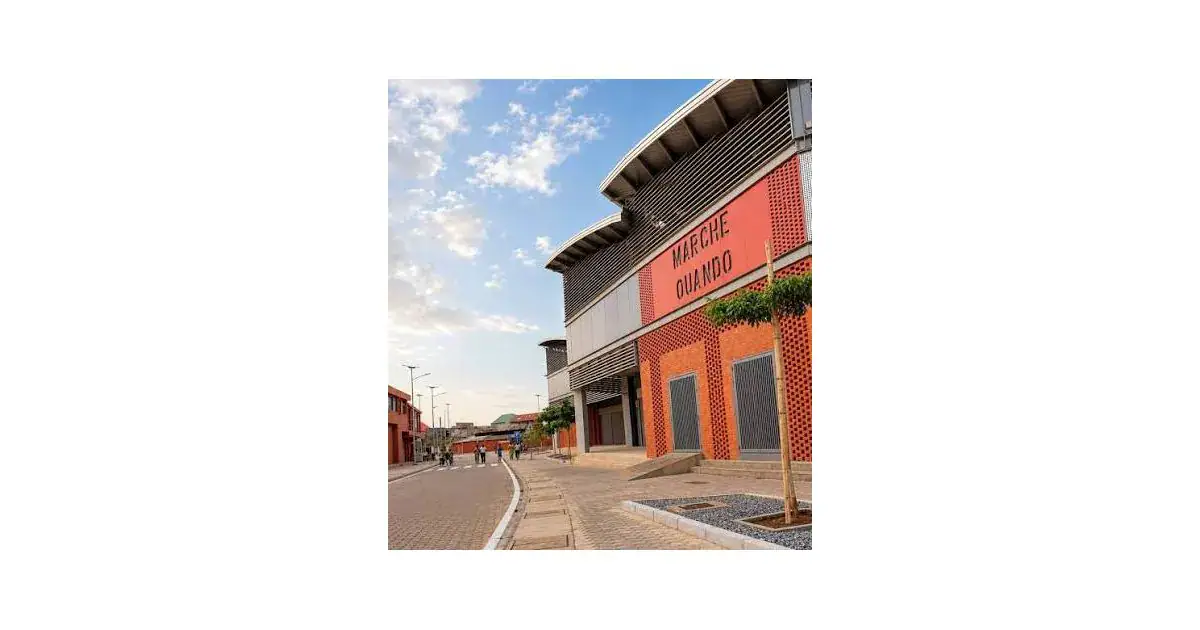
The closure of several shops near the new Ouando market in Porto-Novo, Benin, has sparked outrage and concern among female traders. The situation has resulted in restricted access to their sales points, losses of goods, debt, and uncertainty about their future. The women are demanding a solution that would allow them to resume their activities.
The affected traders claim that the new market's conditions are not suitable for their businesses, particularly for fruit wholesalers who require proper ventilation to preserve their products. They argue that they are being forced to relocate to the new market without available space. This has led to financial difficulties, with some traders relying on microfinance institutions and struggling to meet their obligations.
Tensions have escalated between the traders and law enforcement present at the scene, with reports of brutal interventions and losses of goods. In response, the traders and members of the Ouando market landowners' collective met on November 14 to discuss the situation and present their demands to the authorities.
The representative of the Ouando vendors, Wikayath Assani-Dagba, expressed frustration over the allocation of stalls in the new market, citing unfairness and favouritism towards those with financial influence. She questioned how long-time vendors with valid documentation and tax payments were being denied space while others with no market experience were being allocated stalls.
Paul Agbaossi, representative of the landowners' collective, advocated for the legitimate rights and economic interests of the local population to be considered in the measures implemented around the new market. The traders propose a transparent allocation process, prioritizing long-time occupants and establishing a committee to oversee the allocation of stalls.
The traders also demand an end to the sale of stalls by intermediaries, who they accuse of profiting from the situation. With poverty reduction and improved living conditions being government priorities, the Ouando traders believe their situation warrants special attention and hope for a prompt response from President Romuald Wadagni and other relevant authorities.
The situation remains tense, with the traders seeking a resolution that would enable them to regain their livelihoods and operate in suitable conditions. The government's response is awaited, as the traders continue to push for a fair and transparent solution to their plight.
Key points
- The closure of shops near the Ouando market has caused significant distress for female traders in Benin.
- The traders are demanding a transparent allocation process for stalls in the new market.
- The situation highlights the challenges faced by local vendors in Benin and the need for government intervention.