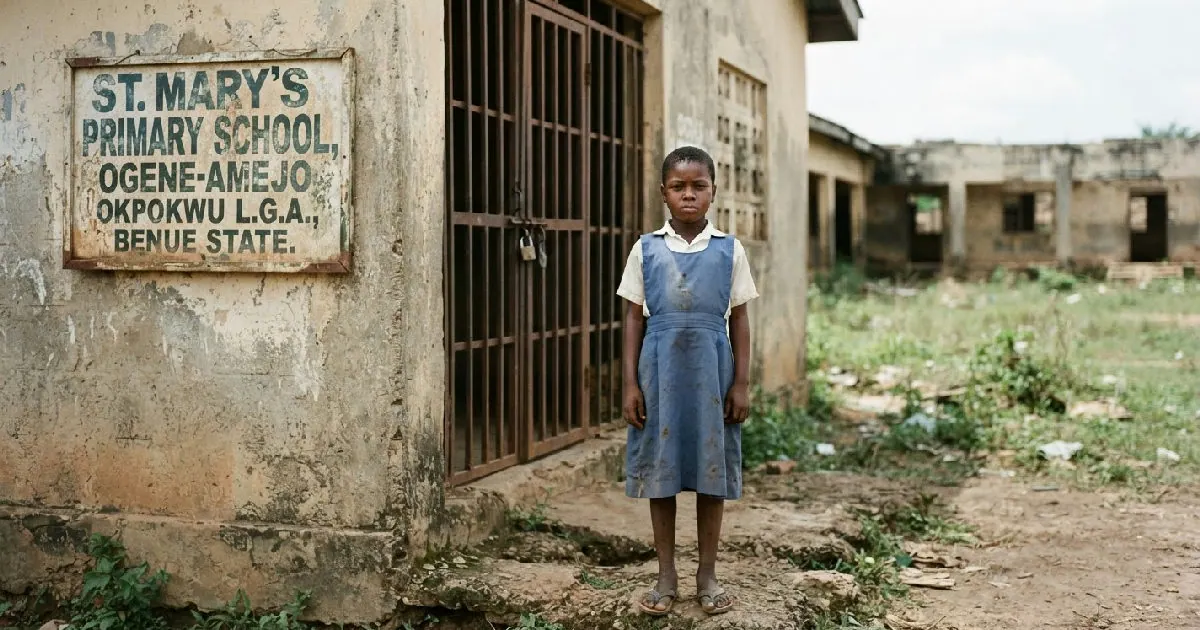
The Ogene-Amejo primary school in Okpokwu Local Government Area of Benue State was forced to close due to the government's failure to pay teachers' salaries from 2011. This closure had a ripple effect, leading to the tragic death of Ochanya Elizabeth Ogbanje in 2018. Her parents, Michael and Rose Abah-Ogbanje, were farmers who valued education as a means to escape rural poverty. The school's closure left them with a difficult decision: either leave their child without education or send her to another community with a functional school.
Rose Abah-Ogbanje decided to send Ochanya to live with her sister, Felicia Ochiga-Ogbuja, in Ugbokolo, so the girl could attend the Emmanuel Primary and Secondary School. At around seven or eight years old, Ochanya moved to a new home, away from her parents' protection. Although the move was made with the intention of providing Ochanya with a better education, it ultimately placed her in a vulnerable situation. The child's new living arrangement made her dependent on a household that would later become the site of her suffering and death.
The prosecution's case alleged that Ochanya suffered abuse at the hands of Andrew Ogbuja and his son Victor Ogbuja, shortly after she arrived at their home. The abuse continued for years, leading to severe medical complications, including Vesicovaginal fistula (VVF). In 2018, Ochanya was admitted to the Federal Medical Centre in Makurdi, where she died on October 17, at the age of 13, after spending two months in the hospital. Her death shocked the nation and sparked campaigns demanding accountability and reforms for child protection in Nigeria.
The closure of the Ogene-Amejo school did not directly cause the crime, but it changed the circumstances of Ochanya's childhood, forcing her parents to seek alternative solutions. The government's failure to pay teachers' salaries created a situation where a family was forced to make a difficult decision, ultimately leading to Ochanya's tragic death. This incident highlights the importance of a functioning education system in protecting vulnerable children.
In November 2018, then-Benue State Governor Samuel Ortom announced plans to renovate the Ogene-Amejo school and name it in Ochanya's memory. Although the school building was renovated and upgraded, journalists found that the deeper problem of teacher shortages persisted. The junior secondary section reportedly failed to commence operations due to a lack of staff. This situation underscores the challenges of rebuilding a functioning educational ecosystem.
The legal consequences that followed Ochanya's death highlighted the institutional fragility witnessed in the education system. The Benue State High Court acquitted Andrew Ogbuja of charges related to rape and causing Ochanya's death in April 2022. The court cited conflicting autopsy evidence and flaws in the investigation. The acquittal was condemned by journalist Kiki Mordi, who argued it exposed a wider failure within Nigeria's justice system to protect and prosecute on behalf of victims of abuse.
Ochanya's story serves as a stark illustration of how systemic decay creates extreme personal vulnerability. The incident emphasizes the need for the government to prioritize education and child protection. The case also highlights the importance of addressing the root causes of such tragedies, including teacher shortages and inadequate educational infrastructure. Ultimately, Ochanya's death led to increased calls for reforms and accountability in Nigeria's education and justice systems.
Key points
- The closure of the Ogene-Amejo primary school due to non-payment of teachers' salaries contributed to Ochanya Ogbanje's tragic death.
- Ochanya's death led to increased calls for reforms and accountability in Nigeria's education and justice systems.
- The government's failure to address teacher shortages and inadequate educational infrastructure continues to pose a challenge in rural areas.