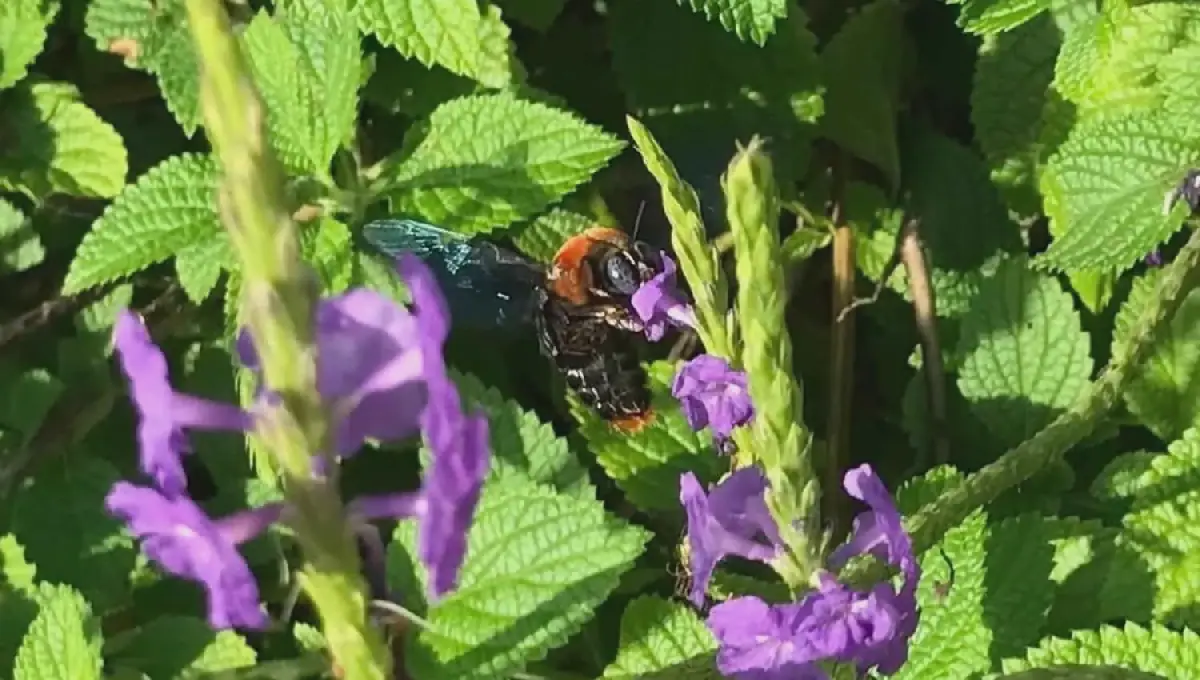
A recent study published in Nature Ecology & Evolution has challenged the long-held expectation that specialised relationships between plants and pollinators become more common towards the tropics. Instead, researchers found that climate, particularly temperature and rainfall, plays a significant role in shaping global pollination patterns. The study, which is the largest global analysis of plant-pollinator interactions to date, was contributed to by Professor Michael Lattorff, an expert in bee health and pollination ecology from the University of KwaZulu-Natal.
The research brought together 3 415 plant-pollinator networks from 162 studies, including more than 110 000 interactions involving 5 343 pollinator species and 6 126 plant species across major terrestrial biomes. The combined dataset covered a wide range of ecosystems, from tropical forests and savannas to temperate grasslands and subarctic tundra. This extensive dataset allowed researchers to identify patterns and relationships that would not have been possible with smaller, more localized studies.
Pollination is essential to plant reproduction, genetic diversity, and the production of fruits and seeds. It also supports food production, with many fruit, vegetable, nut, and oil crops relying on animals to transfer pollen between flowers. While bees are among the best-known pollinators, other insects such as flies, beetles, butterflies, moths, wasps, and even non-insects like birds and lizards also play a crucial role in pollination.
The study found that specialised plant-pollinator relationships were not more common in tropical regions, as traditionally expected. Instead, temperature and rainfall were better indicators of global patterns in specialisation, with different effects across pollinator groups. This suggests that climate change could have significant impacts on plant-pollinator interactions, potentially disrupting the timing and location of these interactions.
Rising temperatures and changing rainfall patterns can affect where species live, when plants flower, and when pollinators are active. This could have significant implications for the reproduction and survival of both plants and pollinators. The study's findings highlight the need for further research into the impacts of climate change on plant-pollinator interactions, particularly in under-studied regions like Southern Africa.
Professor Lattorff noted that Southern Africa remains critically understudied in terms of pollination networks, making it difficult to predict how the region's plant and pollinator communities will respond to climate change. He emphasized the need for expanded Southern African network data to reliably predict regional responses to climate change. Lattorff's research focuses on bee health, pollination ecology, and pollinator conservation, including diseases and parasites, plant-bee interactions, and the effects of climate and agricultural practices on bees.
The study's lead author, Dr Sailee Sakhalkar, highlighted the importance of international collaboration in achieving the study's findings. By combining the work of researchers from across the world, the study was able to provide a comprehensive global picture of plant-pollinator interactions. The study's findings have significant implications for conservation efforts and for understanding the impacts of climate change on ecosystems.
Key points
- Climate, particularly temperature and rainfall, plays a significant role in shaping global pollination patterns.
- Specialised plant-pollinator relationships are not more common in tropical regions, contrary to traditional expectations.
- Southern Africa remains critically understudied in terms of pollination networks, highlighting the need for further research.