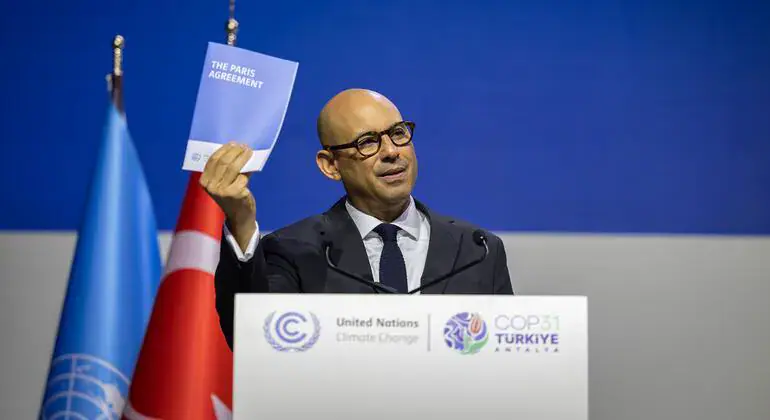
The 31st Conference of the Parties (COP31) began on November 9, 2026, in Antalya, Turkey, with growing concerns about climate financing for adaptation. Small island nations like Mauritius face a significant gap between available resources and announced needs. The United Nations Environment Programme (UNEP) reported that public international financing for adaptation in developing countries reached $28.2-31.7 billion in 2024. This falls short of the estimated annual needs of $305 billion by 2035.
The UNEP's Adaptation Gap Report 2026 highlights the disparity between current financing and required levels. Even if international public financing triples by 2035, it would only cover 20-29% of estimated needs. This financing gap poses significant challenges for vulnerable countries. Mauritius, as a small island nation, is particularly exposed to climate-related impacts such as coastal erosion, flooding, and water resource pressures.
Climate change has severe implications for Mauritius and similar nations. Rising sea levels and extreme weather events threaten coastal ecosystems, infrastructure, and economic stability. To mitigate these effects, adaptation investments are crucial. These investments can focus on coastal protection, water networks, and public infrastructure. However, accessing international financing is often complicated by stringent conditions, procedures, and administrative requirements.
The UNEP report emphasizes the urgent need for increased climate financing. Current flows are insufficient to address the scale of the problem. The report suggests that a significant increase in financing is necessary to support vulnerable countries in their adaptation efforts. This requires not only new targets but also making financial resources more accessible to those who need them most.
COP31 aims to address the climate financing gap. Delegates will discuss ways to mobilize additional resources and improve access to existing funds. The conference also seeks to enhance the effectiveness of climate finance in supporting adaptation and resilience-building efforts. A key challenge is ensuring that financing mechanisms are inclusive, transparent, and responsive to the needs of vulnerable countries.
The outcome of COP31 will have significant implications for countries like Mauritius. The conference must deliver concrete commitments and actions to address the climate financing gap. This includes increasing the availability of climate finance, improving its accessibility, and ensuring that it is effectively utilized to support adaptation and resilience-building efforts.
The COP31 conference is a critical opportunity for countries to come together and address the pressing issue of climate financing. The success of the conference will depend on the willingness of countries to make bold commitments and take concrete actions to support vulnerable nations in their efforts to adapt to the impacts of climate change.
Key points
- The UNEP estimates that the annual adaptation needs of developing countries will reach $305 billion by 2035.
- Current international public financing for adaptation is significantly short of required levels, covering only 20-29% of estimated needs even if it triples by 2035.
- Small island nations like Mauritius are particularly vulnerable to climate-related impacts and require increased climate financing to support adaptation efforts.