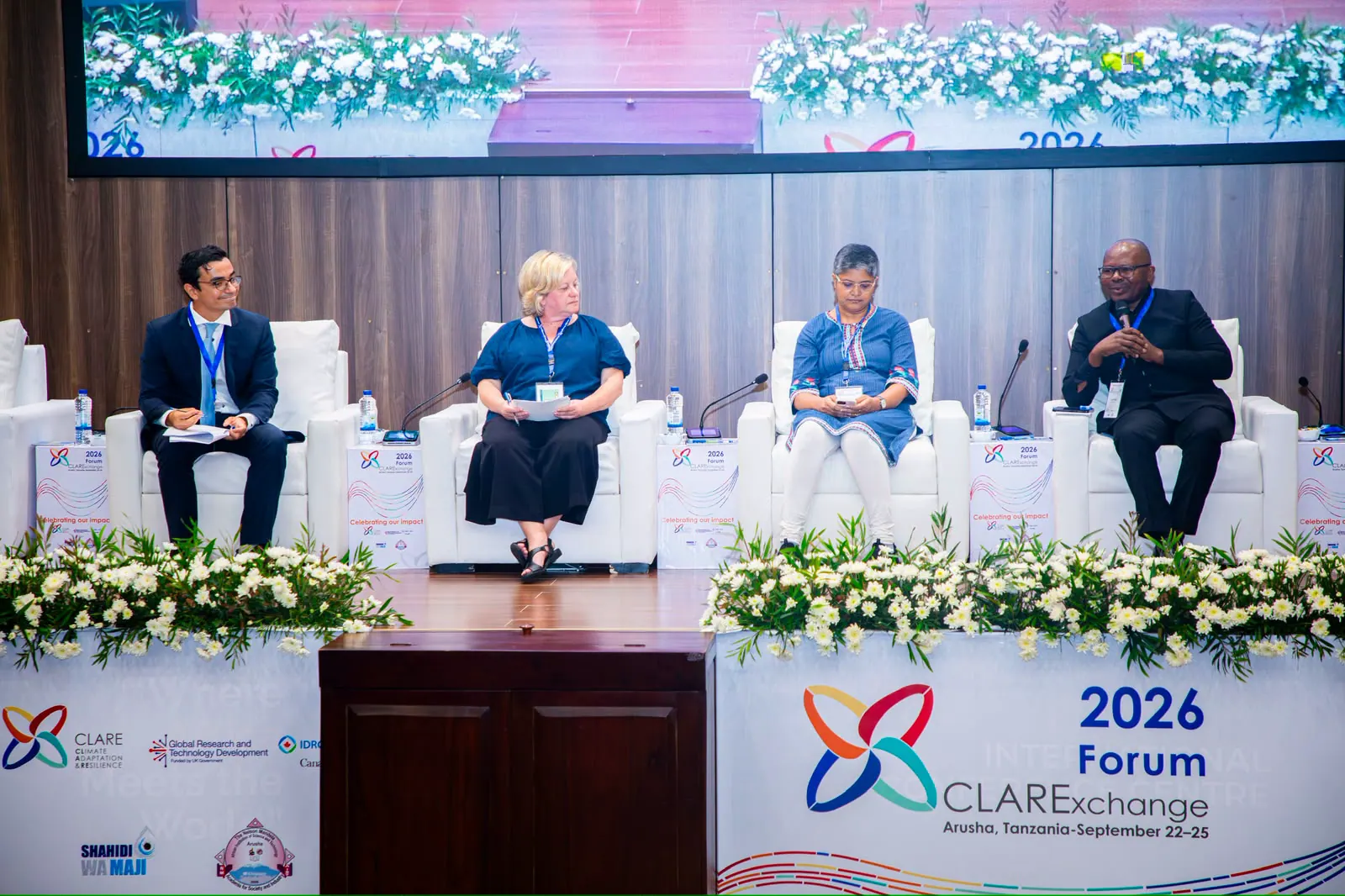
Climate experts have urged Tanzania and other countries in Africa and the Asia-Pacific to prioritize climate preparedness over disaster response. According to Abel Dugange, Executive Director of Shahidi wa Maji, a Non-Governmental Organisation, and Collins Otoo, Economic Affairs Officer for Economic Climate Investment at the United Nations Economic Commission for Africa (UNECA), early action is crucial to enable communities to withstand climate-related impacts. The call was made during a four-day Climate Adaptation and Resilience (CLARE) programme forum in Arusha.
The CLARE programme aims to strengthen climate resilience across Africa and the Asia-Pacific by linking scientific research with government policy, local knowledge, and practical community solutions. Mr. Otoo stated that the programme covers partnerships across 52 countries, with 35 projects implemented under seven thematic areas addressing challenges including water security, flooding, drought, cyclones, and erosion. This comprehensive approach seeks to promote co-ownership and ensure research findings inform decisions.
Mr. Dugange emphasized that climate change is already affecting communities and key sectors, making it necessary to establish systems that allow people to prepare in advance rather than wait for disasters before acting. He highlighted the need to translate research findings into practical measures that can be incorporated into government plans and programmes. This includes taking good practices from other countries, assessing their suitability for Tanzania, and using them.
The Tanzania Meteorological Authority (TMA) plays a crucial role in providing scientific forecasts, while local government officers should translate this information into practical advice for farmers, livestock keepers, and other communities. Mr. Dugange noted that some citizens do not attach sufficient importance to weather information, partly because previous forecasts were perceived to have differed from subsequent events. Therefore, it is essential to change people's perceptions and behaviors as part of climate adaptation efforts.
The CLARE research identified a tendency within some local government systems to emphasize response rather than preparedness. Mr. Dugange stressed that preparedness means establishing strong systems and infrastructure before a disaster occurs, rather than waiting for an emergency and then organizing recovery efforts. He warned that some climate-related impacts, particularly loss of life, cannot be reversed once they occur.
The CLARE programme has made significant progress, reaching approximately 21,000 people in skills strengthening activities and strengthening data systems to support evidence-based policymaking. Mr. Otoo mentioned that engagement with farmers and communities, alongside technologies such as drones, is helping improve data collection, early warning systems, and understanding of climate risks. The ultimate objective is to strengthen preparedness so communities can receive early warnings and take appropriate action.
The CLARE Programme, which invited over 100 global south researchers to attend the CLARExchange event in Arusha, is primarily funded by UK Aid through the Foreign Commonwealth & Development Office (FCDO), with co-funding from Canada's International Development Research Centre. The programme is a collaborative effort between Shahidi wa Maji NGO and the Nelson Mandela African Institution of Science and Technology (NM-AIST).
Key points
- Climate experts urge Tanzania to prioritize climate preparedness over disaster response.
- The CLARE programme aims to strengthen climate resilience across Africa and the Asia-Pacific.
- The programme has reached approximately 21,000 people in skills strengthening activities.