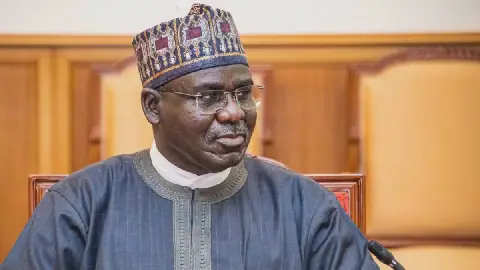
The Parliament of the Economic Community of West African States (ECOWAS Parliament) is facing criticism for its limited legislative powers, with Nigerian lawmakers Senator Ali Ndume and Awaji N. Abiante calling for stronger authority to address regional challenges. The lawmakers made the call during the 2026 Second Extraordinary Session and Seminar of the ECOWAS Parliament in Accra, Ghana. They argued that the Parliament's predominantly advisory role limits its ability to ensure accountability and compel implementation of recommendations on critical regional issues.
The ECOWAS Parliament's existing legal framework gives it responsibilities in regional integration, peace, security, and Community legislation. However, its 2016 Supplementary Act provides for parliamentary opinions and mandatory assent in specified areas, but the distinction between parliamentary functions and full legislative authority remains significant. Ndume questioned the practical impact of an institution whose recommendations ultimately depend on decisions by other ECOWAS organs.
Climate change, migration, and security challenges across West Africa have exposed the limitations of the ECOWAS Parliament. The lawmakers linked the movement of pastoral communities from environmentally stressed areas to rising farmer-herder tensions, particularly in Nigeria. Ndume attributed part of the problem to inadequate government engagement with communities and herders, as well as the failure to establish and enforce effective frameworks for livestock movement and land use.
The week-long seminar focused on the relationship between climate-related pressures, population displacement, food security, and security challenges across the region. Participants examined how environmental degradation and changing climatic conditions contribute to population movements and the consequences of cross-border migration for communities and governments. The lawmakers called for clearer legal frameworks governing livestock movement, land use, and resource management across the region.
Ndume and Abiante argued that the legal framework establishing the Parliament should be amended to give it greater legislative authority, particularly as the region grapples with climate change, population displacement, food insecurity, migration, and growing insecurity. They emphasized that strengthening the Parliament would make regional lawmakers more directly accountable for the issues they debate and the decisions they advocate.
The ECOWAS Parliament has explained that its resolutions can be transmitted to the Council of Ministers, which may recommend them to the Authority of Heads of State and Government for adoption as Community legal texts. However, this institutional process has raised concerns among the lawmakers, who argued that responsibility and accountability should go hand in hand. Ndume stated that until the Parliament is given more responsibilities, it cannot be held accountable for its actions.
The lawmakers' call for stronger legislative powers for the ECOWAS Parliament highlights the need for regional institutions with sufficient authority to translate policy discussions and recommendations into coordinated action. The Parliament's limitations have significant implications for addressing regional challenges, including climate change, migration, and security concerns. The ECOWAS Parliament's powers are expected to evolve from an advisory role towards co-decision and law-making powers in areas defined by the regional Authority.
Key points
- Nigerian lawmakers call for stronger legislative powers for ECOWAS Parliament
- ECOWAS Parliament's advisory role limits its ability to ensure accountability
- Climate change, migration, and security challenges expose ECOWAS Parliament's limitations