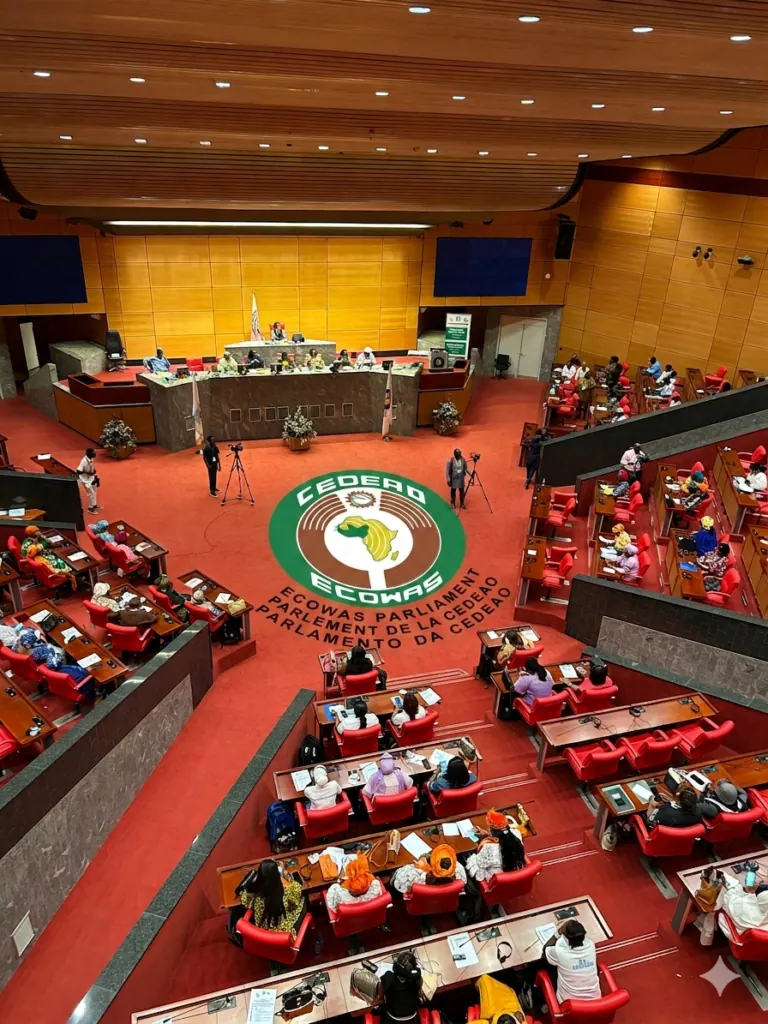
The Economic Community of West African States (ECOWAS) has issued a warning that 32 million people in the region may be displaced from their communities by 2050 due to the ravaging effects of climate change. This alarming projection was made by the President of the ECOWAS Commission, Gen. Birame Diop, at the Second 2026 Parliamentary Seminar of the ECOWAS Parliament in Accra, Ghana. The seminar's theme, "Climate Change as A Driver of Environmental Degradation, Population Displacement and Rising Insecurity," highlights the urgent need for regional cooperation to address this pressing issue.
According to Gen. Diop, the combined effects of climate change, environmental degradation, and insecurity could lead to a significant increase in Internally Displaced People (IDPs) in the sub-region. Citing World Bank projections, he stated that women and children account for about 80 percent of the projected 32 million displaced people. This disturbing trend underscores the need for a comprehensive regional approach to climate resilience and human security. ECOWAS member states are urged to adopt a coordinated strategy to address the root causes of displacement and provide support to affected communities.
Climate financing has been identified as a major challenge confronting West Africa in its efforts to tackle the climate crisis. Gen. Diop revealed that the region requires approximately $294 billion to effectively address the issue. To mobilize investment for climate action, ECOWAS has been working towards establishing a regional carbon market platform under Article 6 of the Paris Agreement since 2024. This initiative aims to promote sustainable development and reduce greenhouse gas emissions in the region.
The impact of climate change on West Africa is already being felt, with devastating consequences. In 2024 alone, about two million West Africans were displaced by climate-related natural disasters, while over seven million people were affected by flooding, resulting in the destruction of critical infrastructure. The situation worsened between 2025 and 2026, with over 12 million people displaced internally across West and Central Africa due to the combined effects of climate change, insecurity, and other vulnerabilities.
Gen. Diop emphasized that climate change is not solely an environmental issue but also a development, humanitarian, peace, and security issue that affects human survival and regional stability. He appealed to member states to prioritize women and youths in their climate-resilience efforts, recognizing their crucial role as innovators, entrepreneurs, community leaders, and agents of resilience. The ECOWAS Commission president also urged regional parliamentarians to strengthen climate-responsive legislation and oversight.
To address the climate crisis, Gen. Diop called on regional parliamentarians to prioritize climate financing, improve early-warning and early-action systems, and promote sustainable management of land, water, forests, and fisheries. He stressed the need for proactive measures to invest in resilience before crises occur, protect ecosystems, create livelihoods, and address grievances before they escalate into conflict. By working together, West African countries can mitigate the effects of climate change and build a more sustainable future.
The ECOWAS Parliament's seminar aims to enable regional parliamentarians, experts, and stakeholders to interrogate the link between climate change, population displacement, and rising insecurity in West Africa. By fostering dialogue and cooperation, the region can develop effective strategies to address the climate crisis and promote sustainable development. The seminar's outcome is expected to inform policy decisions and guide the region's response to the climate crisis.
Key points
- ECOWAS warns 32 million West Africans may be displaced by 2050 due to climate change.
- The region requires approximately $294 billion to tackle the climate crisis.
- Climate change affects human survival and regional stability, requiring a comprehensive regional approach.