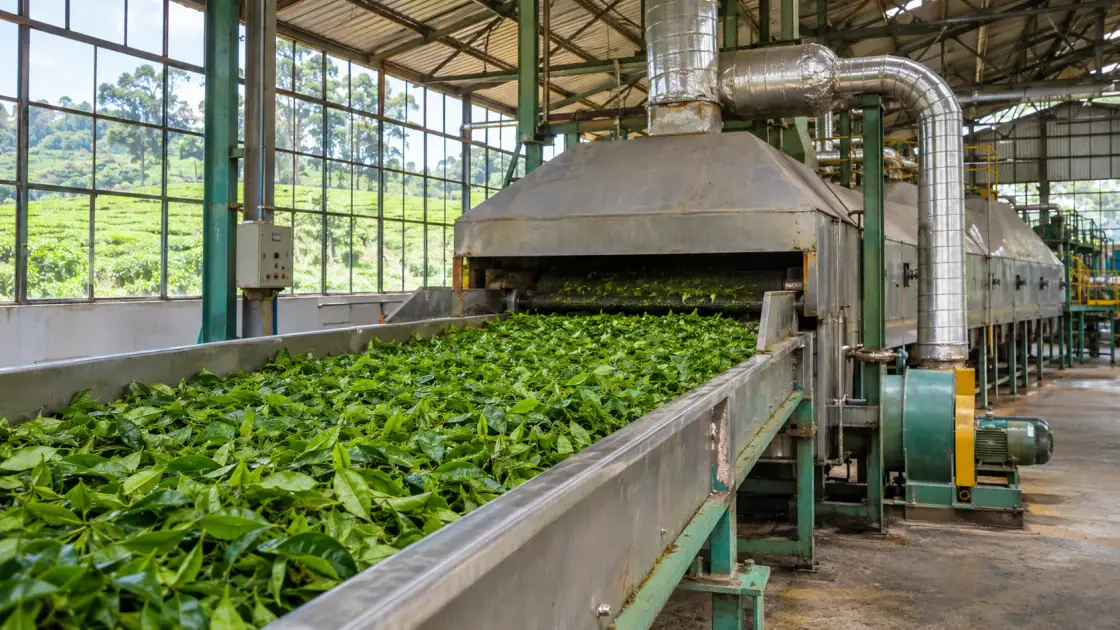
As the world turns its attention to food security and zero waste at COP31, Kenya's tea industry is providing valuable insights into the importance of considering food processing in climate action initiatives. The country's tea sector is a significant contributor to greenhouse gas emissions, largely due to the energy-intensive process of drying tea leaves. Currently, many tea factories in Kenya rely on firewood to produce heat, which puts pressure on the country's forests and increases production costs.
A recent study by the Kenya's Energy and Petroleum Regulatory Authority (EPRA) found that the tea sector used an average of 3.83 cubic metres of firewood for every tonne of tea produced. Over two years, the sector consumed approximately 1.54 million cubic metres of wood, mostly sourced from forests. This has significant implications for the country's biodiversity and water sources, as forests shrink when trees are cut down faster than they can regrow.
Research published in PLOS Climate also examined energy use in Kenyan tea factories over five years, identifying firewood as a major source of greenhouse gas emissions. The study highlighted drying as one of the most energy-intensive stages of tea processing. The findings emphasize that greenhouse gas emissions do not begin and end on farms, but rather follow the food as it moves through processing, preserving, packaging, and transporting.
To address this issue, some stakeholders are exploring alternative sources of fuel for tea factories. One project, led by production manager Joyline Cheptoo, is investigating the use of briquettes as a fuel source. Briquettes are made from agricultural waste collected from nearby farms and could offer a more environmentally responsible option for tea factories. This initiative aims to reduce dependence on conventional firewood while promoting waste management and a circular economy.
However, systemic change is needed to address the scale of the problem. Climate negotiators, African governments, development partners, and financial institutions must work together to recognize food processing as a critical part of climate action. This includes financing energy audits and cleaner processing technologies, supporting research into locally appropriate fuels, and strengthening emissions monitoring.
The tea industry is a significant sector in Kenya, and its environmental impact has far-reaching consequences. By adopting more sustainable practices, the industry can help reduce greenhouse gas emissions and promote environmentally responsible food systems. This requires a collaborative effort from all stakeholders, including farmers, factory owners, and policymakers.
Ultimately, the future of sustainable food systems will depend on the decisions made inside factories, around boilers, and in the technologies chosen to power production. As consumers, we also have a role to play in promoting sustainable food systems by making informed choices about the products we buy and the companies we support. By working together, we can create a more sustainable future for food production and processing.
Key points
- The tea industry in Kenya is a significant contributor to greenhouse gas emissions due to its reliance on firewood for drying tea leaves.
- Alternative sources of fuel, such as briquettes made from agricultural waste, are being explored to reduce the industry's environmental impact.
- Systemic change is needed to address the scale of the problem, requiring collaboration from climate negotiators, governments, development partners, and financial institutions.