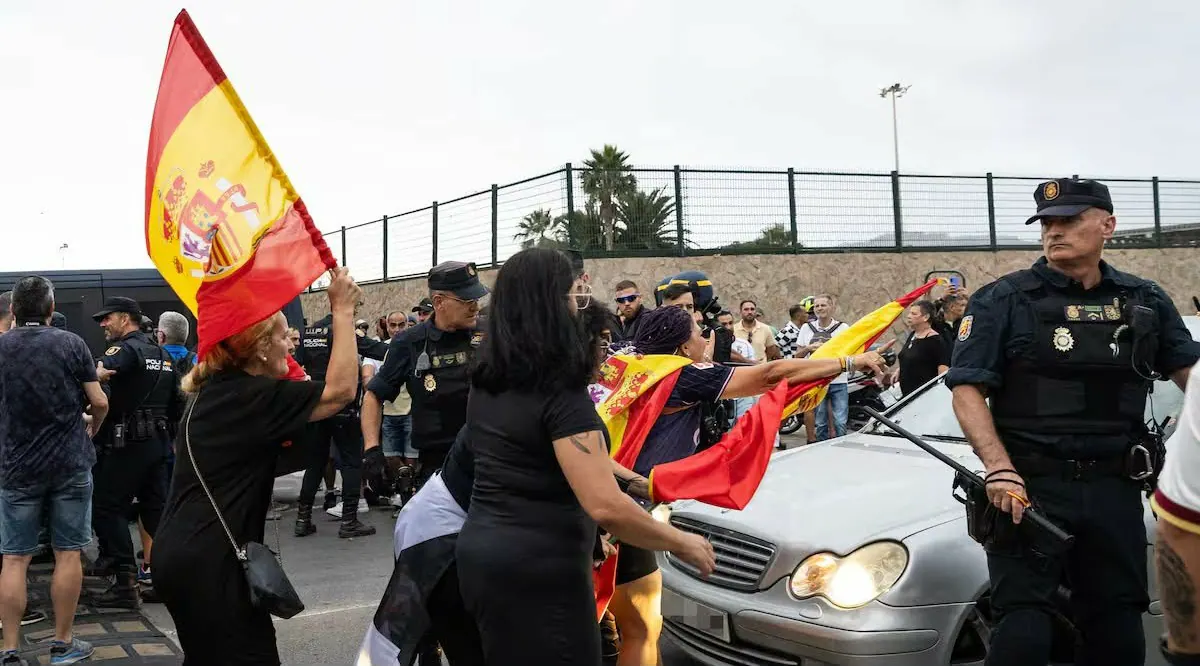
Clashes broke out in the port of Ceuta on Sunday, September 20, between dozens of protesters and Spanish National Police. The protesters had gathered to object to a Spanish group, "Negu Gorriak/Derecho a Techo," which had announced plans to distribute humanitarian aid and organize activities in support of migrants in the city. Around 50 people assembled at the port exit, waving a banner that read "We don't want radical ETA-supporting groups in Ceuta."
The protesters were waiting for the group's arrival on a ferry. At around 8 pm, they mistook a gray car for one belonging to the group and began throwing eggs and stones at it. However, it turned out that the car belonged to Julia Ferreras, a local parliamentarian from the "Ceuta Ya!" group, who was accompanied by two people, including a lawyer and human rights activist.
Ferreras told the newspaper "El Pais" that she had come to the port to pick up Rafael Burgos, who was present at the protest. Burgos and his companion, Sophia Canovas, a human rights lawyer, were monitoring the situation in the city. Some protesters began taunting Burgos, accusing him of being an ETA supporter, before he escaped in the car.
The situation escalated, and police intervened, escorting the car out of the area. As tensions continued to rise, police used tear gas to disperse the protesters after reinforcements arrived. Two protesters were arrested in connection with the incidents. Ferreras and her companions later went to the National Police station to file a complaint about the attack.
The incident occurred amid ongoing controversy over the management of migrant affairs in Ceuta. The "Negu Gorriak/Derecho a Techo" group had announced its intention to provide humanitarian aid to migrants in Ceuta, which sparked objections from some residents. The issue of migration has been a source of tension in Ceuta, with ongoing debates and protests in recent weeks.
The confrontation took place in a context of heightened tensions over migration in Ceuta. The city's authorities have faced criticism over their handling of the migrant situation. The incident highlights the complexities and challenges surrounding migration in the region.
The controversy surrounding the humanitarian aid group reflects the deep-seated concerns and divisions within the community. The city's residents have expressed concerns about the impact of migration on the city's resources and infrastructure. The situation remains a pressing issue for local authorities.
Key points
- The clashes in Ceuta were sparked by protests against a Spanish group's humanitarian aid for migrants.
- The protests turned violent, with police intervening and using tear gas to disperse the crowd.
- Two protesters were arrested in connection with the incidents, and a complaint was filed by a local parliamentarian.