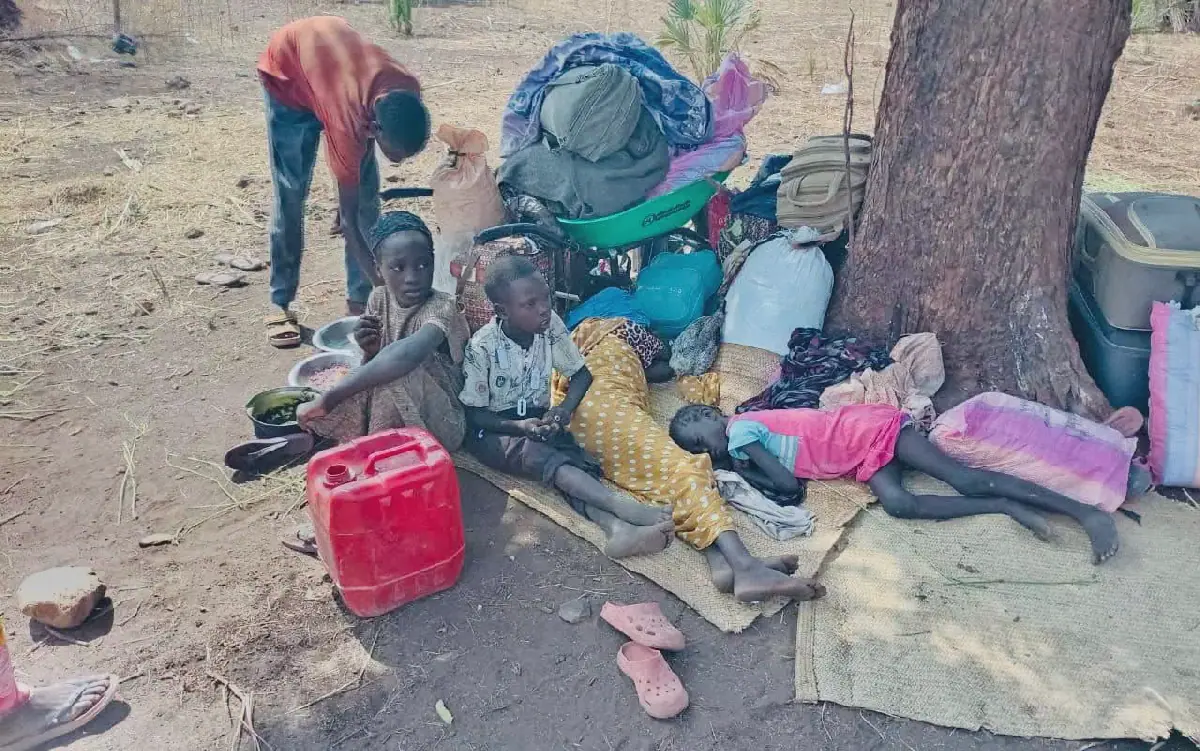
The humanitarian situation in Sudan's Blue Nile state has deteriorated significantly as clashes between the Sudanese army, Rapid Support Forces, and the People's Liberation Army continue. Thousands of people have been displaced, with many fleeing their homes and seeking shelter in other parts of the state or neighboring countries. According to the Humanitarian Aid Commission in Blue Nile state, the displacement is diverse, including those who were displaced in 2023 from Khartoum and Gezira state, as well as those from the western region of Blue Nile.
The humanitarian situation is dire, with many people in need of assistance. The Humanitarian Aid Commission reported that there are 12 camps in the city of Damazin, with some of the largest camps including Al-Karamah 1, 3, 5, 6, and 7, which are home to thousands of displaced families. In addition, there are several smaller camps in other areas, including the city of Roseries, where hundreds of families have sought shelter. The commission's report highlights the strain on these camps, which are struggling to provide adequate assistance to the displaced.
The situation is further complicated by the presence of returnees from South Sudan, which is adding to the pressure on the camps. According to the Humanitarian Aid Commission, the city of Damazin is home to over 1840 families in Al-Karamah 1 camp, 4030 families in Al-Karamah 3 camp, and 4814 families in Al-Karamah 5 camp. The commission's report also notes that the city of Roseries has several camps, including Ajib Al-Manjalk, Naseeba, and Al-Jaweria, which are home to hundreds of displaced families.
The scale of the displacement is significant, with over 27,400 families displaced across the three provinces, according to the Humanitarian Aid Commission. The commission's report also notes that the number of displaced people is continuing to rise, with many more people fleeing their homes due to the ongoing clashes. The situation is dire, with many people in need of assistance, including food, shelter, and medical care.
The International Organization for Migration reported in mid-September that nearly 100,000 people, 47% of whom are children, have been displaced in Blue Nile state since January 11, 2026. The organization noted that an estimated 99,277 people, representing 19,497 families, have been displaced from various locations in the state. The situation is grave, with many people facing significant challenges in accessing basic necessities.
The clashes in Blue Nile state have been ongoing for several months, with many people displaced from their homes. The humanitarian situation is dire, with many people in need of assistance. The Humanitarian Aid Commission and other organizations are working to provide assistance to those affected, but the situation remains challenging. The commission's report highlights the need for continued support to address the humanitarian crisis.
The situation in Blue Nile state is a concern for humanitarian organizations and the Sudanese government. The ongoing clashes and displacement have created a significant humanitarian crisis, with many people in need of assistance. The Humanitarian Aid Commission and other organizations are working to address the crisis, but more support is needed to address the needs of those affected.
Key points
- Thousands of people have been displaced in Blue Nile state due to ongoing clashes between the Sudanese army and Rapid Support Forces.
- The humanitarian situation is dire, with many people in need of assistance, including food, shelter, and medical care.
- The International Organization for Migration reported that nearly 100,000 people have been displaced in Blue Nile state since January 11, 2026.