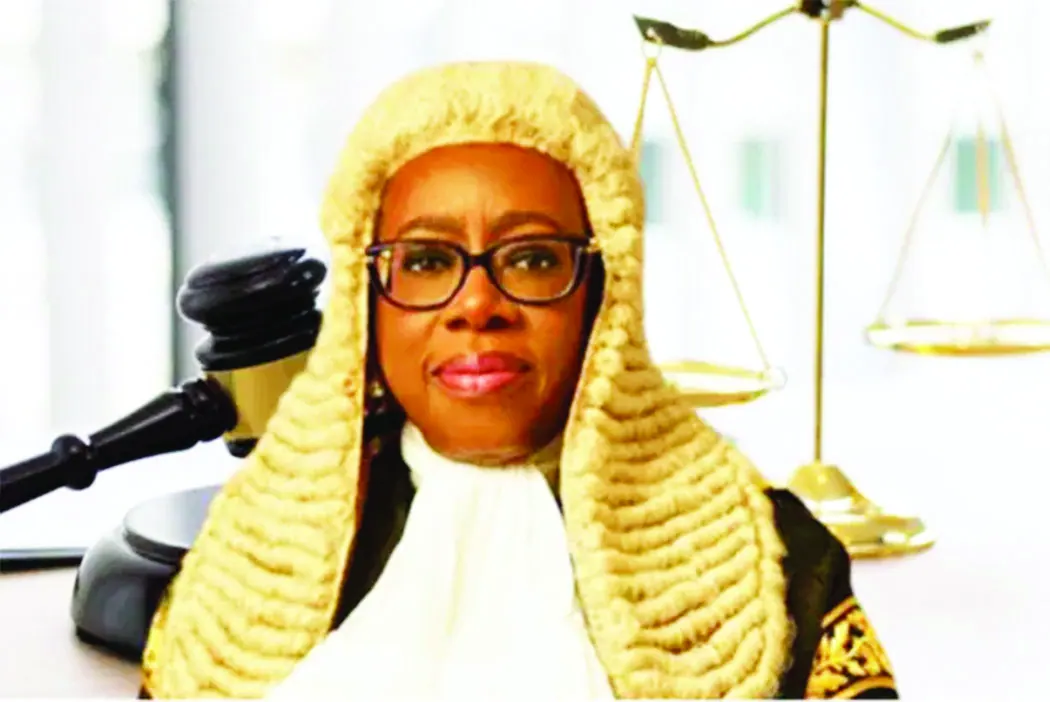
Chief Justice of Nigeria, Justice Kudirat Kekere-Ekun, has urged judges to uphold the highest standards of integrity and impartiality, both on and off the bench. Speaking at a special court session in Abuja for the 2026/2027 Legal Year, she emphasized that their conduct is under close scrutiny by the public. This warning comes as the country prepares for another electoral season, with the Independent National Electoral Commission (INEC) scheduling presidential and federal legislatures elections for January next year, and governorship and state legislatures elections for February.
The CJN made these remarks during the official commissioning of the National Industrial Court of Nigeria (NICN) headquarters building, Alex Enumah, in Abuja. She highlighted the need for judges to avoid engagements that may suggest alignment with political groups. According to her, judges must ensure their decisions are firmly anchored in the constitution, applicable legislation, and established principles of judicial reasoning. This is particularly crucial as the country approaches another electoral season, which often leads to politically sensitive disputes.
Since Nigeria's current democratic dispensation began, all presidential elections have ended up in court, except for the 2015 election, where then-incumbent President Goodluck Jonathan refused to contest the outcome in court. The CJN noted that some judges may be appointed as members of Election Petition Tribunals, where they will handle highly publicized and sensitive disputes. In such roles, judges must exhibit an even greater degree of impartiality, restraint, and detachment.
The CJN emphasized that judges' conduct, whether in regular court sessions or tribunal assignments, will be closely monitored. She advised judges to avoid associations, public engagements, or other actions that could create a perception of political alignment or predisposition. This warning extends not only to judges but also to lawyers, who have a responsibility to protect the integrity of the judicial process. According to the CJN, politically sensitive litigation requires particularly careful professional judgment from lawyers.
The CJN also cautioned lawyers against "forum shopping" and pursuing parallel proceedings in different courts or divisions to obtain a more favorable outcome. She stressed that this practice damages public confidence and can embarrass the judiciary. Instead, lawyers should determine the proper forum based on the law, not on the likelihood of success before a particular judge or court. The CJN urged the legal profession to maintain the integrity of the judicial process and avoid using it for partisan or strategic purposes.
Furthermore, the CJN emphasized the need for restraint in public commentary on judicial decisions. While criticizing a judgment or judicial process is a right, she urged that this should not extend to personal attacks on judges or deliberate misrepresentation of facts. This, she believes, is essential for maintaining public trust and confidence in the judiciary. The CJN's remarks underscore the critical role of the judiciary in Nigeria's democratic process.
The event at which the CJN delivered her address marked a significant milestone for the NICN, with the commissioning of its new headquarters building in Abuja. The court's role in resolving industrial disputes and promoting fair labor practices is crucial to Nigeria's economic and social development. As the country navigates another electoral season, the CJN's call for judicial integrity and impartiality resonates as a vital component of democratic stability and progress.
Key points
- The CJN emphasized judges must ensure decisions are based on the constitution and laws.
- The warning comes ahead of Nigeria's elections scheduled for next year.
- The CJN also cautioned lawyers against forum shopping and personal attacks on judges.