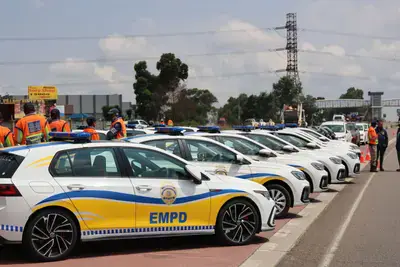
The Ekurhuleni Metropolitan Police Department has been identified as one of several Gauteng metro police departments harbouring criminal networks. An investigation revealed that its vetting system failed to detect police officers facing serious charges, including murder. This development has raised concerns about the department's ability to maintain law and order. The issue has also sparked a wider debate about corruption in municipalities across South Africa. Experts warn that this could be a symptom of a larger problem. Effective solutions are being sought to address the issue.
The Madlanga Commission's interim findings described the situation in Ekurhuleni and other Gauteng metros as "a rot that runs deep". Municipal law enforcement agencies were found to have frequently acted as a law unto themselves, operating parallel criminal syndicates or capturing local state procurement. This has led to widespread corruption and malfeasance. The City of Johannesburg and City of Tshwane are also embroiled in similar scandals. These developments have significant implications for service delivery and governance. Authorities are under pressure to take decisive action.
Reverend Mautji Pataki, chairperson of the Ethical Foundation for Leadership, has expressed concern about the state of leadership in municipalities. He believes that the current political leadership has veered off the trail designed by those who fought against apartheid and injustice. Pataki, formerly general secretary of the South African Council of Churches, warned that the church has lost its sense of vocation and must speak up against corruption. He called for new prophets to emerge and take up the cudgels for social justice. The church's role in promoting moral leadership is being questioned.
The issue of corruption in municipalities has significant implications for service delivery. The failure to provide basic services such as sanitation and policing has left many communities vulnerable. The Reverend Pataki has called for the church to repent and confess its failure to lead the nation. He believes that the church has conformed to the whims of the status quo and the powerful. The church's credibility as a champion of social justice is at stake. Communities are demanding action from their leaders.
Two high-profile cases have highlighted the extent of corruption in Ekurhuleni. Fired former police chief Julius Mkhwanaza and former city manager Dr Imogen Mashaza face several charges related to fraud, corruption, and defeating the ends of justice. These cases demonstrate the need for accountability and effective governance. Authorities are under pressure to ensure that those responsible are brought to justice. The public is demanding transparency and action.
The Reverend Pataki has invoked the legacy of Archbishop Oscar Romero, who became a champion of the poor and a fierce critic of state violence in El Salvador. Pataki believes that the church must embody the spirit of Romero and champion justice for the poor and vulnerable. He has called for a new generation of leaders to emerge and take up the cudgels for social justice. The church's role in promoting human rights and dignity is being re-examined.
The City of Ekurhuleni episodes have exposed deep-seated corruption and a lack of moral consciousness. Effective solutions will require a concerted effort from authorities, civil society, and the church. The public is demanding action and accountability from its leaders. Key issues that need to be addressed include the vetting of police officers, the role of municipal law enforcement agencies, and the promotion of moral leadership.
Key points
- Ekurhuleni Metropolitan Police Department flagged for harbouring criminal networks
- Corruption in municipalities has significant implications for service delivery and governance
- Church called upon to promote moral leadership and champion social justice