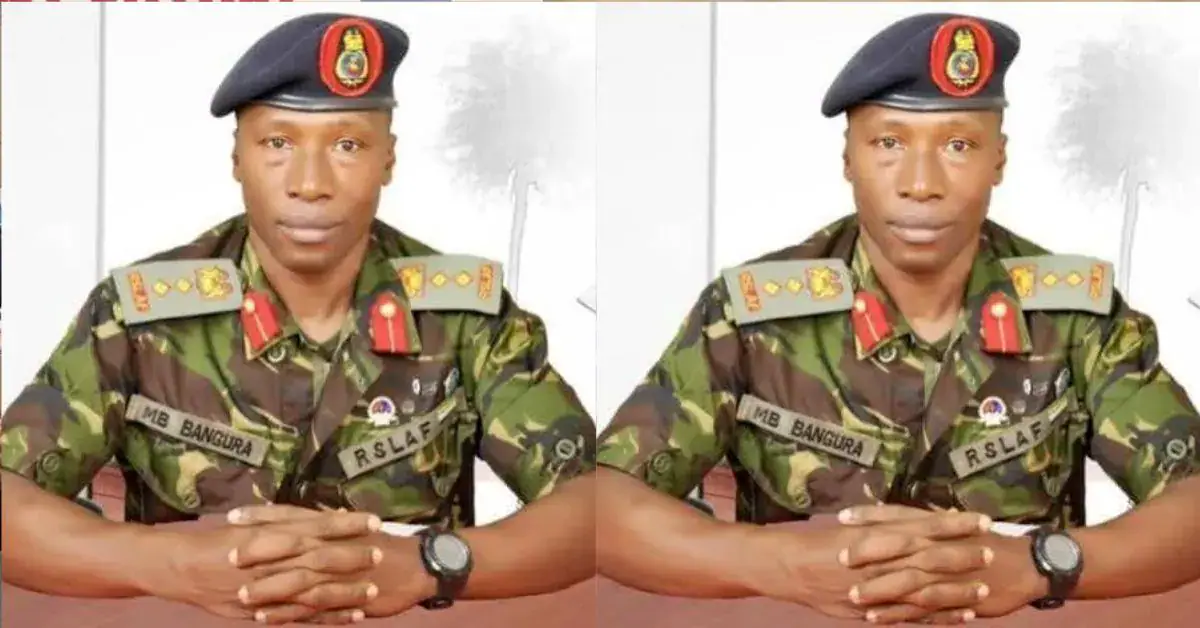
Colonel Musa Bangura, who enlisted in the Sierra Leone Army on May 4, 1991, was compulsorily discharged on January 31, 2024, following the publication of his name in the Sierra Leone Gazette in February 2024. His discharge is part of a broader restructuring exercise within the Republic of Sierra Leone Armed Forces, which saw 37 officers discharged. The official record confirms his rank, enlistment date, and compulsory discharge but does not explain the specific circumstances or grounds behind the decision.
The Ministry of Defence and RSLAF announced that the Defence Council had endorsed the discharge of 37 officers, including eight for absence without leave, 18 for alleged subversion, and five for alleged misconduct. Six other officers opted for voluntary discharge. However, Bangura's individual entry in the Gazette records his departure as a compulsory discharge without specifying the category. This has led to public interest and questions about the specific grounds that led to his discharge.
Bangura's military history has attracted attention due to his reported experience during Sierra Leone's civil war. A 2019 publication by the Australian Army Research Centre documented the ordeal of a Sierra Leone Army liaison officer identified as Lieutenant Musa Bangura during the West Side Boys hostage crisis in August 2000. He was part of a patrol accompanying British soldiers when they were captured by the West Side Boys and taken to their headquarters.
The hostages, including Bangura, were subjected to violence and mock executions during their captivity. Bangura received particularly severe treatment after being recognised by former members of the Sierra Leone Army who had joined the armed group. He was close to death by the time the rescue operation took place on September 10, 2000, during Operation Barras, a British military operation.
The circumstances surrounding Bangura's departure have continued to generate public interest, particularly because the official discharge notice does not provide a detailed explanation of the decision. Questions are being raised about what specific grounds led to his compulsory discharge, whether he was subjected to formal disciplinary proceedings, and whether he was given an opportunity to respond to any allegations against him.
A report published on January 29, 2024, alleged that Bangura's departure was connected to issues involving a WhatsApp group, citing unnamed military sources. However, the available official records do not establish that Bangura was discharged for misconduct or involvement in a WhatsApp group. The Ministry of Defence and RSLAF's general announcement explained the categories under which officers were discharged but did not provide a detailed account of Bangura's individual case.
The central issue is not whether military officers should be held accountable for their conduct, but what specific decision and procedure led to Colonel Musa Bangura's compulsory discharge after nearly 33 years in uniform. A clear explanation from the Ministry of Defence would help establish the facts surrounding his departure and address the questions that continue to circulate about the end of his military career.
Key points
- Colonel Musa Bangura was compulsorily discharged from the Sierra Leone Army after 32 years of service, with the official record not specifying the grounds for the decision.