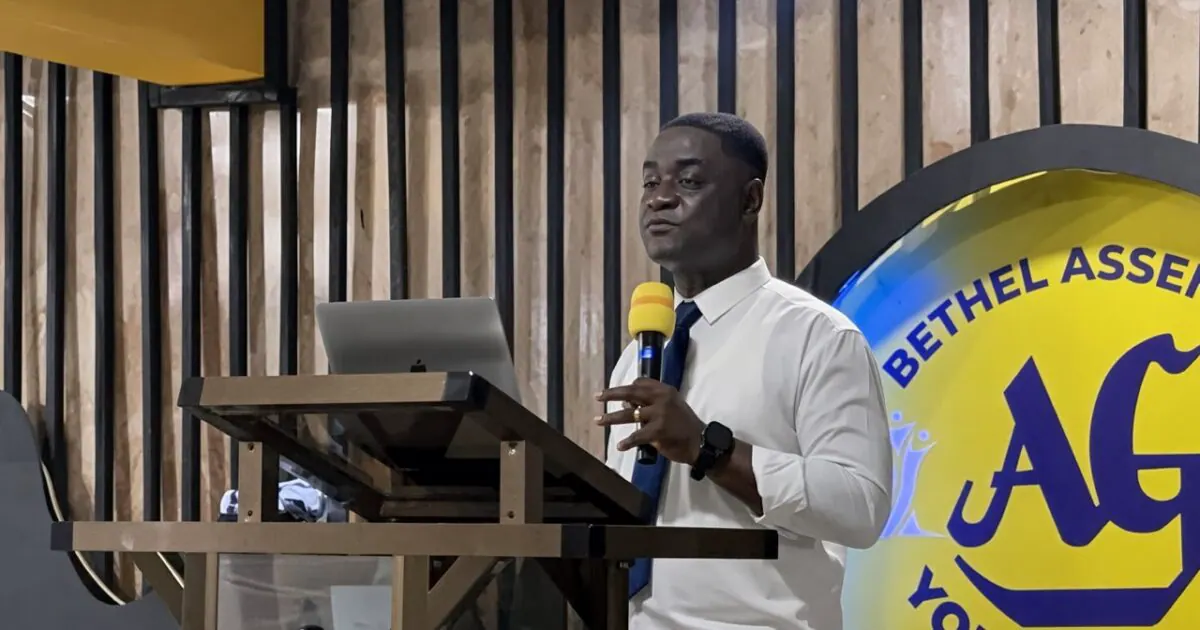
Professor Eric Appau Asante, the Artificial Intelligence Coordinator at Kwame Nkrumah University of Science and Technology (KNUST), has emphasized the need for churches to harness emerging technologies like artificial intelligence (AI) while upholding Christian values. Speaking at the Christian Home Week organized by the KNUST Local Council of Churches, Professor Asante highlighted the potential of AI and digital technologies to expand churches' reach, support sermon preparation, and complement ministerial activities.
According to Professor Asante, technology can help churches serve emerging generations and ensure that people who increasingly live and interact in digital spaces are not left behind. He stressed that technological convenience must not come at the expense of human dignity, privacy, truth, and Christian values. Professor Asante suggested that AI tools could help organize ideas, support learning activities, and complement ministry, but their use must be guided by ethical and spiritual discernment.
Professor Asante cautioned Christians against assuming that digital content is authentic simply because they have seen a photograph, heard a voice, or watched a video. He noted that advances in AI now make it possible to generate photographs, replace faces, clone voices, and create videos portraying people saying or doing things that never happened. This development means Christians must become more deliberate about verifying information before believing or sharing it.
Professor Asante identified various technologies that could support church administration and theological education, including data analytics, digital dashboards, cloud systems, digital meeting platforms, speech-to-text tools, electronic voting, and digital signatures. He also suggested that digital Bible software, theological databases, electronic libraries, virtual classrooms, and AI tools could assist pastors and students with activities such as comparing Bible translations and researching biblical geography.
In addition to supporting church administration and theological education, Professor Asante proposed that churches could use social media, podcasts, translation systems, mobile applications, chatbots, digital advertising, and geospatial technologies to extend evangelism and missionary activities beyond geographical boundaries. He emphasized that responsible use of these tools could enable churches to reach people who may otherwise remain outside traditional forms of ministry.
Professor Asante also urged churches to exercise restraint when recording and publishing events, particularly where individuals may be emotionally vulnerable. He stressed that the ability to record an event does not necessarily mean there is permission to publish it, and that privacy is an essential aspect of pastoral care. Ultimately, Professor Asante urged Christians to ensure that the adoption of emerging technologies remains anchored in truth, wisdom, love, responsibility, and the glory of God.
Key points
- Churches should harness emerging technologies like AI while upholding Christian values and ensuring that their use aligns with human dignity, privacy, and truth.