The Chairman of the Niger State chapter of the Nigeria Christian Youths in Politics (NCYP), Evangelist Marcus Dobiya Salka, has urged political parties to ensure Christians are represented as deputy governorship candidates in the spirit of equity, justice, and fairness ahead of next year's general elections. Salka made this appeal at a press conference held at the state headquarters of the Christian Association of Nigeria (CAN). He emphasized that Christians have suffered denials, discriminations, and deprivations during previous administrations.
According to Salka, despite Christians making up 45.7% of Niger state's population, they have been treated as second-class citizens in their own state and country due to inaccurate population projections. He accused Governor Umaru Bago of prioritizing a particular religion over others in job placements, political appointments, admissions into public institutions, and other benefits. Salka stressed that the essence of obtaining official data was to correct inaccurate projections of Christian population, particularly those circulating on social media.
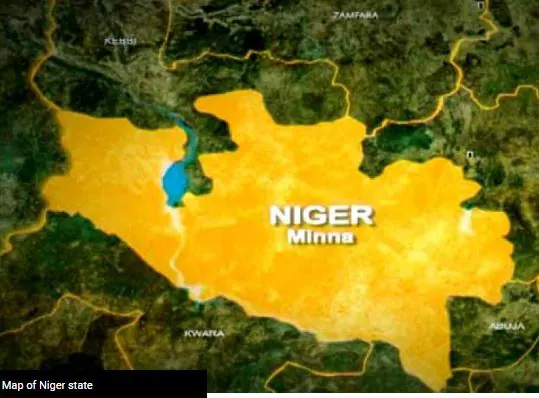
The Christian Statistics Verification Committee, set up by CAN Niger State chapter, was established to get accurate numbers of Christian populations in Niger state. Salka, flanked by the Secretary of the Committee, Mr. Barde Christopher Jesse, and other members, presented data showing that Christians comprise 45.7% of Niger state's population. Out of the state's projected 7,478,417 population, Christians number approximately 3,417,636. Salka linked changes in Christian community distribution to prolonged insecurity in parts of the state, including Shiroro, Munya, Paikoro, Rafi, Wushishi, and Magama.
Salka alleged that attacks in these areas led to unprecedented deaths and displacement of mostly Christian residents from their ancestral homes and communities. He claimed that some Christians were forced to relocate while others were killed, affecting their demographic distribution. Despite displacement, the group maintained that Christians remain present across both rural and urban communities in the state. Niger state's population has increased substantially, with 2025 projections indicating 7,478,417 people, comprising 3,790,197 males and 3,688,220 females.
Christians are spread across the state's 25 local government areas, representing various denominations, including Roman Catholics, Anglican, Methodist, Baptist, Pentecostal, Evangelical, and African Instituted churches. The Christian blocs identified by the group include the Catholic Secretariat of Nigeria, Christian Council of Nigeria, Pentecostal Fellowship of Nigeria, Organisation of African Instituted Churches (OAIC), TEKAN, and ECWA-related fellowships. Salka emphasized that Christians' sizeable population should not be judged by their level of participation in active politics.
Salka stated that it is possible that Christians trusted non-Christians to represent them at all tiers of government, but those they trusted failed to live up to expectations, becoming increasingly religiously biased. The group vowed to challenge what it considers inaccurate representations of Christian population in Niger state. Salka drew the attention of relevant authorities to the reality that must be accepted, emphasizing that Christians make up a significant population in Niger state.
The Christian youths in politics leader called on political parties to ensure fair representation of Christians in political appointments and positions. He stressed that the Christian population should be considered in representations, citing the 2006 census population of 3,950,249 for Niger state. The group seeks to correct mistakes of inaccurate projections of Christian population, particularly those circulating on social media. Salka concluded that the Committee would continue to challenge inaccurate representations of Christian population in Niger state.
Key points
- Christian youths in Niger state demand fair representation in politics
- Christians make up 45.7% of Niger state's population
- Insecurity has affected Christian community distribution in Niger state