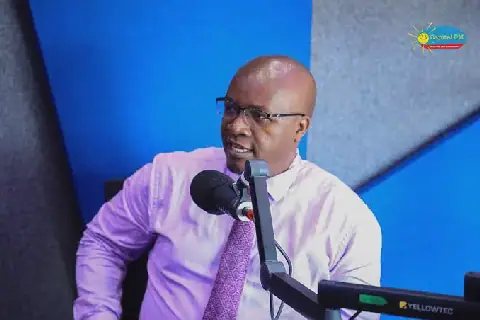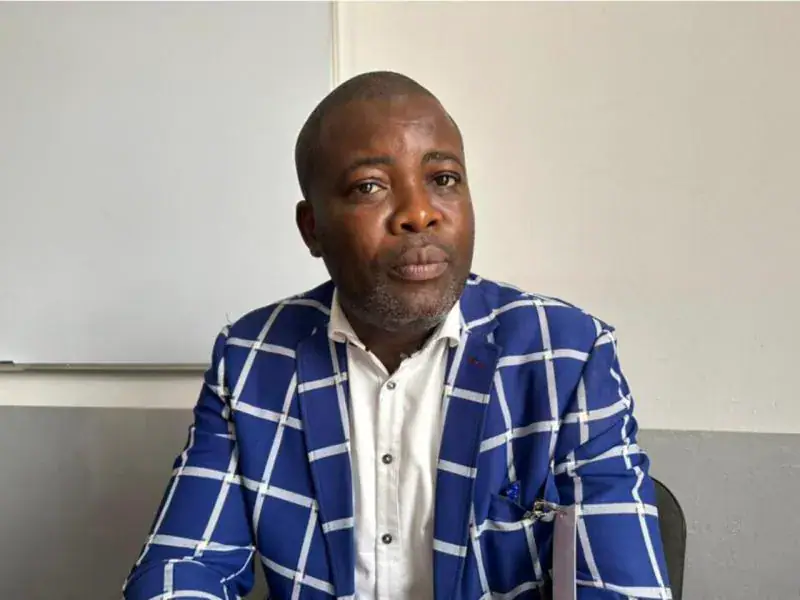
The ongoing crisis in the Democratic Republic of Congo has been exacerbated by the Francophonie crisis, according to analyst Christian Moleka. In a recent interview, Moleka stated that the crisis is linked to Rwanda's aggression and is being played out on various fronts, including the military and diplomatic arenas. The conflict between Kinshasa and Kigali has already been seen in the UN Human Rights Council and Security Council, and is now being fought in the Francophonie.
Moleka believes that the Congolese strategy at the Francophonie seems to be more focused on countering Rwanda than promoting Juliana Lumumba's candidacy. He notes that Kinshasa has been indecisive and regrets that the country did not capitalize on the momentum of the 2023 Francophonie Games to prepare a solid candidacy. The initiative by French President Emmanuel Macron to have Paul Kagame withdraw Louise Mushikiwabo's candidacy in favor of Dacian Cioloș has been seen as a sign of Paris's embarrassment.
According to Moleka, a defeat for Louise Mushikiwabo would be a "small half-victory" for Kinshasa, even if Juliana Lumumba is not elected. He believes that Kinshasa is caught in a binary logic with France, which does not want to take sides or satisfy either camp. The Romanian candidate appears to be a compromise solution. Moleka also notes that the threat to leave the Francophonie is a maximalist negotiating position, but that Kinshasa's frustration has been building for some time.
The recent law on the referendum, promulgated on November 9, has been seen as a way to pave the way for a new constitution. Moleka notes that the text allows the government, parliament, or the population to initiate a new constitution, but that the political opportunity remains to be seen. He questions whether the state has the means to organize a referendum across the entire territory and whether President Tshisekedi will use the law as a bargaining chip.
Moleka also discussed the Front Révolutionnaire National (FRN), which he believes is a rebranded version of the AFC/M23. He notes that the same figures, including Corneille Nangaa and Sultani Makenga, are involved, as well as Rwandan logistical support. The only change is the arrival of Joseph Kabila, who brings greater visibility and will polarize the crisis internally.
The decision to remove Joseph Kabila's name from streets and places has been seen as a symbolic and conjunctural move by Moleka. He notes that the memory of Kabila's legacy will not be easily erased and that a genuine effort to come to terms with the past is needed. He also believes that the invocation of article 64 of the Constitution by both the government and the FRN is part of a "battle of narratives".
Moleka believes that 2027 will be a crucial year for the Congo, with the approach of the 2028 elections and the need for either elections to be held or a legitimacy to be given to the presidential mandate. He doubts that a dialogue with Joseph Kabila is still possible, given Kinshasa's radicalization, and notes that a third-party mediator is needed to facilitate talks.
Key points
- The Francophonie crisis is linked to Rwanda's aggression against the Democratic Republic of Congo.
- The Congolese strategy at the Francophonie seems to be more focused on countering Rwanda than promoting Juliana Lumumba's candidacy.
- 2027 will be a crucial year for the Congo, with the approach of the 2028 elections and the need for either elections to be held or a legitimacy to be given to the presidential mandate.