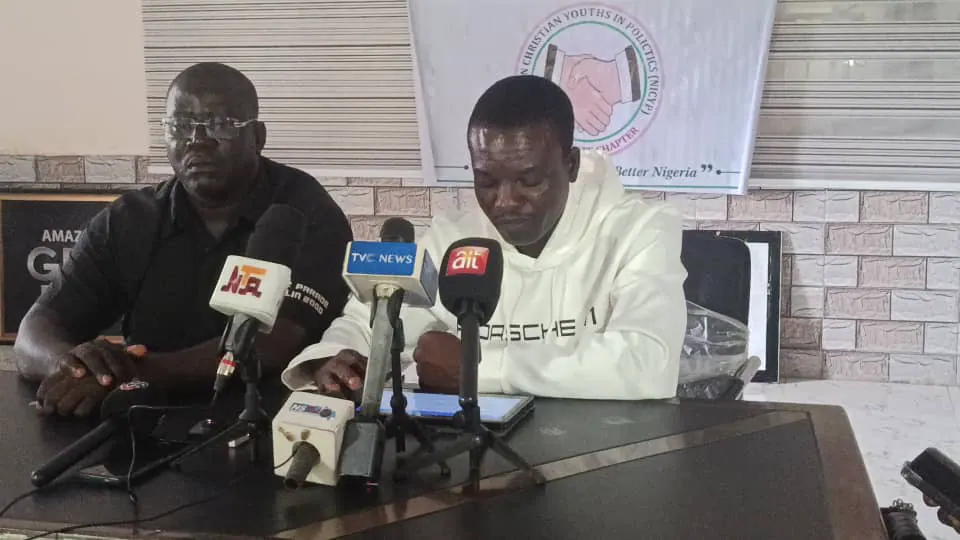
Christian leaders in Niger state, Nigeria, have called for equal representation in the state's affairs, emphasizing that the continued marginalization of Christians is no longer acceptable. According to Evangelist Markus Salka, Chairman of the Nigerian Christian Youths in Politics, Niger state Chapter, Christians make up 45.7% of the state's population, totaling approximately 3,417,636 people out of an estimated 7,478,417 residents. This demographic, he stressed, warrants equal representation in political appointments and state affairs.
The Christian leaders, supported by data from the Christian Association of Nigeria (CAN) Niger State chapter, revealed that the 45.7% figure was derived from the 2025 projected population of 7,478,417 for Niger State by the Niger state Bureau of Statistics. This projection, Salka noted, was necessary to correct inaccurate representations of the Christian population circulating on social media. The 2006 population census for Niger State recorded 3,950,249 residents, comprising 2,032,725 males and 1,917,524 females, but did not include religious affiliation.
Evangelist Salka pointed out that Nigeria's last official population census did not account for religious demographics, making the 45.7% figure an estimate based on available demographic projections, surveys, and research carried out since 2025. He emphasized that the size of the Christian population should not be judged by their level of participation in active politics, as some Christians may choose not to participate in politics. The Christian leaders stressed that they would not allow inaccurate projections to affect their representation.
The Christian leaders cited prolonged insecurity, particularly in Christian-dominated areas, as a factor affecting the distribution of Christian communities in the state. Local government areas such as Shiroro, Munya, Paikoro, Rafi, Wushishi, and Magama have experienced continued attacks by terrorists, resulting in deaths and displacement of residents from communities with significant Christian populations. This, Salka alleged, was a deliberate attempt to reduce the Christian population in affected communities.
Despite the displacement, Christians remain present across both rural and urban communities in the state, with a substantial increase in population, according to the 2025 state projection of 7,478,417, comprising 3,790,197 males and 3,688,220 females. The Christian population is spread across the state's 25 local government areas and is represented by various Christian blocs, including the Catholic Secretariat of Nigeria, Christian Council of Nigeria, and Pentecostal Fellowship of Nigeria.
The Christian leaders identified several Christian blocs, including the Organisation of African Instituted Churches, TEKAN, and ECWA-related fellowships. They vowed to continue challenging what they consider inaccurate representations of the Christian population in Niger State. The Christian Association of Nigeria (CAN) Niger State chapter had set up a committee to gather data on Christians in the state, which led to the 45.7% population figure.
The demand for equal representation by Christian leaders in Niger state highlights the need for accurate demographic data and fair distribution of resources and opportunities. The Christian population in Niger state is comprised of various denominations, including Catholic, Anglican, Methodist, Baptist, Pentecostal, Evangelical, and African Instituted churches. The Christian leaders' call for equal representation aims to ensure that their population is adequately represented in state affairs.
Key points
- Christian leaders in Niger state demand equal representation in state affairs, citing 45.7% of the population as Christians.
- The Christian population in Niger state has been affected by prolonged insecurity, particularly in Christian-dominated areas.
- The Christian leaders' demand for equal representation aims to ensure fair distribution of resources and opportunities in the state.