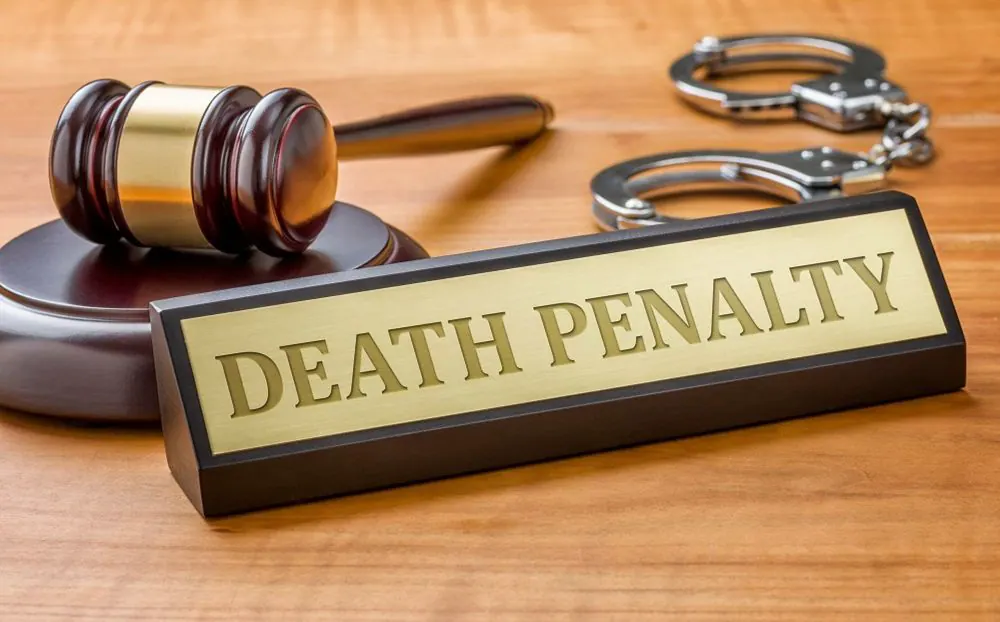
The recent failed execution of Christa Pike in Tennessee has sparked renewed debate about the death penalty in South Africa. Pike, who was convicted of torturing and murdering a 19-year-old woman in 1995, was scheduled to die by lethal injection but remained alive after two doses of pentobarbital were administered. The incident has raised questions about the morality and efficacy of capital punishment, particularly in a country like South Africa where violent crime is on the rise.
South Africa has a history of capital punishment, with thousands of people executed during the 20th century, including under apartheid. However, the Constitutional Court abolished the death penalty in 1995, citing concerns about the right to life, dignity, and the possibility of error. The court's decision was not based on sympathy for murderers, but rather on the principles of a constitutional state and the risk of irreversible mistakes.
The debate about the death penalty in South Africa is not about excusing or justifying crimes, but about the powers of the state and the risk of errors in the justice system. The country's experience with a fallible justice system, including poorly investigated cases and wrongful convictions, suggests that introducing an irreversible punishment like the death penalty would be problematic.
The argument against the death penalty is also based on the lack of scientific evidence that it deters homicide more effectively than long-term imprisonment. While some argue that the death penalty serves as a deterrent, research has not provided a reliable basis for this claim. Instead, factors like the likelihood of being caught, prosecuted, and sentenced quickly and certainly are more important in deterring crime.
In South Africa, the poor and marginalized would disproportionately carry the risk of irreversible mistakes in a system with the death penalty. The country's justice system is not immune to errors, and the introduction of capital punishment would increase the risk of wrongful executions. This is a concern that is particularly relevant in a country with a history of inequality and racial oppression.
The failed execution of Christa Pike highlights the psychological violence and cruelty that can result from the death penalty. Pike was subjected to a series of traumatic events, including being told she would die, then reprieved, and finally administered lethal drugs that failed to kill her. This incident underscores the need for a more nuanced discussion about the death penalty and its implications for human rights and dignity.
As South Africa grapples with rising crime and public anger, the debate about the death penalty is likely to continue. However, the discussion should be informed by a careful consideration of the risks and consequences of capital punishment, including the potential for errors and the lack of scientific evidence supporting its deterrent effect. Ultimately, the question is whether any justice system can guarantee that it will not make irreversible mistakes.
Key points
- The death penalty debate in South Africa is not about excusing or justifying crimes, but about the powers of the state and the risk of errors in the justice system.
- The lack of scientific evidence that the death penalty deters homicide more effectively than long-term imprisonment is a key argument against capital punishment.
- The poor and marginalized would disproportionately carry the risk of irreversible mistakes in a system with the death penalty.