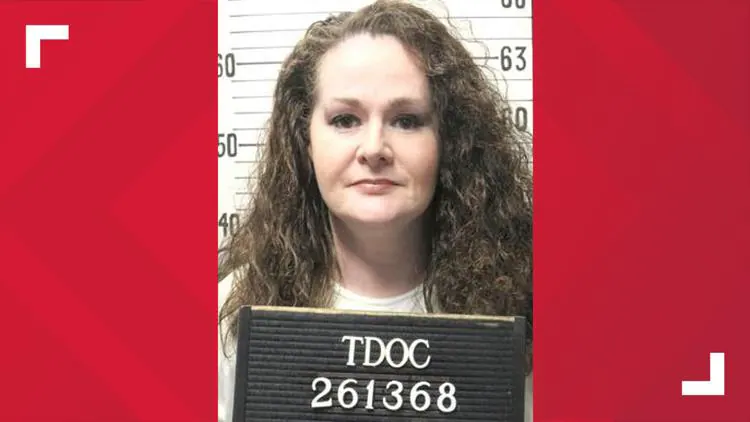
Christa Pike, a 50-year-old Tennessee death row inmate, is facing serious health complications after a failed execution attempt last week. Her attorneys report that she has contracted pneumonia and is currently unable to move her arms. Pike was subjected to two doses of the lethal-injection drug pentobarbital during the attempted execution on September 30. The botched procedure left her critically ill, and she was hospitalized, placed on a ventilator, and remained unconscious for several days.
Pike's condition took a turn for the better on October 6 when she unexpectedly regained consciousness and began speaking. Her attorney, Randy Spivey, stated that she was initially confused but gradually started recalling details of the execution attempt. However, her medical condition remains serious, with her lawyers citing pneumonia, a blood clot in one arm, and an inability to swallow as ongoing concerns. Pike's arms and hands are severely swollen, and her attorneys are uncertain about the extent of her future mobility.
According to Spivey, Pike's hands are extraordinarily swollen, and her legal team is attributing the botched procedure to problems establishing intravenous access. They claim that her known medical conditions, including small veins and a blood disorder, had raised concerns about the difficulty of inserting an IV. The attorneys allege that the lethal drug entered surrounding tissue instead of being properly delivered into her bloodstream, causing severe injuries to her arms.
The failed execution has prompted an investigation by Tennessee authorities, and Governor Bill Lee has halted the state's remaining scheduled execution for 2026. An independent review will examine what went wrong during the botched procedure. A Tennessee judge has ordered state officials to preserve evidence connected to the execution attempt, including drugs, IV lines, needles, medical supplies, restraints, and records relating to the procedure.
Pike's survival is unprecedented in the modern US death penalty era. According to the Death Penalty Information Center, she is the only person known to have survived after actually receiving lethal-injection chemicals during an execution attempt. Pike was sentenced to death for the 1995 torture and murder of 19-year-old Colleen Slemmer, a crime committed when Pike was 18.
Pike's attorneys are pushing for her death sentence to be commuted to life imprisonment and continue legal challenges surrounding the failed execution. Her condition remains uncertain, with doctors yet to determine how much function she may eventually regain in her arms. For now, Pike remains in the hospital, and her future mobility and health outcomes are unclear.
The incident has raised concerns about the use of lethal injection as a method of execution. Pike's case highlights the complexities and risks associated with the procedure, and her attorneys argue that her medical conditions should have been taken into account before the execution attempt. As the investigation and legal challenges continue, Pike's fate and the implications of her botched execution will remain a topic of discussion.
Key points
- Christa Pike, a 50-year-old Tennessee inmate, is battling pneumonia and arm paralysis after a botched lethal injection.
- Pike's attorneys blame problems establishing intravenous access for the botched procedure, citing her known medical conditions.
- The failed execution has prompted an investigation by Tennessee authorities, and Governor Bill Lee has halted the state's remaining scheduled execution for 2026.