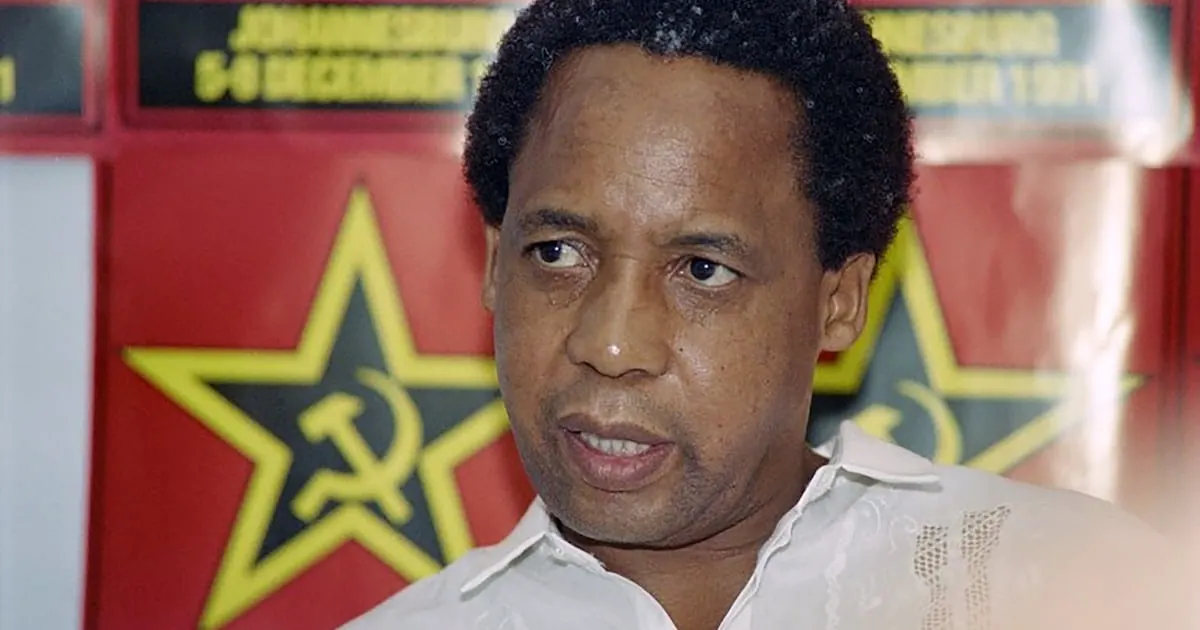
Chris Hani, the chief of staff of uMkhonto we Sizwe, the armed wing of the African National Congress (ANC), was deeply upset when he learned of the suspension of the armed struggle on August 6, 1990. He was in the Transkei at the time, and upon seeing the news on television, he broke down in tears in front of his comrades, including Mzwandile Vena, TT Matanzima, and Derrick Mgwebi. Hani felt blindsided by the decision, which was made without his consultation or input.
Hani's wife, Limpho, who was based in Lesotho at the time, recalled her husband's reaction to the news. She had driven to Mthatha to visit him and the children and found him extremely angry and distraught. According to Limpho, Hani was so upset that he cried and stammered when trying to talk, and it took him until late in the afternoon to compose himself. He then told her that he had to calm down the cadres, who would be upset by the news.
Hani's comrades, including Vena and Khotso Liphapang Matli, an MK guerrilla, corroborated his emotional reaction to the news. They noted that Hani was frustrated because he had not been consulted about the decision, and he felt that his role as chief of staff had been undermined. Vena described the situation as "very frustrating" for Hani, who had continued to send people for training and was now left wondering what to tell them.
The decision to suspend the armed struggle was made by the ANC's national executive council (NEC) in July 1990, with Joe Slovo, the then MK chief of staff, proposing the move. According to Mac Maharaj, a key ANC leader, the decision was motivated by a desire to regain the moral high ground, as FW de Klerk's government had gained international acclaim for unbanning the liberation movement and releasing political prisoners.
Maharaj also noted that the ANC leadership had deliberately kept Hani in the dark about the decision, citing concerns about communication security. However, Maharaj described this as "utter nonsense," given the ANC's ability to communicate with cadres across different countries and regions. The distance between Johannesburg and Mthatha, where Hani was based, was only 880km, making it feasible for him to have been consulted in person.
In the aftermath of the announcement, Hani instructed his comrades to align with the decision publicly, while also being tactical about it. He told them that he would inform reporters that he supported the suspension of the armed struggle, but also make it clear that it was a temporary decision. This approach reflected Hani's loyalty to the ANC, despite feeling sidelined and undervalued.
The incident highlighted the tensions and divisions within the ANC leadership during a critical period in South Africa's transition to democracy. Hani's emotional reaction to the news underscored his commitment to the armed struggle and his perception of being excluded from key decision-making processes. The event also shed light on the complexities of the ANC's internal dynamics and the challenges of navigating the country's transition to democracy.
Key points
- Chris Hani felt blindsided by the ANC's decision to suspend the armed struggle, which was made without his consultation or input.
- Hani's emotional reaction to the news reflected his frustration and sense of exclusion from key decision-making processes.
- The incident highlighted the tensions and divisions within the ANC leadership during a critical period in South Africa's transition to democracy.