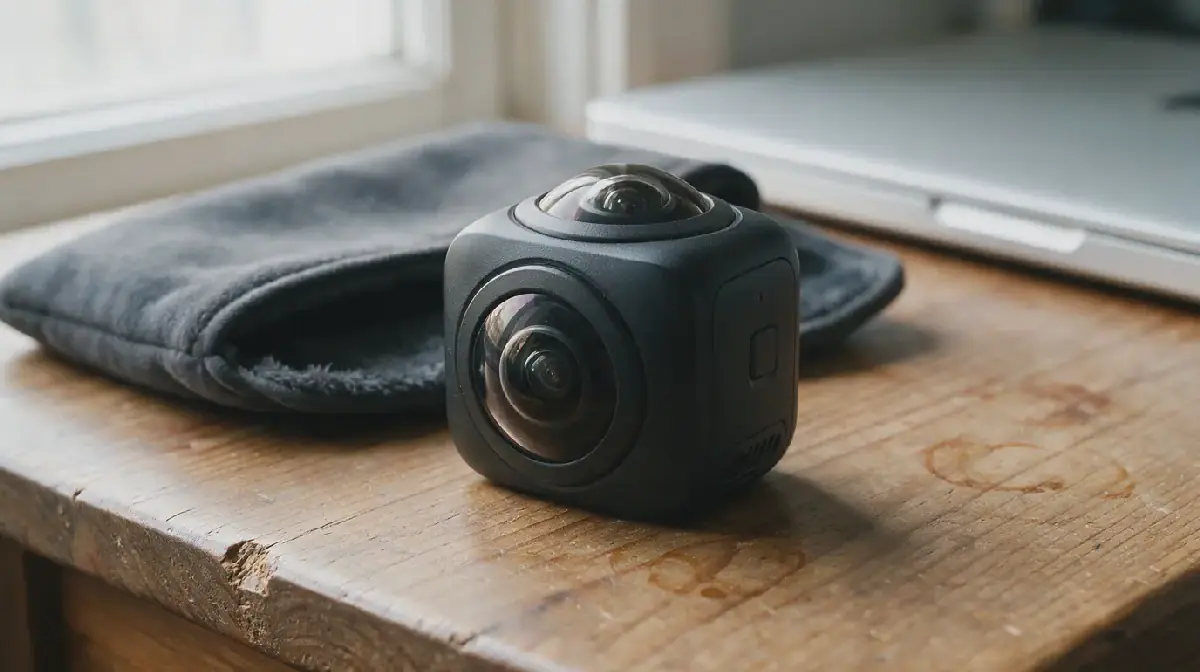
A 360 camera is a device that captures images and videos in all directions simultaneously, providing a complete immersion in an environment. This type of camera has gained popularity due to its ability to capture a complete scene in one shot. Whether you want to film your travels, create immersive content, or document a project, 360 cameras offer a unique approach. With various models available, it can be challenging to identify the one that best meets your expectations.
There are several categories of 360 cameras available, each suited to different needs and levels of expertise. Before making a choice, it's essential to identify the intended use, desired quality, and budget. Cameras for leisure use are compact, lightweight, and often affordable, making them suitable for travelers, vloggers, and users who want to capture everyday moments. On the other hand, professional cameras offer higher resolution, better exposure control, and advanced features such as optical stabilization and RAW data processing.
When selecting a 360 camera in 2026, several technical criteria must be evaluated. Resolution is a key factor, with a minimum of 5.7K recommended for a clear image during movements or cropping. Stabilization also plays a crucial role, as it ensures a smooth video even during rapid movements. Additionally, consider the camera's performance in low light, battery life, storage capacity, and durability. A long-lasting battery, expandable memory, and a water-resistant design are all advantages for unrestricted filming.
Before investing in a 360 camera, it's essential to understand how price, usage, and diffusion impact your investment. Entry-level models typically cost between 150 and 300 euros, suitable for occasional use, while mid-range cameras, often priced between 400 and 800 euros, offer a better balance between quality and features. Professional models exceeding 1,000 euros guarantee superior resolution, advanced stabilization, and better workflow management. Consider your priorities: do you prioritize mobility, image quality, robustness, or ease of editing?
The usage of 360 cameras varies greatly depending on needs, including immersive content production, virtual tours, technical documentation, sports capture, or VR creation. Before choosing, evaluate your priorities to orient your budget more accurately. Diffusion is another key point, as platforms like YouTube, Facebook, or VR viewers have specific requirements. Check that your model offers compatible formats, simple export, and optimized encoding options to reduce file weight without sacrificing quality.
A well-chosen 360 camera can meet your current needs while remaining relevant in the long term. By carefully evaluating budget, usage, and diffusion, you can invest in a durable model that adapts to your future projects. A good 360 camera offers a unique perspective on the world, allowing you to capture and share experiences in a new and immersive way. With the right camera, you can unlock new creative possibilities and take your content to the next level.
In conclusion, choosing the right 360 camera requires balancing budget, usage, and diffusion. By considering these factors and evaluating technical criteria, you can select a camera that meets your needs and provides a high-quality imaging experience. Marc Dubois, a technical writer with a solid background in computer engineering, provides expert insights to help readers make informed decisions when choosing a 360 camera.
Key points
- Resolution is a key factor when selecting a 360 camera, with a minimum of 5.7K recommended.
- Stabilization plays a crucial role in ensuring a smooth video even during rapid movements.
- Budget, usage, and diffusion are essential factors to consider when investing in a 360 camera.
Reporting sources
- Camera camera 360 : guide pour choisir la meilleure option · itmag-dz.com