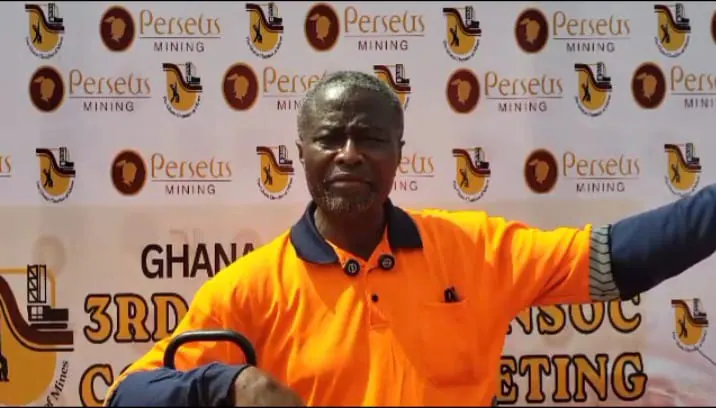
A conference organised by the Ghana Chamber of Mines' Environmental Sector at Perseus Mining Company Limited in Obuasi-Ayanfuri area recently showcased a Chinese-developed Gas Expansion Rock Breaking System. This technology, manufactured by Shanxi Rilong Machinery Equipment Co., Ltd. (Rilon) in China, uses gas expansion to break rocks instead of conventional explosive methods. Engineer Andy Augustus Agyemang Amoah, CEO of Mining and Construction Services, led the presentation. He highlighted the system's potential to mitigate challenges associated with blasting, such as vibrations, flying rocks, and noise.
The introduction of this technology is timely, given the increasing challenges faced by quarry and mining operators in Ghana. As settlements and developments encroach on quarry sites, operators face limited space to maintain safety distances associated with conventional blasting. Engineer Amoah noted that the Gas Expansion Rock Breaking System offers a different approach to rock fragmentation, simplifying storage, transportation, and handling. This technology has undergone demonstrations at the ESM Quarry at Buoho, Bibiani Mines, and the Prestea-Bondae area, with results presented to the Minerals Commission.
Key attractions of the Gas Expansion Rock Breaking System include its potential to reduce concerns associated with conventional blasting. During demonstrations, personnel were able to remain close to the breaking point without the risks of flying rocks and significant vibrations. Engineer Amoah explained that conventional blasting requires people to remain several hundred meters away from the blast area as a safety precaution. In contrast, the new system allows for a much safer working environment.
The initiative to introduce this technology began with training provided by a Chinese technical team. Engineer Amoah and his workers underwent an intensive program to acquire the skills required to operate the system. With the experience gained from initial training and field exercises, local operators can now learn and handle the technology within a considerably shorter period. This development is expected to facilitate the adoption of the Gas Expansion Rock Breaking System in Ghana's quarrying and mining industries.
The physical design of the system makes it relatively convenient to handle. Its rock-breaking components resemble commonly used plumbing pipes, making storage and transportation less complicated. Engineer Amoah noted that the final regulatory requirements for commercial operations would be determined by the relevant authorities. The Ghana Chamber of Mines and the Minerals Commission are likely to play a crucial role in shaping the regulatory framework for this technology.
According to Engineer Amoah, the Gas Expansion Rock Breaking System has the potential to transform Ghana's quarrying and mining industries. By reducing the risks associated with conventional blasting, this technology can contribute to a safer working environment for operators and nearby communities. As the mining sector continues to evolve, the adoption of innovative technologies like the Gas Expansion Rock Breaking System is expected to play a significant role.
The presentation of the Gas Expansion Rock Breaking System to Ghanaian mining stakeholders marks a significant milestone in the country's mining industry. As the sector continues to grow, the need for innovative solutions to address challenges associated with conventional blasting has become increasingly pressing. With its potential to mitigate risks and simplify operations, this technology is likely to be closely watched by mining stakeholders in Ghana and beyond.
Key points
- The Gas Expansion Rock Breaking System uses gas expansion to break rocks, reducing the risks associated with conventional explosive blasting.
- The technology has undergone demonstrations in Ghana, with results presented to the Minerals Commission.
- The system's design makes it relatively convenient to handle, with rock-breaking components similar to commonly used plumbing pipes.