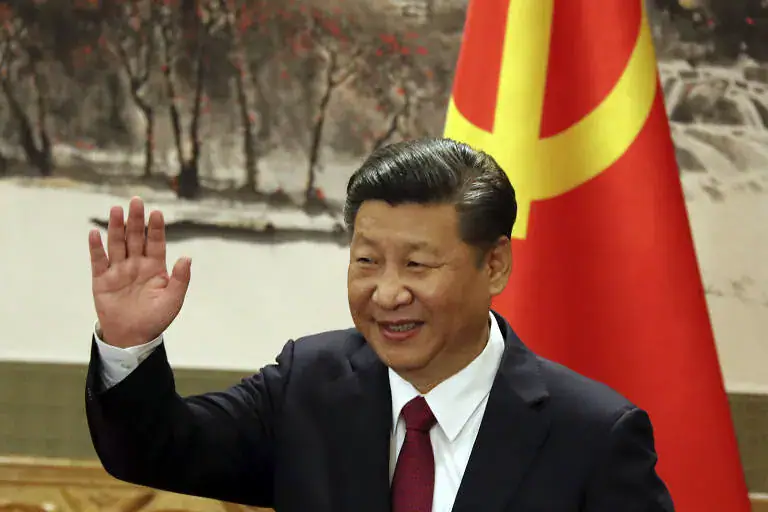
Chinese President Xi Jinping is set to host a historic summit with US President Donald Trump and Russian President Vladimir Putin in Shenzen, China, on Thursday, November 19. The meeting brings together the leaders of the world's three largest military powers, amid rising global tensions and ongoing conflicts. Trump's visit comes as the US is embroiled in a conflict with Iran, which has had a devastating impact on the US economy and led to a catastrophic electoral outcome in the midterm elections.
The summit is being compared to the 1945 Yalta Conference, which brought together US President Franklin Roosevelt, British Prime Minister Winston Churchill, and Soviet leader Joseph Stalin to redefine the world's spheres of influence. The current meeting may mark a new era of global influence, with China, the US, and Russia emerging as the three pillars of power. However, analysts note that Xi Jinping is unlikely to allow the conversation to drift into a definition of spheres of influence that could consolidate US global influence.
In the lead-up to the summit, Xi Jinping emphasized the need to eliminate trade barriers, tariff wars, and strategies of domination and control through sanctions. This stance has the clear support of Vladimir Putin. The Chinese leader also highlighted the importance of promoting balanced and equitable development, scientific and technological innovation, and cooperation in the digital economy and artificial intelligence.
The summit also comes as Putin faces challenges at home, including a recent attack on the Crimean Bridge, a project in which he has invested significant prestige. The bridge was damaged in a Ukrainian attack, which has been seen as a significant blow to Putin's personal pride. Meanwhile, Trump's visit to China has been marked by tensions over trade, with China imposing retaliatory tariffs on US goods.
The partnership between China and Russia has been described as "as hard as rock" by Chinese Foreign Minister Wang Yi. This strategic alliance is likely to make it difficult for Trump to drive a wedge between the two nations, which have united in opposition to US global influence. The meeting may also mark a turning point in global politics, as China and Russia seek to promote a new world order based on cooperation and equality.
In his opening speech at the APEC summit, Xi Jinping called for the promotion of active partnerships for scientific and technological innovation, deeper cooperation in the digital economy and artificial intelligence, and a strong focus on green energy and transition. The Chinese leader's emphasis on cooperation and development is seen as a bid to promote a more balanced and equitable global economy.
The summit's outcome is uncertain, but it is clear that the meeting will have significant implications for global politics and the balance of power. As the world's three largest military powers gather, the stakes are high, and the potential for a new era of global cooperation or conflict hangs in the balance. The meeting may also mark a shift in the global landscape, as China, the US, and Russia redefine their relationships and jockey for influence.
Key points
- The summit brings together the leaders of the world's three largest military powers, amid rising global tensions and ongoing conflicts.
- The meeting may mark a new era of global influence, with China, the US, and Russia emerging as the three pillars of power.
- Xi Jinping has emphasized the need to eliminate trade barriers, tariff wars, and strategies of domination and control through sanctions.
Reporting sources
- China: "Imperador" Xi recebe dois gigantes com pés... · novojornal.co.ao