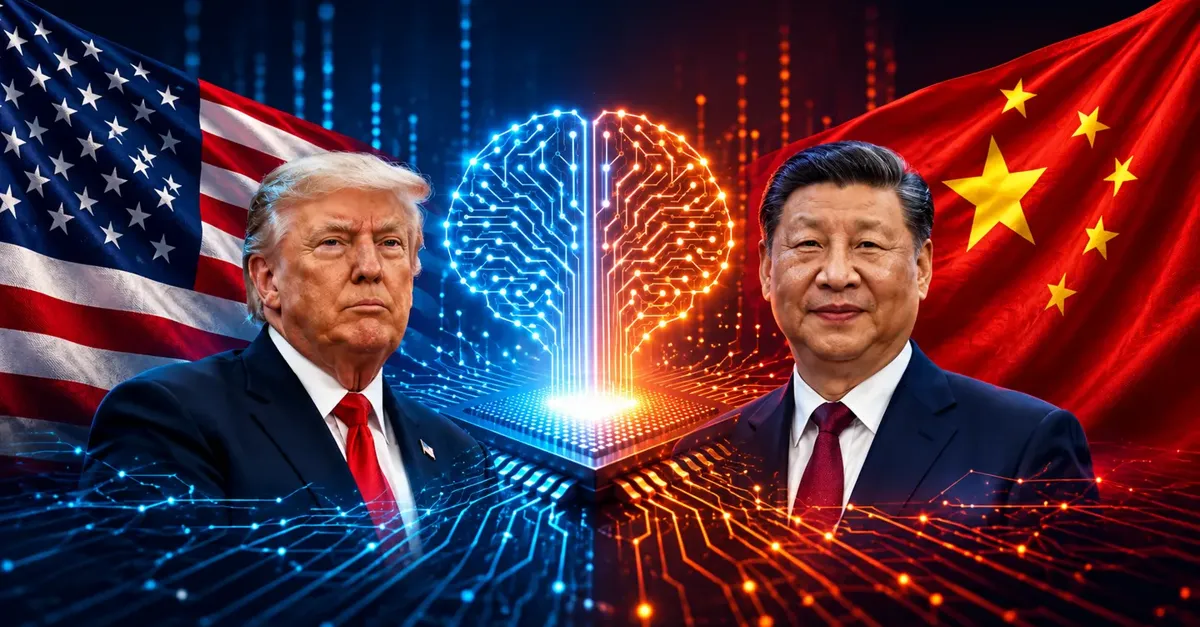
Chinese President Xi Jinping and US President Donald Trump recently met at the White House, where they discussed various topics, including artificial intelligence. Despite Trump's seemingly dismissive remarks on AI, Xi stressed the importance of responsible management of this technology. According to Xi, both China and the US have a responsibility to develop and manage AI in a way that serves the greater good and ensures human control.
The conversation between Xi and Trump comes as executives from major AI companies have urged the US government to collaborate with China to mitigate the risks associated with AI. However, Trump's response to these concerns was lukewarm, suggesting that he is not interested in regulating AI. In contrast, Xi emphasized the need for mechanisms to prevent losing control of AI, highlighting the potential risks of this technology.
The US and China have long considered AI a crucial aspect of their competition, with China aiming to become a global leader in AI by 2030. Xi has previously emphasized the need for regulatory mechanisms to prevent losing control of AI, despite China already having stricter regulations in place compared to the US. This highlights the complexities of the US-China relationship regarding AI.
A recent warning from a Chinese AI regulator highlights the potential risks of AI, citing the ability of AI models to exploit vulnerabilities in programs and leading to a significant loss of control. This warning underscores the need for responsible AI management and the potential consequences of neglecting this issue.
Experts suggest that Trump's opposition to AI regulation and China's concerns over US efforts to restrict its AI industry through export controls make a comprehensive agreement between the US and China on AI unlikely. However, the willingness of Chinese officials to acknowledge AI risks and the ongoing discovery of new incidents of AI misconduct suggest that some form of international agreement on regulating AI is not impossible.
The US and China are not only competing in AI for economic benefits but also for military advantages. The Pentagon expects AI to play a significant role in future wars, enabling autonomous drones and accelerating tactical decisions, which could alter the US military's influence in the Pacific. The rapid expansion of AI capabilities has convinced business leaders and politicians in both countries that AI will soon be a cornerstone of economic growth.
The conversation between Xi and Trump highlights the need for a collaborative approach to managing AI risks. As AI continues to evolve and play a larger role in various aspects of life, it is essential for global leaders to work together to ensure that this technology is developed and used responsibly.
Key points
- Chinese President Xi Jinping emphasized the need for responsible management of artificial intelligence during a meeting with US President Donald Trump.
- The US and China are competing in AI for economic and military advantages, with China aiming to become a global leader in AI by 2030.
- Experts suggest that a comprehensive agreement between the US and China on AI regulation is unlikely due to Trump's opposition to regulation and China's concerns over US export controls.