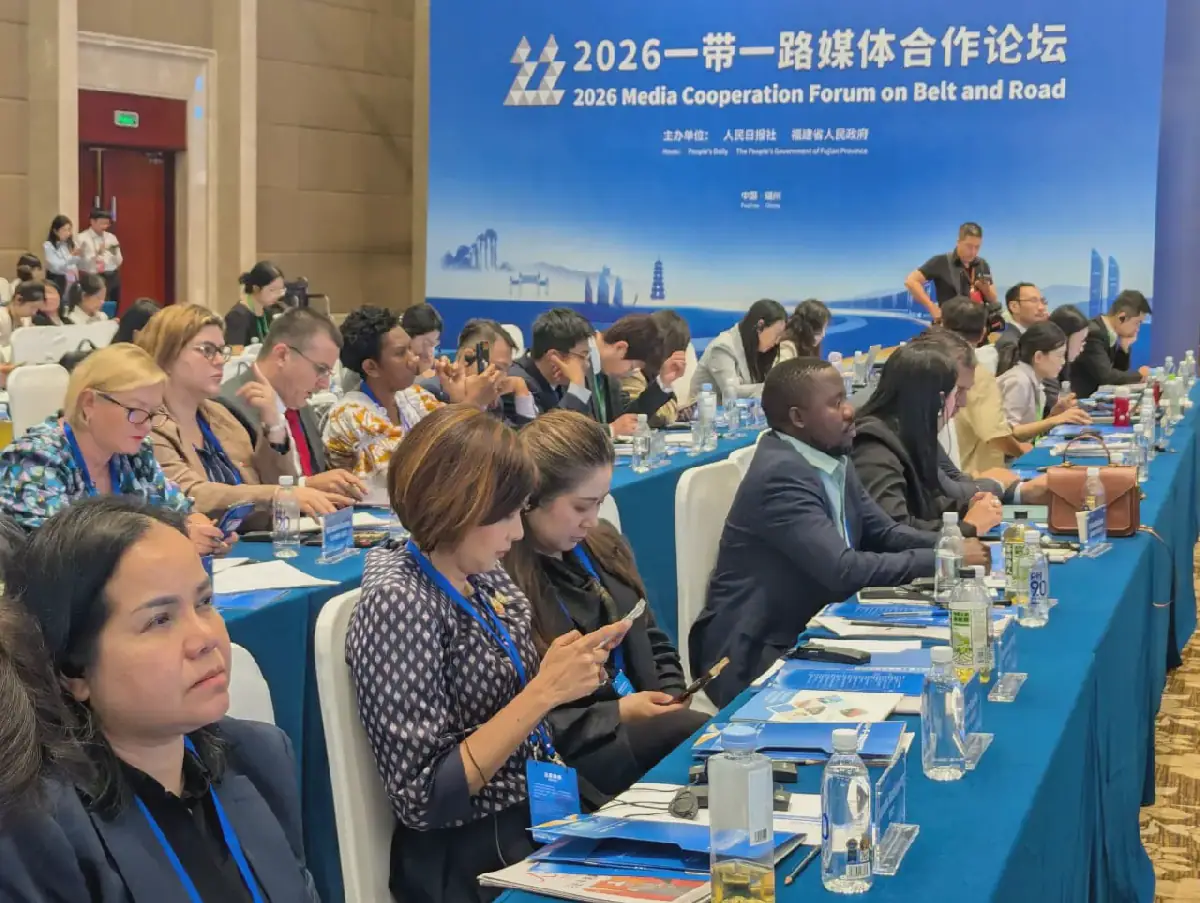
Chinese experts have urged journalists from countries participating in the Belt and Road Initiative (BRI) to report on the programme from national development perspectives. They emphasized the need to highlight the initiative's contribution to economic transformation, poverty reduction, and people-to-people cooperation. The experts made these remarks during the opening ceremony of the 2026 Media Cooperation Forum on Belt and Road in Fuzhou, China.
The forum brought together over 325 media representatives from more than 20 countries. Vice-Chairperson of the National Committee of the Chinese People's Political Consultative Conference (CPPCC), Ms Xian Hui, stressed the media's responsibility to engage the public in dialogue to promote mutual understanding and build shared aspirations among BRI partner countries. She encouraged journalists to use their platforms to advocate peace and security, strengthen people-to-people connections, and promote friendship and cooperation.
Ms Xian Hui also emphasized the importance of aligning BRI coverage with national development priorities. She noted that media organisations should help audiences understand how the initiative relates to their countries' development agendas. This approach will enable journalists to provide more comprehensive and relevant coverage of the BRI.
Executive Deputy Head of the Publicity Department of the Communist Party of China (CPC) Central Committee, Mr Hu Heping, highlighted the media's vital role in promoting the initiative and strengthening connections among people across participating countries. He urged journalists to communicate policy alignment with the BRI from the perspective of their respective national development strategies.
Mr Hu Heping also challenged media practitioners to use quality journalism to empower communities, promote cultural exchanges, and open new avenues for people-to-people cooperation. He emphasized the need for responsible and development-focused journalism that connects the BRI's broader objectives with the everyday experiences of people in participating countries.
President of the People's Daily of China, Mr Yu Shaoliang, encouraged journalists to develop stories that reflect local realities and perspectives. He argued that reporting should capture how the initiative is being implemented and the benefits it brings to communities. The forum provides a platform for media professionals to exchange ideas, strengthen professional cooperation, and explore ways of improving coverage of the initiative.
The 2026 Media Cooperation Forum on Belt and Road seeks to strengthen understanding of the BRI among editors and journalists while promoting closer cooperation and a common understanding among participating countries. The experts' remarks underscored the need for media organisations to go beyond reporting high-level agreements and infrastructure projects to examine how the initiative addresses the development priorities and aspirations of participating countries.
Key points
- Chinese experts urge journalists to report on BRI from national development perspectives
- Media organisations should align BRI coverage with national development priorities
- Journalists should use quality journalism to empower communities and promote people-to-people cooperation