The 20th Central Committee of the Communist Party of China (CPC) recently held its fifth plenary session in Beijing, adopting a decision on major issues related to pursuing integral self-governance with rigor. This decision reviews the significant achievements and valuable lessons learned in the CPC's self-governance under the new era, demonstrating the party's determination to support Chinese modernization through high-quality party building. The session coincides with the 105th anniversary of the CPC's founding.
The CPC has always prioritized self-governance, with a focus on preserving its purity and progressive character. Since its early days, the party has recognized the importance of self-supervision, with Mao Zedong emphasizing the need for the people to monitor the government. The CPC has made significant efforts to combat corruption, with a focus on "turning the knife inward" to maintain its integrity and progressiveness. This approach has been reinforced through the concept of "self-revolution," which involves rigorous governance and self-purification.
The decision adopted by the CPC's central committee emphasizes the need to strengthen the party's sense of purpose and improve its behavior, discipline, and anti-corruption efforts. The goal is to maintain the party's fundamental nature, qualities, and virtues, ensuring that it remains committed to serving the people. The CPC's self-governance is crucial for consolidating and developing a favorable political situation, characterized by solidarity and unity within the party, the military, and the people.
The CPC's self-governance has contributed significantly to China's economic growth and stability. With an economy exceeding 140,000 billion yuan, China has become a major global player, driving economic growth and innovation. The country's commitment to self-governance has also fostered a sense of trust and satisfaction among its population, with over 92% reporting a sense of fulfillment, happiness, and security.
The Chinese government has made significant strides in promoting good governance and combating corruption. These efforts have created a favorable environment for economic growth and development. China's experience in self-governance can serve as a valuable reference for other countries, including Guinea, which has also prioritized institutional building, regulatory frameworks, and anti-corruption efforts.
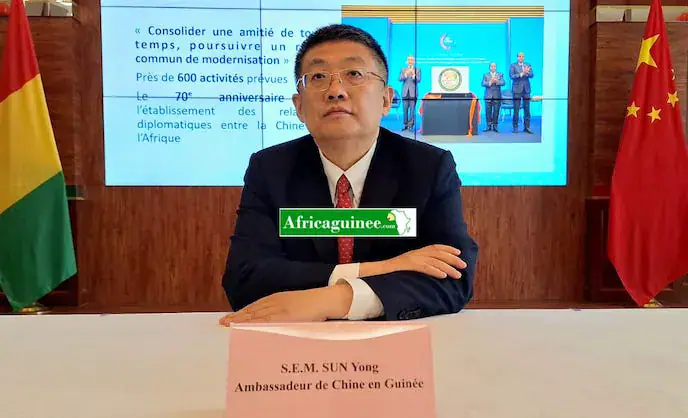
Ambassador Sun Yong expressed China's support for Guinea's efforts to explore a development path tailored to its national realities. He praised Guinea's determination and measures to promote probity and good governance, which have become hallmarks of the country's development. China and Guinea can learn from each other's experiences in promoting integral self-governance and modernization.
The emphasis on integral self-governance with rigor is an ongoing process for the CPC. The decision adopted by the central committee highlights the need to strengthen party teams, regulate power exercise, and refine control tools to improve governance effectiveness. This approach will provide a solid foundation for China's modernization and its contribution to global development.
Key points
- The Communist Party of China prioritizes integral self-governance with rigor to maintain its purity and progressive character.
- China's experience in self-governance can serve as a valuable reference for other countries.
- The CPC's self-governance has contributed significantly to China's economic growth and stability.