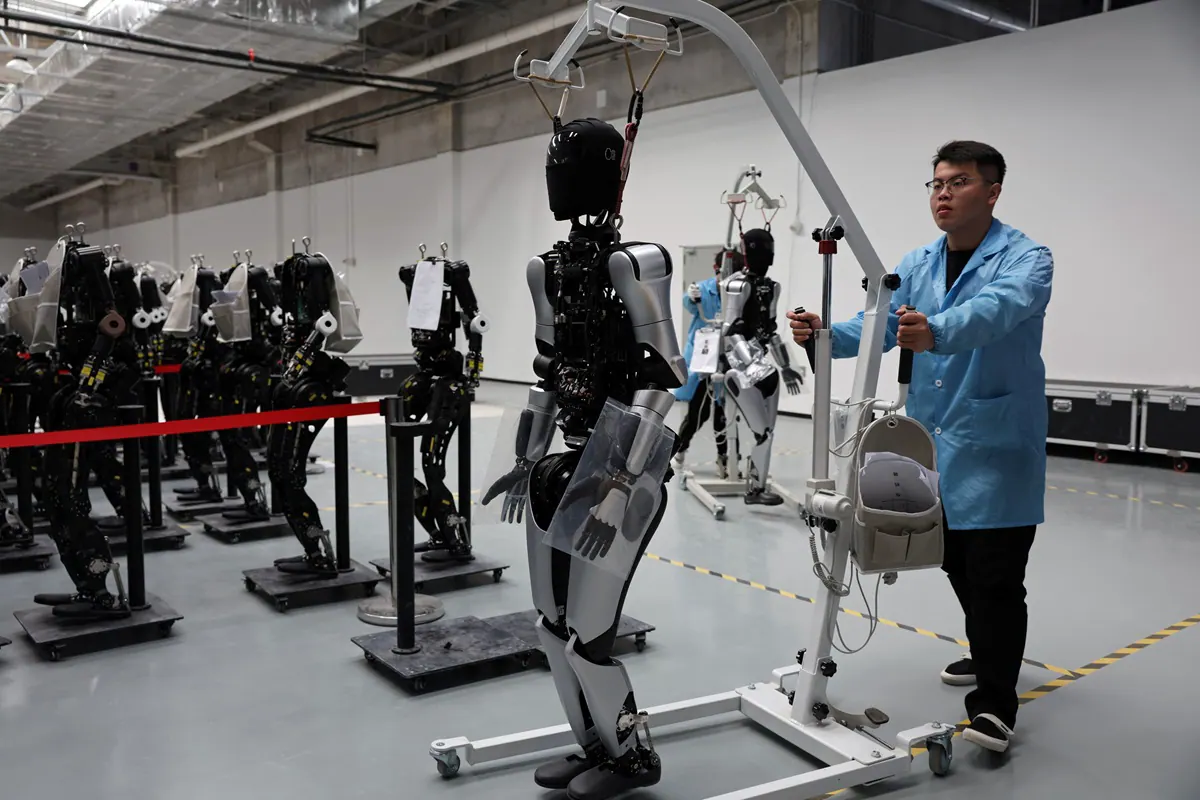
Chinese regulators have slowed the approval of humanoid-robot initial public offerings (IPOs) as they scrutinize valuations and revenue linked to government-backed projects. This move comes after a sharp share-price decline at Unitree Robotics following its Shanghai debut last month. The company's stock surged more than fivefold on its first day of trading before falling 55% from its peak.
Unitree's dramatic share-price swing has drawn attention to valuations across China's humanoid-robot sector, where several companies are preparing to seek public listings. At least six Chinese humanoid-robot companies, including Deep Robotics, X Square Robot, and AGIBOT, are preparing to go public. Regulators have reportedly used informal guidance to raise the bar for humanoid-robot IPO approvals, although no formal ban has been announced.
Regulatory scrutiny is also extending to revenue generated through projects backed by local governments. Some robotics companies have generated significant revenue through robot data-collection centers and joint ventures in which local governments may provide most of the initial investment. Regulators are examining how much of that activity represents sustained demand from independent commercial customers.
Questions about revenue quality have emerged alongside concerns over the sector's ability to turn technological demonstrations into large-scale commercial deployments. One source estimated that valuations at some companies could fall sharply if revenue associated with data-collection centers were excluded. This scrutiny is part of China's push into advanced manufacturing and "embodied intelligence," referring to AI systems that can perceive and act in the physical world.
China continues to promote humanoid robotics as part of its technology agenda. Greater scrutiny of IPO candidates does not amount to a withdrawal of that policy support. Instead, companies seeking access to public markets are facing closer examination of their financial performance, commercial prospects, and valuations.
For companies waiting to list, Unitree's volatile debut has added a new reference point for investors and regulators assessing how quickly the humanoid-robot industry can turn technological progress into sustainable commercial revenue. This development has significant implications for the industry, as it seeks to demonstrate its ability to generate consistent and reliable revenue.
The slowdown in humanoid-robot IPOs is a notable development in China's technology sector. As the industry continues to evolve, companies will need to demonstrate their ability to generate sustainable revenue and achieve commercial success. The regulatory environment will likely play a crucial role in shaping the future of China's humanoid-robot sector.
Key points
- Chinese regulators are slowing humanoid-robot IPOs to examine valuations and revenue.
- Unitree Robotics' volatile debut has added a new reference point for investors and regulators.
- The slowdown in IPOs does not signal a withdrawal of policy support for humanoid robotics.