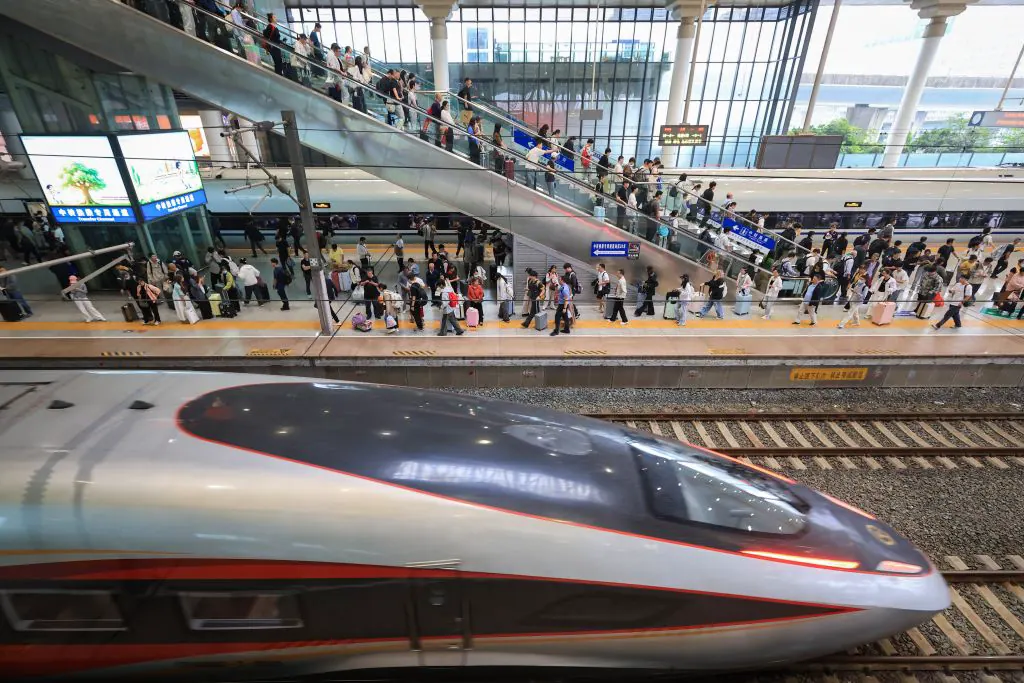
During China's National Day holiday from October 1 to 7, millions of people were on the move, with cross-regional passenger trips exceeding 300 million on each of the first three days. The country's railways handled over 25.2 million passenger trips on October 1, setting a new single-day record. This massive movement of people was made possible by China's extensive transport network, which has been built up over decades and spans more than 6 million km.
China's transport network includes the world's largest high-speed rail network, expressways, airports, and ports that connect cities, towns, and rural areas across the country. The network is continually expanding, with four major high-speed railway sections opened on September 28, adding over 1,100 km of new lines. These new lines have shortened travel times and made more destinations accessible to families and travelers.
The development of China's transport network goes beyond just faster journeys; it also includes better supporting services. New energy vehicles (NEVs) have become increasingly popular among Chinese households and are now a common choice for long-distance travel. To meet the growing demand for charging services, China has built over 24 million EV charging facilities, forming the world's largest EV charging network.
To handle the holiday peak, mobile emergency chargers were added at key service areas, and drivers were encouraged to leave after charging their batteries to 80 percent to improve charging turnover. This has made it easier for travelers to visit more destinations in a single trip. Data from online travel platform Qunar showed that nearly 30 percent of travelers had booked hotels in at least two cities, while bookings involving stays in four or more cities surged 53 percent year on year.
China's expanding transport links are also supporting a rise in cross-border travel, with Chinese airlines operating regular international passenger routes connecting 177 cities in 80 countries. For outbound travel, hotel bookings for multi-country trips more than doubled year on year during the holiday. Inbound tourism also recorded double-digit growth, according to Trip.com Group, with day-tour bookings up more than fourfold and train ticket bookings up more than 170 percent year on year.
The transport network that carries millions of travelers is also keeping goods moving, linking businesses and markets and sustaining economic activity across the country. The Liujing operating area of Nanning Port in south China's Guangxi Zhuang Autonomous Region remained busy during the holiday, with ship horns sounding and workers loading and unloading goods. The opening of the Pinglu Canal has provided a shorter river-sea route for cargo from southwest China to international markets.
The Pinglu Canal, which stretches 134.2 km from Hengzhou in Guangxi to the Beibu Gulf, opened to navigation on September 16. It has increased cargo traffic, with an additional 20,000 tonnes of cargo handled per day on average. According to You Tong, deputy manager of the production operations center at Nanning Port Development and Investment Co., Ltd., the port expects to transport 200,000 tonnes of cargo during the National Day holiday.
Key points
- China's comprehensive transport network handled over 25.2 million passenger trips on October 1, setting a new single-day record.
- China has built over 24 million EV charging facilities, forming the world's largest EV charging network.
- The Pinglu Canal has increased cargo traffic, with an additional 20,000 tonnes of cargo handled per day on average.